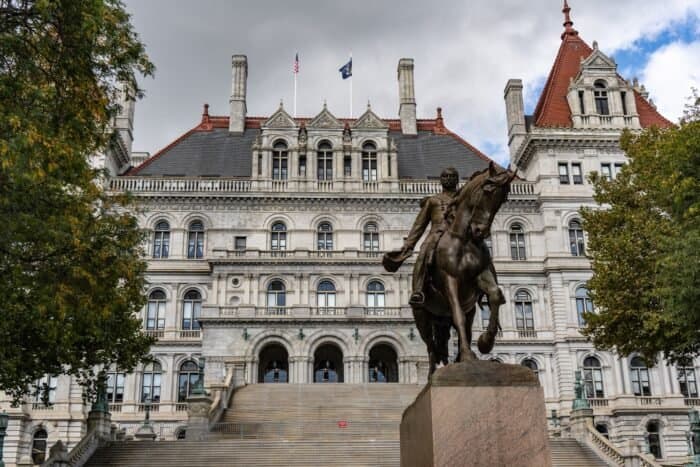
New York state legislators have introduced a bill requiring news organizations to label AI-generated content and implement human review processes before publication.
New York state legislators have introduced a bill that would require news organizations to label AI-generated content and implement human review processes before publication, marking one of the first attempts to regulate artificial intelligence in journalism at the state level.
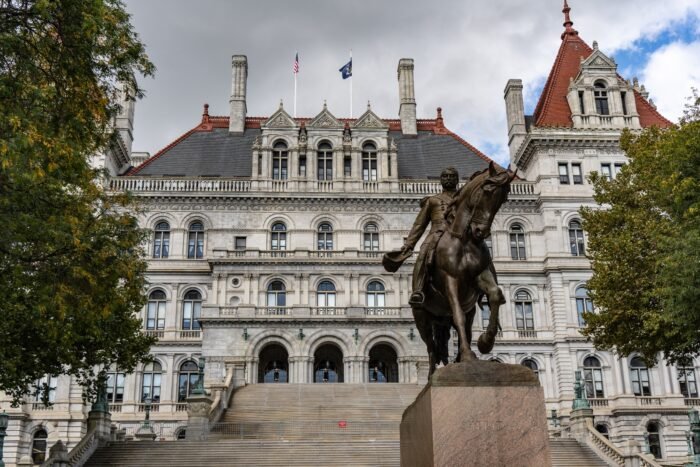
The proposed legislation, called The New York Fundamental Artificial Intelligence Requirements in News Act (NY FAIR News Act), was introduced Monday by Senator Patricia Fahy (D-Albany) and Assemblymember Nily Rozic (D-NYC). The bill comes amid growing concerns about AI's impact on journalism and follows similar debates in newsrooms across the country.
Under the proposed law, news organizations would be required to place disclaimers on any published content that is "substantially composed, authored, or created through the use of generative artificial intelligence." The bill also mandates that human employees with "editorial control" review any AI-generated content before publication, covering not just written articles but also audio, images, and other visual materials.
The legislation includes provisions to protect confidential information, requiring news organizations to create safeguards that prevent AI technologies from accessing sensitive material, particularly information about sources. Additionally, the bill would require news organizations to disclose to their journalists and media professionals when and how AI is being used in their newsrooms.
A notable aspect of the bill is its labor protection provisions. The legislation would restrict news organizations from firing journalists or reducing their work, pay, or benefits due to generative AI adoption. This language mirrors recent union contract negotiations across the country as news organizations grapple with AI integration.
"At the center of the news industry, New York has a strong interest in preserving journalism and protecting the workers who produce it," said Rozic in a statement announcing the bill. Senator Fahy added, "Perhaps one of the industries at most risk from the use of artificial intelligence is journalism and as a result, the public's trust and confidence in accurate news reporting."
The bill's sponsors cite two primary concerns driving the legislation: first, that AI-generated content may be "false or misleading," and second, that such content "plagiarizes" by deriving material from original sources "without permission or proper citation." The legislators point to polling showing that more than 76% of Americans are concerned about AI stealing or reproducing journalism and local news stories.
The proposed legislation has garnered support from major news industry unions, including WGA-East, SAG-AFTRA, and the DGA. Jennifer Sheehan, a spokesperson for the NewsGuild of New York, confirmed that the union has been working with a labor coalition to address shared concerns around AI adoption in newsrooms.
The timing of the bill coincides with recent controversies over AI use in journalism. In December, the NewsGuild launched a nationwide campaign called "News Not Slop" to advocate for more guardrails on AI usage in newsrooms. In New York City, the Business Insider union held a rally in the Financial District to protest an editorial pilot that was publishing AI-generated news stories with an "AI byline."
The bill includes a carve-out for copyrightable material, acknowledging that the U.S. Copyright Office has ruled that works solely generated by AI systems are not eligible for copyright, while allowing leeway for works that show signs of "human authorship."
This legislative effort represents a significant development in the ongoing debate over AI's role in journalism. While some critics argue that AI disclaimers may alienate audiences even when generative AI is used only as an assistive tool, the New York bill suggests that transparency requirements may become a standard feature of the news industry's relationship with AI technology.
The legislation also reflects broader concerns about the economic impact of AI on journalism jobs, coming at a time when many news organizations are exploring ways to integrate AI tools while maintaining editorial standards and protecting their workforce.
If passed, the NY FAIR News Act would position New York as a leader in regulating AI use in journalism, potentially influencing similar legislation in other states and setting precedents for how news organizations must disclose their use of artificial intelligence to both their employees and the public.
Comments
Please log in or register to join the discussion