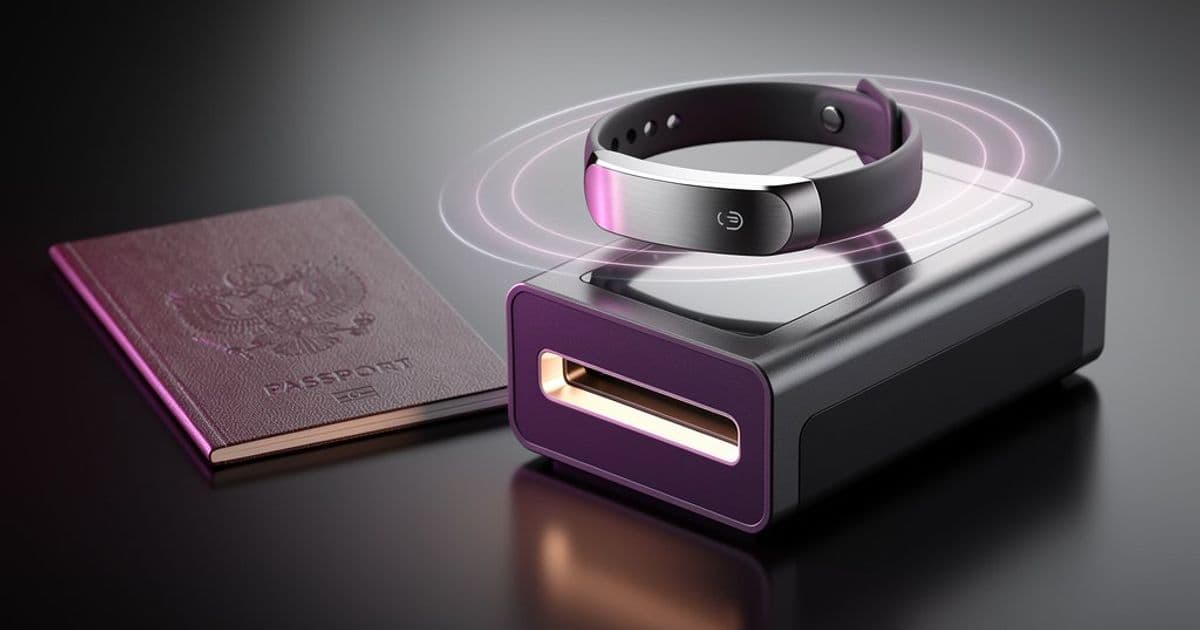
A traveler's persistent eGate failures at Heathrow Airport reveal how NFC wearables interfere with passport scanners due to signal collision, highlighting unexpected vulnerabilities in border technology.
For frequent travelers, electronic passport gates promise streamlined border crossings. But when Terence Eden repeatedly encountered rejection at Heathrow Airport's eGates while returning to the UK, it sparked a technological detective story. His passport worked flawlessly worldwide and even passed manual inspection by border agents, yet Heathrow's automated system consistently failed—but only at this specific airport.
Eden's breakthrough came after observing a pattern: When holding his passport down with his left hand (bearing a wedding ring), the eGate processed it successfully. When using his right hand (with an NFC-enabled smart ring), the system rejected it after three attempts. This pointed to radio frequency interference between his wearable tech and the passport's embedded NFC chip.
NFC (Near Field Communication) technology enables contactless data exchange at short ranges. Modern biometric passports contain NFC chips that transmit encrypted identity data to readers. Eden's NFC ring, designed for tasks like contactless payments or smart home triggers, unintentionally responded to the eGate's scan request alongside his passport. Heathrow's system interprets multiple responses as an error condition—likely a deliberate security measure to prevent travelers from scanning multiple passports simultaneously.
This phenomenon, known as "card clash," occurs when multiple NFC devices respond to a single reader. While common in payment systems (where wallets might contain several contactless cards), it's rarely considered in border control contexts. Eden confirmed the issue wasn't passport-specific: "I can read my passport's NFC chip on Linux without issues," he noted, confirming his passport was fully functional.
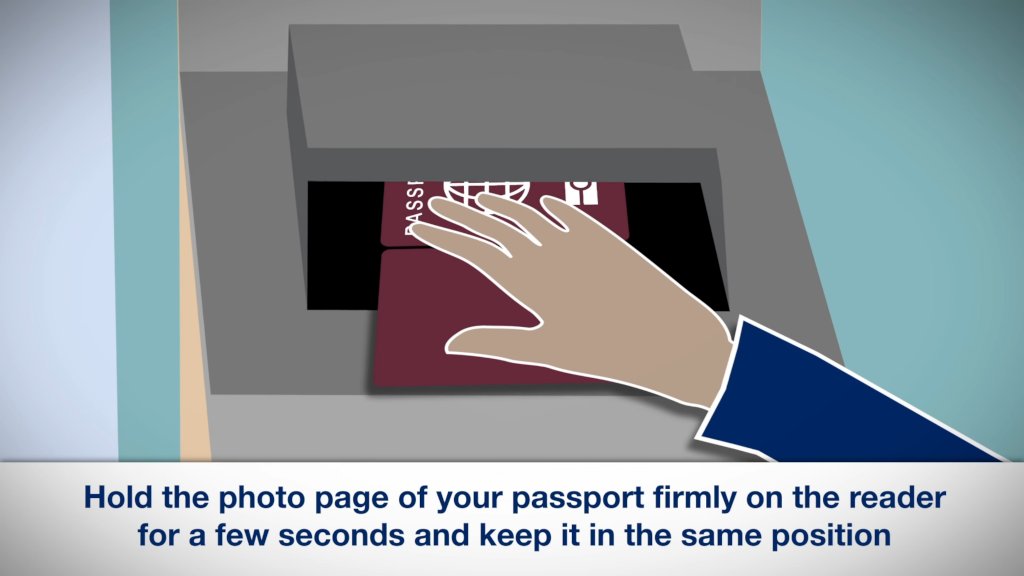
Heathrow's eGates differ from many international counterparts by requiring travelers to physically hold passports against readers rather than using motorized mechanisms that pull documents into shielded slots. This design leaves room for external NFC devices to interfere. Airports like Schiphol or Changi use internalized scanning that minimizes external signal interference.
Security experts acknowledge the trade-off: While rejecting multiple signals prevents passport fraud attempts, it creates false positives for tech-equipped travelers. "The system's intolerance for extra signals is understandable from a security perspective," explains Dr. Emily Tran, a border technology researcher. "But it highlights how personal tech ecosystems increasingly interact with infrastructure in unanticipated ways."
For travelers, the solution involves simple awareness: Remove NFC wearables from the scanning hand when using eGates. For system designers, it underscores the need for better error differentiation between multiple devices and faulty credentials. Eden's experience demonstrates how proliferating personal technology creates novel edge cases for public infrastructure—a challenge that will only grow as implantables and wearables become more common.
Read Eden's original account on his personal blog. For technical details on NFC standards, see the NFC Forum specifications. UK border procedures are documented on the government's official portal.
Comments
Please log in or register to join the discussion