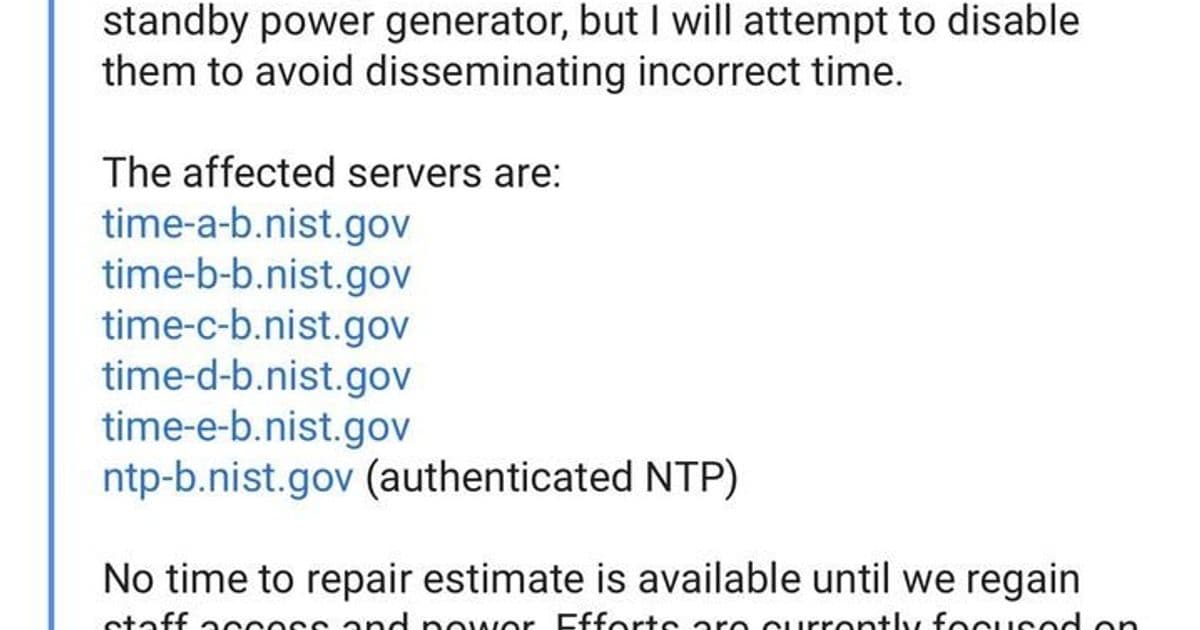
The atomic ensemble time scale at NIST's Boulder laboratory has failed, jeopardizing foundational timekeeping services essential for global technology systems. This unprecedented outage threatens financial networks, telecommunications, and cybersecurity protocols reliant on nanosecond precision.
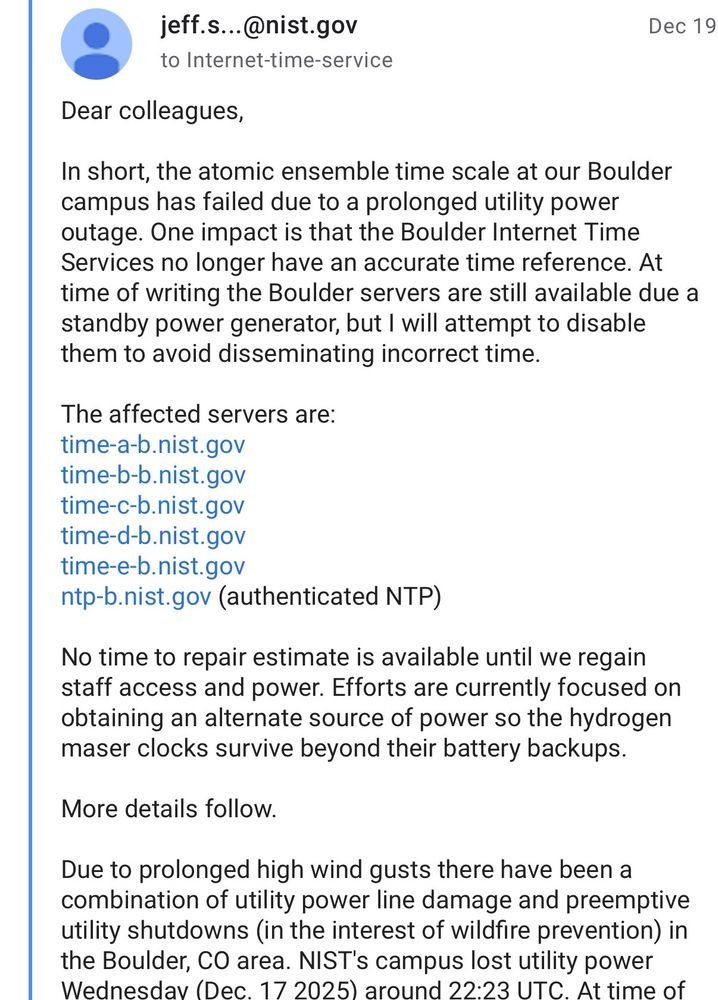
A critical failure has struck the atomic ensemble time scale at the National Institute of Standards and Technology (NIST) facility in Boulder, Colorado, according to reports verified by journalist Steve Herman on Bluesky. This system—a coordinated array of cesium fountain atomic clocks—serves as the primary source for Coordinated Universal Time (UTC) in the United States, providing the heartbeat for digital infrastructure worldwide.
Why Atomic Timekeeping Matters
Atomic clocks like those at NIST Boulder underpin modern technology:
- Financial Systems: Stock exchanges timestamp transactions with nanosecond precision to prevent market manipulation.
- Telecommunications: 5G networks and fiber optics rely on synchronization for data routing.
- Cybersecurity: Encryption protocols and certificate validity depend on accurate time synchronization.
- Scientific Research: Particle physics experiments and space navigation require extreme time fidelity.
The ensemble approach averages multiple atomic clocks to mitigate individual failures, making this system-wide collapse particularly alarming.
Cascading Risks
While NIST hasn't released technical details, experts speculate potential causes:
- Environmental Disruptions: Power surges or seismic activity affecting cesium fountain stability
- Synchronization Algorithm Failure: Software glitches in the time-averaging system
- Hardware Degradation: Atomic clocks require meticulous calibration; component wear could trigger chain reactions
Immediate impacts include degraded GPS precision and potential timestamp mismatches in distributed systems. Financial regulators are reportedly activating contingency plans.
The Bigger Picture
This incident exposes the fragility of centralized time infrastructure. While NIST operates secondary systems in Maryland, Boulder's ensemble handles peak load. The outage fuels discussions about:
- Decentralized time networks using blockchain or quantum clocks
- Mandatory failover protocols for critical infrastructure operators
- Increased investment in optical lattice clocks resistant to environmental fluctuations
As engineers work to restore service, developers are advised to audit systems relying on NTP (Network Time Protocol) and implement multi-source time synchronization immediately.
Source: Steve Herman via Bluesky (@newsguy.bsky.social)
Comments
Please log in or register to join the discussion