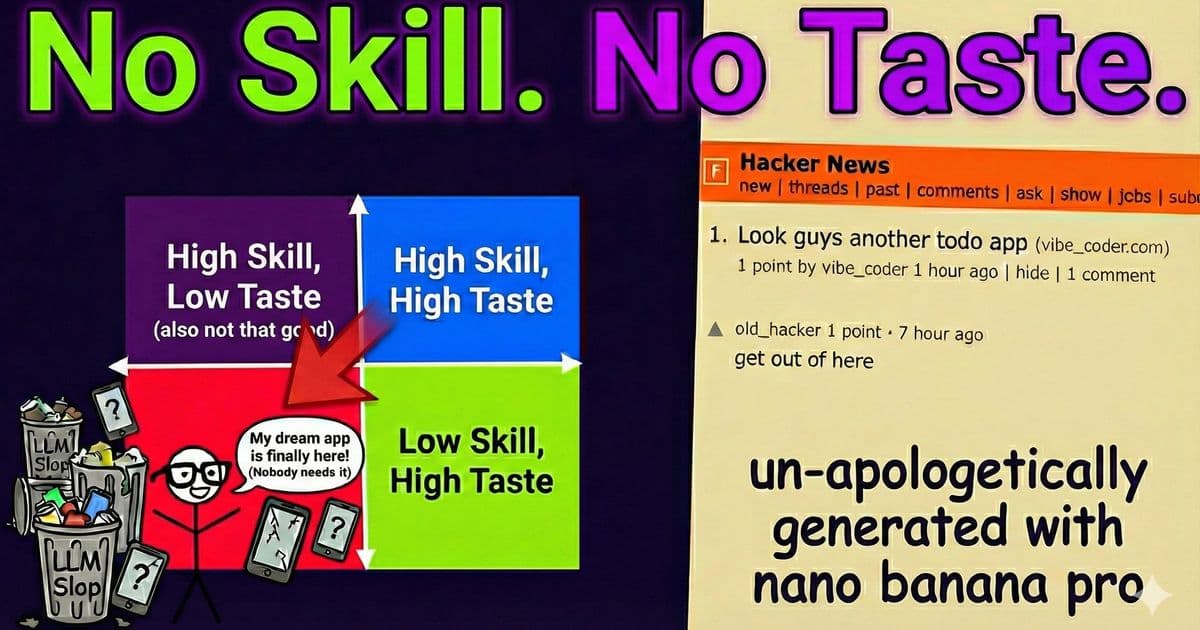
A veteran developer argues that while LLMs lower technical barriers, they expose the enduring importance of taste in software creation – and why its absence creates industry noise.
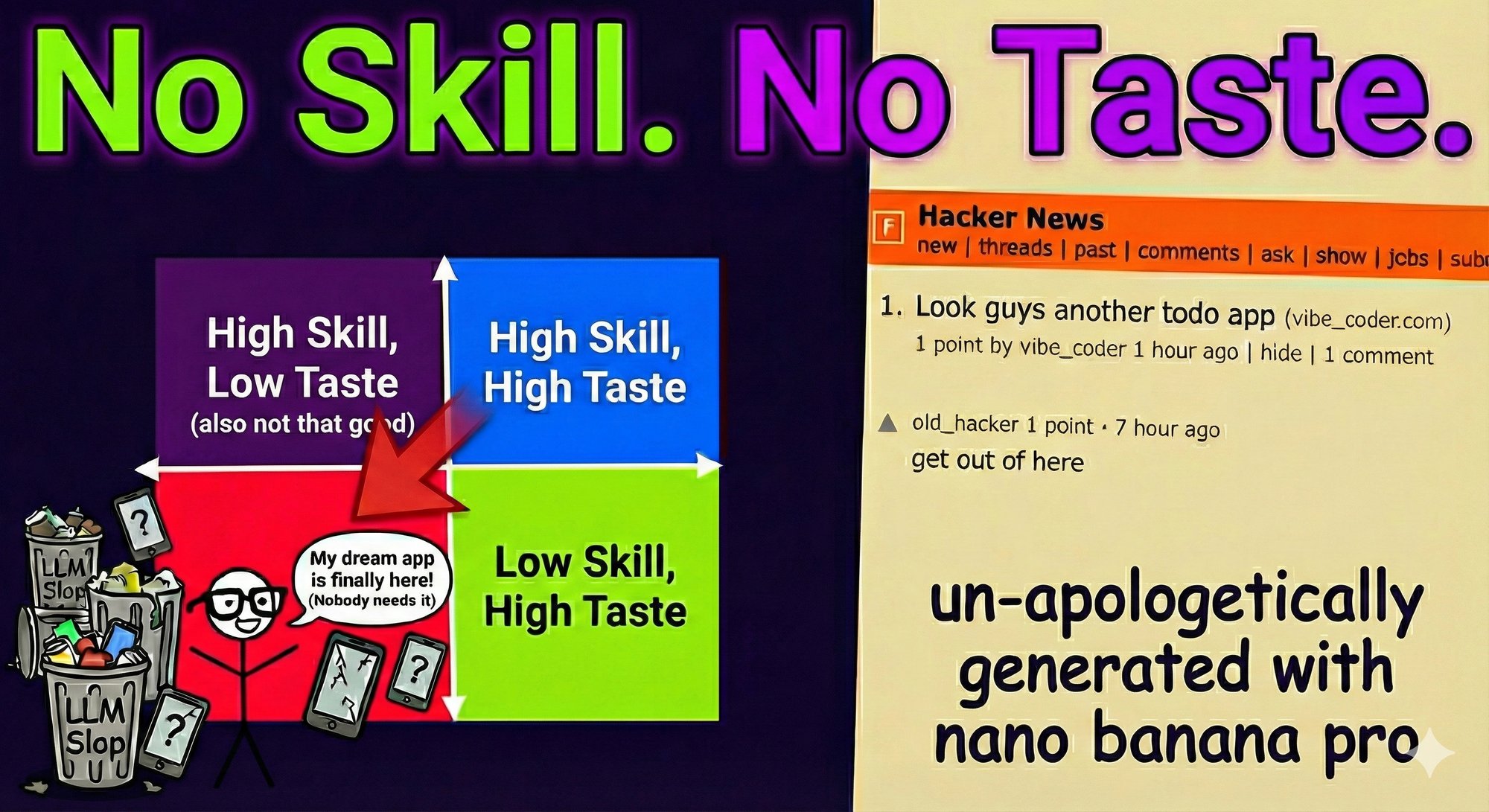
For two decades, I've navigated the evolution of software development – from distributed systems to search algorithms. Today, as large language models (LLMs) flood the ecosystem with new applications, I'm witnessing a troubling illusion: the false belief that technical skill alone suffices for meaningful creation. The real barrier was never just technical proficiency; it's taste. And LLMs are mercilessly exposing who lacks it.
Consider Hacker News' "Show HN" section. Historically, it served as a taste barometer where technically simple but novel ideas could thrive. An application that self-destructed if unused for 24 hours might gain traction because its premise resonated emotionally. The platform's voting mechanism inherently rewarded taste – the ability to identify what resonates with human needs or curiosity.
LLMs disrupt this equilibrium. They enable creators to bypass technical learning curves, generating functional code with minimal skill. But this accessibility has a dark side: it unleashes floods of derivative applications that solve no real problem. We're seeing endless variations of saturated concepts – yet another chat interface, a slightly tweaked productivity tool, or a thinly veiled clone of existing services. These creations occupy the bleakest quadrant: no technical skill (replaced by AI generation) and no discernible taste.
Why does this matter? Because taste is the invisible architecture of innovation. It's the understanding of what deserves to exist – what fulfills an unmet need or delivers delight. Skill executes vision; taste defines it. LLMs haven't eliminated this filter; they've intensified it. When anyone can build, differentiation shifts entirely to the quality of the underlying idea.
Take OpenClaw as a counterexample. Technically, it had significant flaws – yet its core concept was so compelling that users overlooked its shortcomings. Its taste quotient outweighed its technical debt. This demonstrates an enduring truth: humans forgive imperfect execution for exceptional vision.
The current surge of low-taste output resembles crypto's gold rush mentality – a belief that easy tools guarantee success. But history shows otherwise. As the noise increases, platforms and users will develop stronger filters. Creators relying solely on LLMs without cultivating taste face inevitable disappointment. This isn't elitism; it's market reality.
For newcomers, the path forward is clear: use LLMs as collaborators, not substitutes. Study why certain applications resonate. Analyze failures. Understand that taste develops through exposure, iteration, and empathy – not prompt engineering. The true barrier was never typing code; it's knowing what code deserves to be written. LLMs didn't lower that barrier; they lit it on fire.
So build your dream application. But first, ask: who dreams of using it?
Comments
Please log in or register to join the discussion