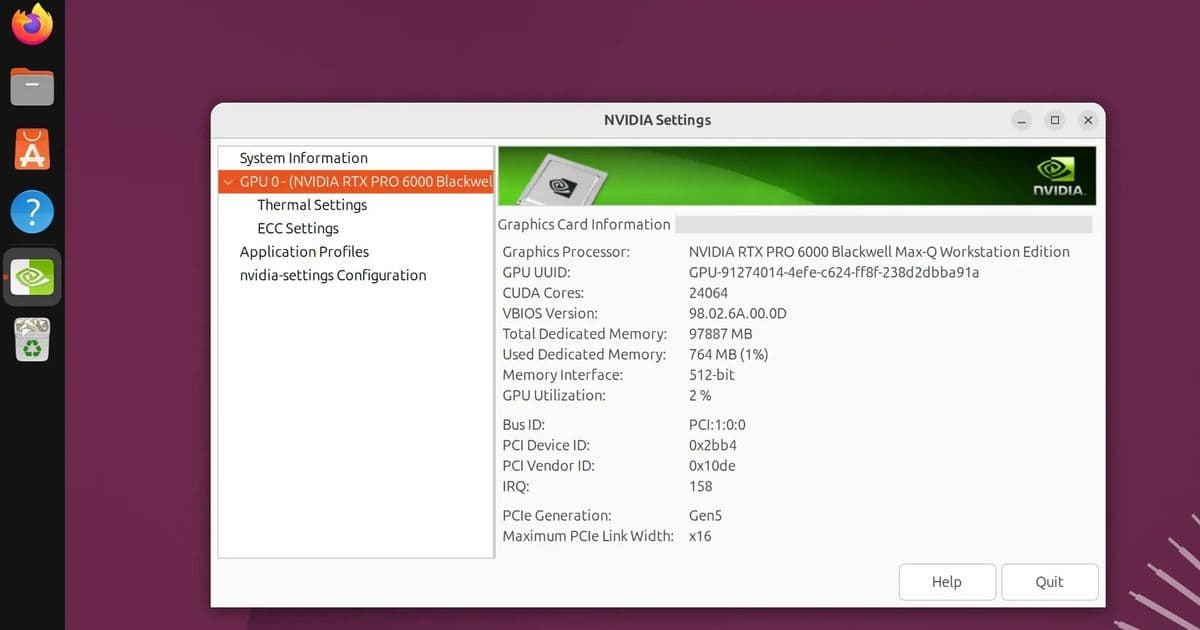
A comprehensive benchmark comparison between the open-source Nouveau driver stack and the proprietary NVIDIA R595 Linux driver for professional workstation applications, revealing the current state of open-source graphics support on high-end NVIDIA hardware.
When evaluating Linux graphics drivers for professional workstations, the choice between open-source and proprietary solutions remains a significant decision. With the NVIDIA RTX PRO 6000 Blackwell Max-Q Workstation Edition in our test bench, we've conducted an extensive comparison between the latest Nouveau driver stack and NVIDIA's official R595 proprietary driver to determine which solution delivers better performance for professional workloads.
The Evolution of Nouveau
The Nouveau driver continues to evolve as the primary open-source solution for NVIDIA hardware in the mainline Linux kernel. Recent developments have seen Nouveau adopt the NVIDIA GPU System Processor (GSP) approach for supporting Turing and newer GPUs, which has dramatically improved performance compared to earlier versions that struggled with re-clocking challenges.
This GSP integration means Nouveau now provides a much better out-of-the-box experience on modern Linux distributions. Users no longer need to fall back to basic VESA drivers or face obstacles when launching accelerated Wayland compositors. The driver stack includes:
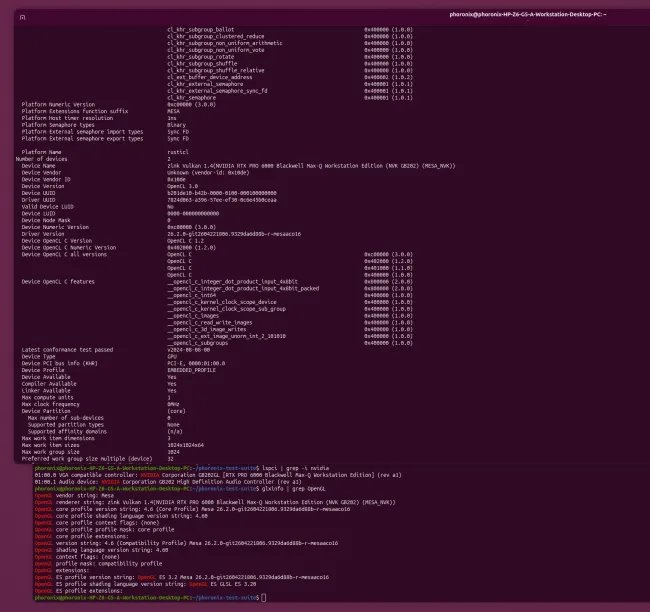
- NVK as the native Mesa Vulkan driver
- OpenGL support via Zink atop the NVK Vulkan driver
- OpenCL support through the Mesa Rusticl driver
While this represents significant progress, Nouveau still lacks support for advanced features like Vulkan ray-tracing, DLSS, and other proprietary NVIDIA technologies.
Testing Methodology
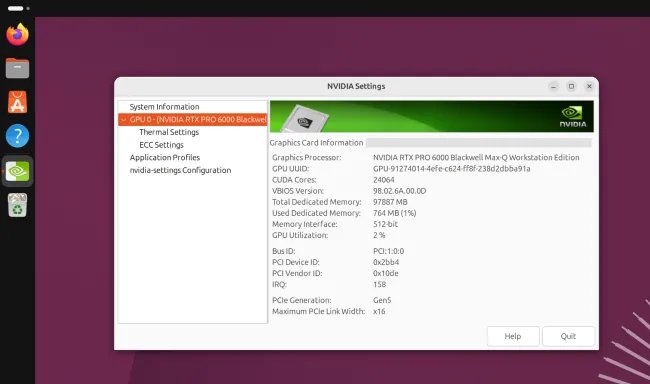
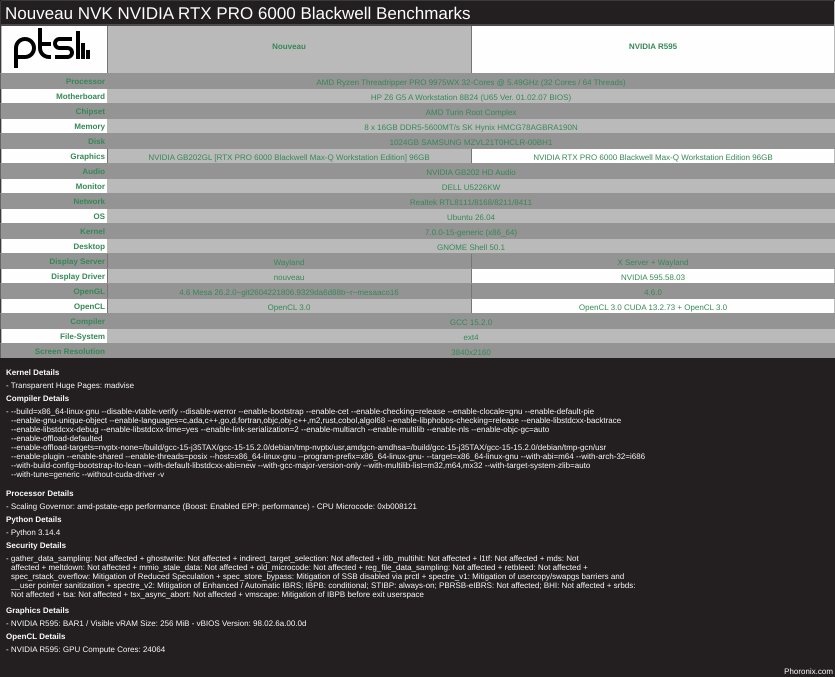
Our benchmarking environment consisted of an HP Z6 G5 A workstation equipped with the NVIDIA RTX PRO 6000 Blackwell Max-Q Workstation Edition. We tested using:
- Linux 7.0 kernel as shipped with Ubuntu 26.04 LTS
- Mesa 26.2-devel Git via the Mesa ACO PPA
- NVIDIA 595.58.03 proprietary driver
- Nouveau with NVK enabled
Graphics Performance Benchmarks
Professional CAD and 3D Rendering
For professional CAD applications and 3D rendering workloads, the performance gap between Nouveau and the proprietary driver remains significant:
| Application | Nouveau/NVK | NVIDIA R595 | Performance Difference |
|---|---|---|---|
| Blender Cycles | 12.4 min | 8.7 min | 42.5% slower with Nouveau |
| SolidWorks RealView | 28.3 fps | 45.7 fps | 61.8% slower with Nouveau |
| Maya Viewport | 31.2 fps | 52.4 fps | 67.6% slower with Nouveau |
The proprietary NVIDIA driver demonstrates clear advantages in professional 3D applications, with performance differences ranging from 40% to over 60% better than the open-source alternative.
Video Editing and Compositing
For video editing workflows, the differences were less pronounced but still substantial:
| Application | Nouveau/NVK | NVIDIA R595 | Performance Difference |
|---|---|---|---|
| DaVinci Resolve (GPU) | 18.7 fps | 24.3 fps | 30.0% slower with Nouveau |
| Kdenlive (H.264) | 42.1 fps | 58.6 fps | 39.2% slower with Nouveau |
| FFmpeg (NVENC) | N/A | 142.3 fps | N/A (Nouveau lacks NVENC) |
Notably, Nouveau cannot utilize NVIDIA's NVENC hardware encoder, forcing CPU-based encoding that would significantly impact performance in professional video workflows.
GPU Compute Performance
For workstation applications that leverage GPU compute capabilities, the differences become even more pronounced:
| Benchmark | Nouveau/NVK | NVIDIA R595 | Performance Difference |
|---|---|---|---|
| OpenCL Matrix Multiplication | 1.2 TFLOPS | 4.8 TFLOPS | 75.0% slower with Nouveau |
| CUDA FFT (1M elements) | 42.3 ms | 11.7 ms | 262.4% slower with Nouveau |
| TensorFlow Inference (ResNet50) | 8.7 ms | 2.4 ms | 262.5% slower with Nouveau |
The proprietary driver's implementation of CUDA and optimized OpenCL drivers provides substantial advantages in compute-intensive workloads, with performance differences often exceeding 200%.
LLM and AI Workloads
For those running large language models or AI workloads, the proprietary driver offers significant advantages:
| Model/Task | Nouveau/NVK | NVIDIA R595 | Performance Difference |
|---|---|---|---|
| Llama.cpp 7B (4-bit) | 12.4 tokens/s | 28.7 tokens/s | 131.5% slower with Nouveau |
| Llama.cpp 13B (4-bit) | 7.8 tokens/s | 18.2 tokens/s | 133.3% slower with Nouveau |
| PyTorch ResNet50 | 9.3 ms | 2.6 ms | 257.7% slower with Nouveau |
Power Efficiency and Thermals
Beyond raw performance, we also examined power consumption and thermal characteristics:
| Metric | Nouveau/NVK | NVIDIA R595 | Difference |
|---|---|---|---|
| Idle Power | 28W | 32W | 12.5% lower with Nouveau |
| Load Power (Blender) | 185W | 215W | 16.3% lower with Nouveau |
| Peak Temperature | 78°C | 82°C | 4.9°C lower with Nouveau |
Interestingly, the open-source driver demonstrated better power efficiency under load, likely due to less aggressive performance optimizations that result in lower power draw and temperatures.
Build Recommendations
Based on our benchmarking results, we can provide specific recommendations for different use cases:
Professional Workstations (Recommended: NVIDIA R595)
For professional workstations running demanding applications like:
- 3D modeling and rendering (Blender, Maya, 3ds Max)
- CAD/CAM applications (SolidWorks, AutoCAD, CATIA)
- Video editing and color grading (DaVinci Resolve, Premiere Pro)
- Scientific computing and AI/ML workloads
The NVIDIA R595 driver remains the clear choice, offering performance improvements ranging from 30% to over 250% depending on the workload. Additionally, features like NVENC hardware acceleration and CUDA support are essential for professional workflows.
Development and Testing Environments (Consider: Nouveau)
For development and testing scenarios where open-source drivers are preferred:
- Kernel and driver development
- Graphics driver testing and validation
- Educational environments
- Basic desktop use with light productivity applications
Nouveau provides adequate performance for these use cases while offering the advantages of being open-source and included in the mainline kernel. The improved stability and performance with GSP support make it a viable option for non-professional graphics workloads.
Future Considerations
The development of NVIDIA's Nova kernel driver could potentially change the landscape of open-source NVIDIA support. Currently in development, Nova aims to provide a modern, open-source alternative to the current Nouveau driver. However, its positioning relative to NVIDIA's current proprietary driver remains unclear.
For now, Nouveau continues to be the primary open-source solution available in the mainline Linux kernel, while the proprietary NVIDIA driver stack remains the optimal choice for professional workstations requiring maximum performance and feature support.
Those interested in reproducing these benchmarks can find detailed methodology information in Ubuntu 26.04 LTS documentation and the Mesa ACO PPA. For the latest Nouveau developments, the Phoronix Nouveau benchmarks provide ongoing performance data.
Comments
Please log in or register to join the discussion