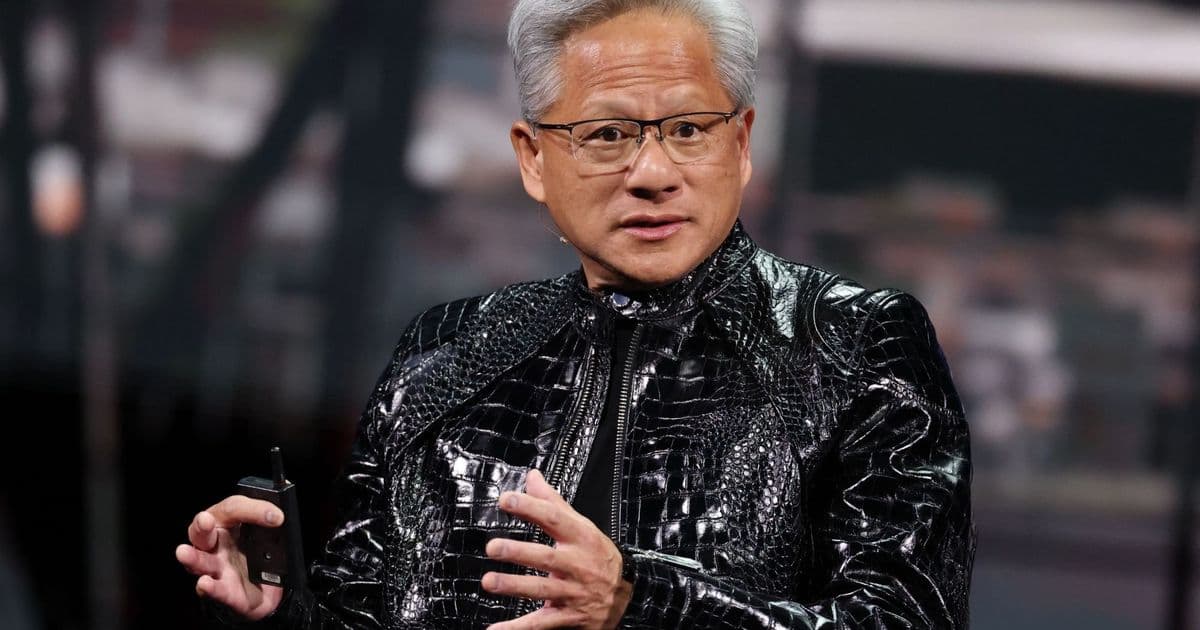
Jensen Huang acknowledges gamer concerns about DLSS 5 while defending its role as an artistic tool, clarifying it's neither post-processing nor general AI but 'content-controlled generative AI' integrated with developer workflows.
Nvidia CEO Jensen Huang is walking back some of his earlier comments about DLSS 5 after facing significant backlash from the gaming community. During a recent appearance on the Lex Fridman podcast, Huang struck a more conciliatory tone while still defending the technology's role in game development.
Backtracking on "Completely Wrong" Comments
Following his controversial statements at GTC 2026 where he told gamers they were "completely wrong" about their DLSS 5 criticisms, Huang now says he's "empathetic" to the concerns. The gaming community had labeled DLSS 5 as "AI slop," expressing worries about the technology fundamentally altering game visuals without player control.
"I think that they got the impression that the games are going to come out the way the games are... and then we're going to post-process it," Huang explained. "That's not what DLSS is intended to do."
Clarifying DLSS 5's Technical Nature
Huang attempted to clarify what DLSS 5 actually is, positioning it between two extremes. "It isn't a general-purpose generative AI model," he stated, describing it instead as "content-controlled generative AI." He also pushed back against characterizing it as a post-processing filter.
"The technical details of DLSS 5 live somewhere between that space," Huang admitted, acknowledging that the full technical explanation won't be available until the feature's release later this year.
Future Vision: Prompt-Based Game Enhancement
Looking ahead, Huang painted a picture of DLSS's potential evolution. "In the future, you could even prompt it," he suggested. "I want it to be a toon shader. I want it to look like this, kind of. You could even give it an example and it would generate in the style of that, all consistent with the artistry, the style, the intent of the artist."
This vision positions DLSS as a tool that puts generative AI capabilities directly in artists' hands rather than replacing their work. "All of that is done for the artist so they can create something that is more beautiful but still in the style that they want," Huang emphasized.
DLSS as an Integrated Development Tool
Huang stressed that DLSS is "integrated" with the artist rather than being an afterthought. He drew parallels to other rendering technologies that have become standard in game development, like skin shaders with sub-surface scattering that make characters look more realistic.
"[DLSS 5] is just one more tool," Huang said. "They can decide what to use."
Current DLSS Limitations
Despite Huang's optimistic framing, the current reality of DLSS implementation differs from his vision. To date, DLSS hasn't been a tool developers interact with extensively. It operates late in the rendering chain and is largely governed by Nvidia's models and presets rather than developer customization.
AI in Gaming: A Broader Trend
Huang's comments come as generative AI increasingly appears in shipping games. Recent examples include Clair Obscur: Expedition 33 and the newly launched Crimson Desert, both of which incorporate AI-driven visual enhancements.
Gaming's Most Influential Title
In a lighter moment during the interview, Huang immediately pivoted after discussing DLSS 5 to declare 1993's Doom as "the most influential video game ever made," showcasing his deep connection to gaming history despite the current controversy.
Market Context
The DLSS 5 debate occurs against the backdrop of Nvidia's dominant position in gaming hardware and AI acceleration. With the company's market capitalization exceeding $4 trillion, its technologies increasingly shape both gaming and AI development landscapes.
Industry Implications
The controversy highlights growing tensions between technological advancement and gamer expectations. As AI becomes more sophisticated and integrated into creative workflows, companies like Nvidia must navigate between pushing innovation and maintaining trust with their core gaming audience.
The DLSS 5 discussion also reflects broader questions about AI's role in creative industries. While Huang frames it as empowering artists, skeptics worry about AI fundamentally changing how games look and feel without adequate transparency or control.
As DLSS 5 approaches its release window, the gaming community will be watching closely to see whether it delivers on Huang's promises of artistic integration or confirms critics' fears about AI-driven visual homogenization.
Comments
Please log in or register to join the discussion