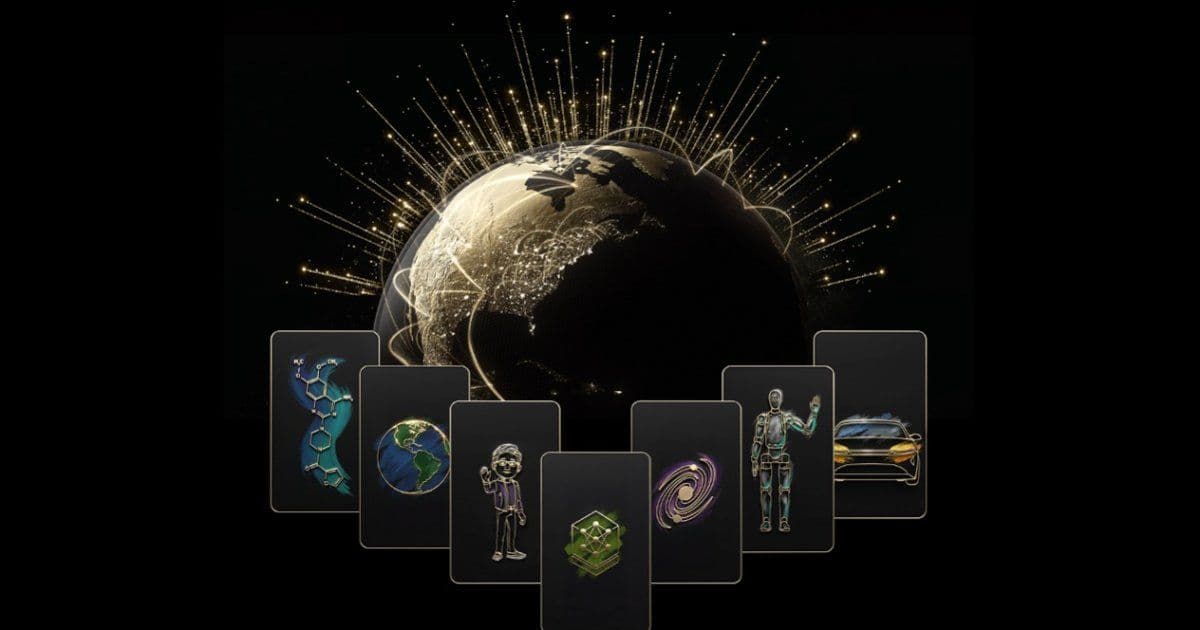
NVIDIA released major updates to its open-source ecosystem, introducing new foundation models across agentic AI, robotics, autonomous driving, and healthcare domains, alongside datasets and deployment tooling.
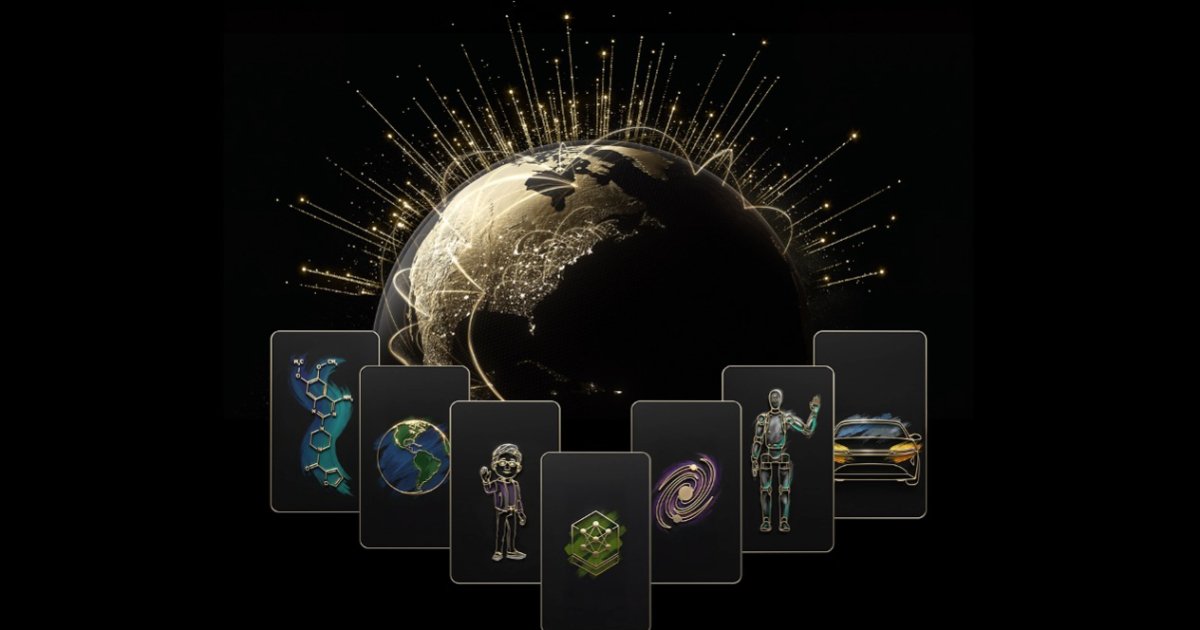
NVIDIA has significantly expanded its open-source ecosystem with new foundation models, datasets, and development tools spanning agentic AI, robotics, autonomous driving, and biomedical research. Unlike traditional proprietary approaches, this release provides comprehensive resources under open licenses, accessible via GitHub, Hugging Face, and NVIDIA's developer platforms, signaling a strategic shift toward democratizing complex AI workloads.
Core Service Updates
Agentic AI Enhancements The Nemotron family now includes three specialized components:
- Nemotron Speech: Low-latency ASR models for real-time transcription (GitHub)
- Nemotron RAG: Vision-language models for multimodal document retrieval with embedding/reranking capabilities
- Nemotron Safety: Content filtering models for PII detection Accompanying datasets and training code enable customization against public benchmarks, addressing gaps in reproducible RAG pipelines.
Robotics & Physical AI New Cosmos foundation models enable synthetic environment simulation:
- Cosmos Reason 2: Multimodal reasoning for scene understanding
- Cosmos Transfer 2.5/Predict 2.5: Synthetic video generation for data augmentation Built atop this stack, Isaac GR00T N1.6 (GitHub) provides open vision-language-action capabilities for humanoid robots, integrating full-body control with visual perception.
Autonomous Driving The Alpamayo model family combines perception, planning, and explainability in a vision-language-action architecture. Paired with AlpaSim (GitHub)—an open-source simulation framework for closed-loop evaluation—it supports safety-critical validation. NVIDIA's Xinzhou Wu emphasized multi-year development involving real-world testing and partnerships with automakers like Mercedes-Benz.
Biomedical Research New NVIDIA Clara models include:
- La-Proteina for atomic-scale protein design
- ReaSyn v2 for drug synthesis optimization
- A 455,000-entry synthetic protein dataset These enable accelerated research in computational biology.
Architectural Use Cases
These tools enable novel integration patterns:
- Hybrid Simulation Pipelines: Combine Cosmos-generated synthetic data with real-world robotics testing using Isaac GR00T, reducing physical prototyping costs.
- Safety-Critical Stacks: Layer Nemotron Safety with Alpamayo's explainability features for auditable autonomous systems.
- Edge-to-Cloud Inference: Deploy models as NIM microservices across NVIDIA-accelerated infrastructure, from embedded systems to cloud clusters.
Trade-offs and Considerations
While lowering entry barriers, architects should note:
- Computational Costs: Models like Cosmos Predict require substantial GPU resources for synthetic data generation.
- Integration Complexity: Combining multiple foundation models (e.g., RAG + Safety) demands careful latency management.
- Real-World Validation: Despite AlpaSim's advances, physical testing remains essential for safety certification.
NVIDIA mitigates these through optimized NIM packaging and published reference architectures. All resources are available under permissive licenses, encouraging community-driven refinement rather than vendor lock-in.
Conclusion
This expansion positions NVIDIA as an infrastructure provider for next-generation intelligent systems. By open-sourcing foundational components while maintaining hardware acceleration moats, they enable broader innovation in domains where simulation, safety, and real-time performance converge. The true impact lies in how developers compose these blocks—whether creating industrial cobots using Isaac GR00T or biomedical discovery pipelines with Clara.
 Robert Krzaczyński is a software engineer focused on AI applications in healthcare. He holds advanced degrees in Control Engineering and Computer Science.
Comments
Please log in or register to join the discussion