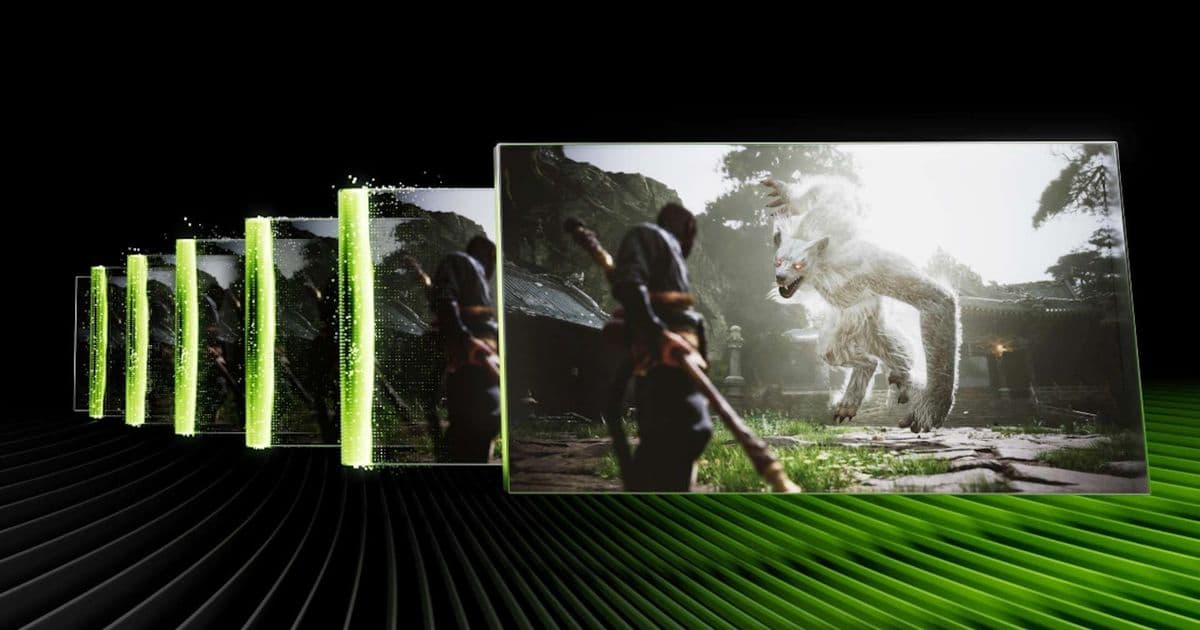
Nvidia's Dynamic Multi Frame Generation technology with 5x and 6x multipliers launches March 31 for RTX 50-series GPUs, offering adaptive frame rate scaling for high-refresh-rate gaming.
Nvidia is bringing its Dynamic Multi Frame Generation (MFG) technology to RTX 50-series GPUs on March 31, marking a significant advancement in frame generation capabilities that will allow gamers to push their high-refresh-rate monitors to their absolute limits.
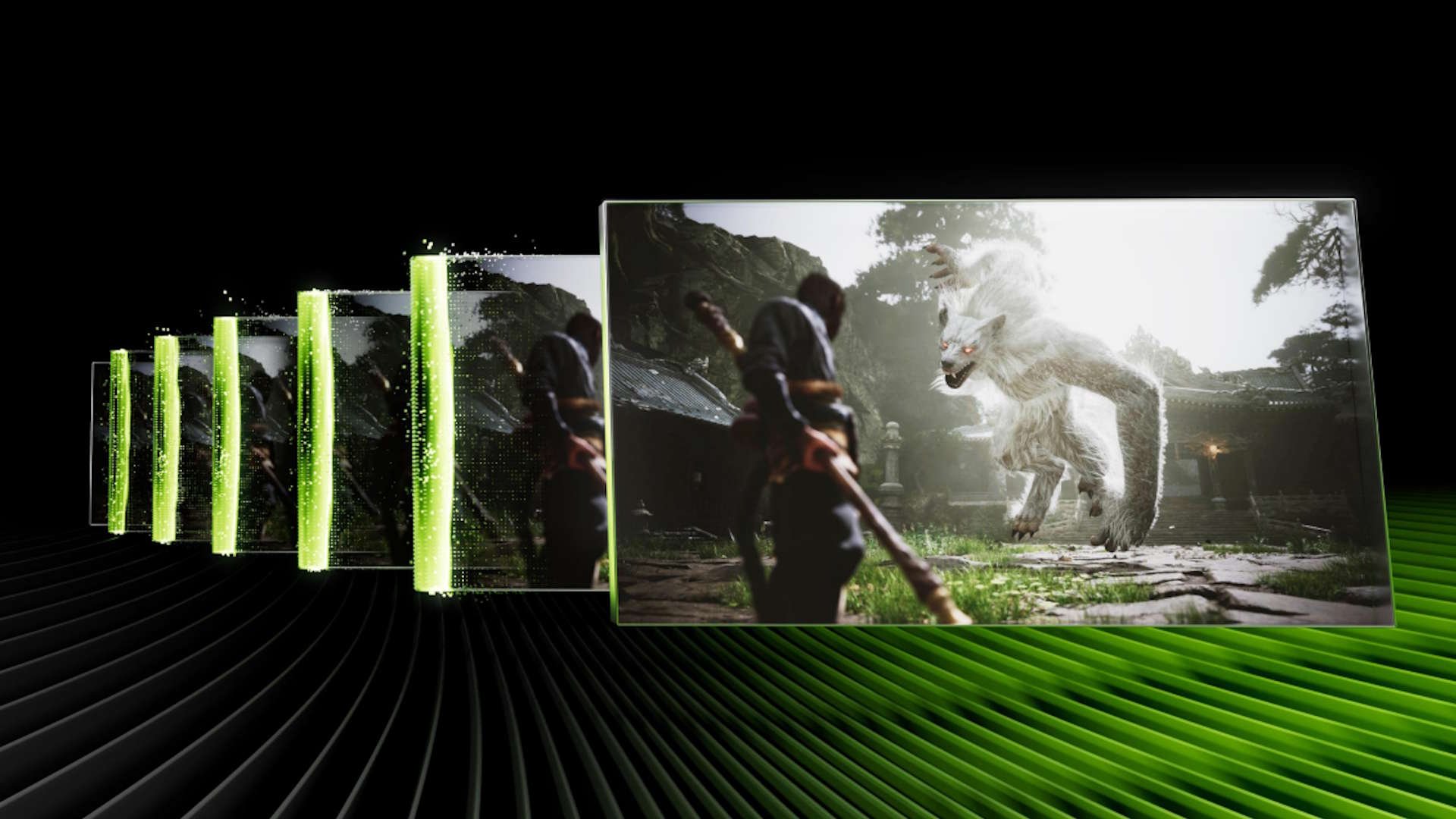
Unlike the current MFG implementation that offers only a constant frame rate multiplier, Dynamic MFG can shift gears on the fly to maintain target frame rates. This adaptive approach means the technology can dynamically adjust between different multiplication factors based on real-time performance demands, rather than being locked to a single multiplier.
The addition of 5x and 6x modes represents a substantial leap forward. While traditional MFG might offer 2x or 3x frame generation, these new multipliers will enable RTX 50-series owners to achieve frame rates that were previously unattainable without significantly more powerful hardware. For gamers with 240Hz or 360Hz monitors, this technology could mean the difference between hitting 120fps consistently versus pushing toward the monitor's maximum refresh rate.
This announcement comes during the Game Developers Conference (GDC), where Nvidia is focusing on software performance enhancements rather than new hardware releases. The timing is particularly noteworthy given the current AI-driven hardware supply constraints that have delayed both mid-cycle and next-generation gaming hardware across the industry.
Dynamic MFG arrives alongside DLSS 4.5, which Nvidia says provides noticeably better image quality than previous implementations even at relatively low input resolutions. The combination of these technologies gives RTX 50-series owners a powerful toolkit for achieving smooth gaming experiences, though it's worth noting that MFG remains a Blackwell-exclusive feature while DLSS 4.5 works across both RTX 40-series and 50-series GPUs.
However, the technology isn't without tradeoffs. Multi Frame Generation inherently introduces input latency, as the system must generate frames that weren't directly rendered from user input. This is why many competitive gamers have been hesitant to embrace frame generation technologies, despite their performance benefits.
Interestingly, Nvidia's announcement makes no mention of Reflex 2 with Frame Warp, a latency-reduction technology that has been in "Coming Soon" status since the Blackwell GPU launch over a year ago. When asked about the technology during pre-briefing discussions, Nvidia simply said to "stay tuned," suggesting that latency-conscious gamers may need to wait longer for solutions to the input lag introduced by MFG.
The Dynamic MFG announcement is part of a broader showcase of Nvidia's gaming and AI technologies at GDC. The company highlighted several upcoming titles that will feature demanding rendering techniques, including Control Resonant and 007: First Light with path-traced effects, joining recently launched Resident Evil Requiem and the upcoming Pragmata.
Nvidia is also extending its RTX Mega Geometry technology to help CD Projekt Red create richer forested vistas in The Witcher IV. This enhanced version allows for selective updates of ray-tracing data structures and supports finer-grained opacity micromaps, enabling real-time ray tracing of complex scenes like entire forests. The technology works best on Blackwell architecture thanks to optimizations in the fourth-generation RT Cores.
For AI enthusiasts, Nvidia announced improvements to ComfyUI, the most popular tool for locally generating AI assets. The company has worked with ComfyUI to introduce a new, more user-friendly "app view" interface that should make the node-based approach less intimidating for newcomers. Additionally, Nvidia has improved resource utilization in some workflows through better quantizations of models like LTX-2, allowing creators to iterate more quickly on generative content across a broader range of hardware.
These software enhancements arrive at a crucial time when the AI chip crunch continues to affect hardware availability. With new GPUs still scarce and existing hardware supply constrained, getting more performance out of current-generation cards through software optimizations becomes increasingly valuable.
For RTX 50-series owners, March 31 can't come soon enough. The combination of Dynamic MFG's adaptive frame generation, DLSS 4.5's improved image quality, and the growing library of games optimized for these technologies offers compelling reasons to stay on the cutting edge, even as the industry waits for the next wave of hardware innovations to materialize.
Comments
Please log in or register to join the discussion