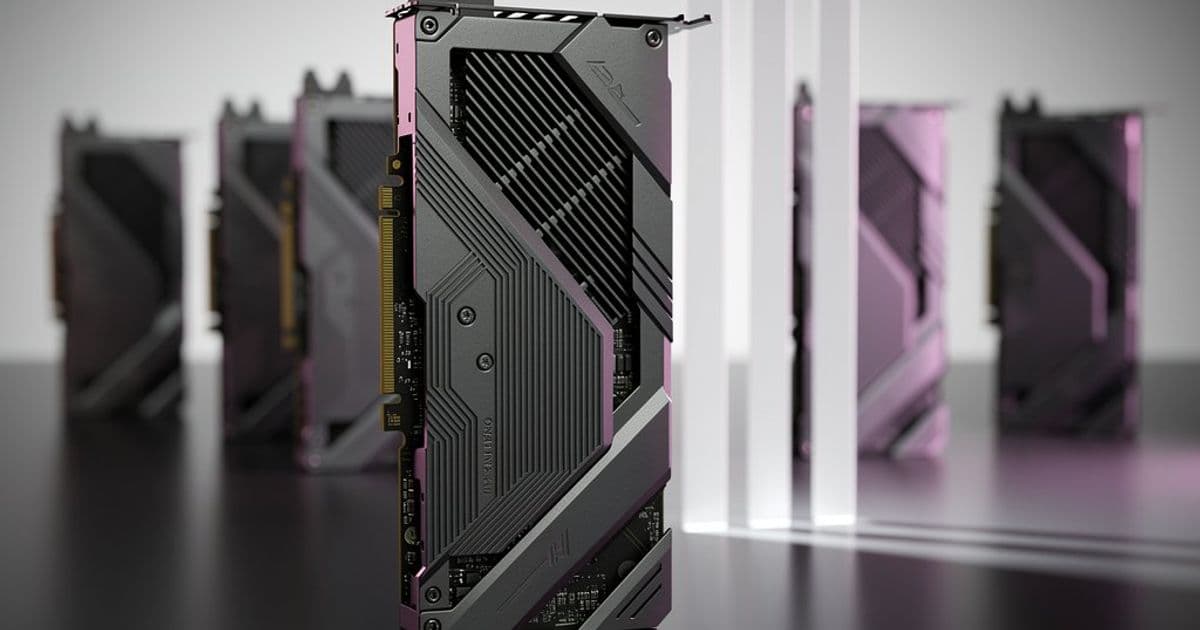
Suppliers of components for Nvidia's H200 AI chips have paused production after Chinese customs officials blocked shipments of the processors, creating uncertainty about whether Beijing will allow imports of these advanced AI accelerators. The move highlights growing geopolitical tensions in the semiconductor supply chain and could impact global AI development timelines.
The global AI hardware supply chain has hit a significant snag. According to sources familiar with the matter, Chinese customs officials have blocked shipments of Nvidia's H200 AI processors, prompting suppliers of parts for these chips to halt production. The uncertainty stems from concerns about whether Beijing will ultimately permit imports of these advanced AI accelerators, which represent some of the most powerful chips available for training and running large language models.
The H200 represents Nvidia's flagship AI processor, featuring enhanced memory bandwidth and capacity compared to its predecessor, the H100. Built on the Hopper architecture, the H200 includes 141GB of HBM3e memory running at 4.8 TB/s, making it particularly valuable for training massive AI models and running inference workloads at scale. Major cloud providers and AI research labs have been eagerly awaiting shipments to expand their computational capacity.
The production pause creates a ripple effect through the semiconductor ecosystem. Component suppliers, who invest heavily in specialized manufacturing equipment and processes for Nvidia's chips, face inventory and cash flow challenges when production halts unexpectedly. These suppliers often operate on thin margins and rely on predictable order volumes to maintain their operations. The uncertainty about future shipments makes it difficult for them to plan capacity or commit to other customers.
This development reflects the broader pattern of technology becoming entangled in geopolitical tensions. The United States has implemented export controls restricting China's access to advanced semiconductors, particularly those with AI capabilities. These controls aim to prevent China from developing military applications or surpassing Western technological capabilities. However, they also create complex compliance challenges for companies operating globally.
Chinese customs officials blocking shipments represents a potential escalation in this ongoing trade dispute. Rather than simply complying with US export restrictions, Chinese authorities appear to be taking proactive measures to control the flow of advanced technology into the country. This could be part of a broader strategy to encourage domestic semiconductor production or to negotiate better terms in ongoing trade discussions.
For Chinese AI companies, the blocked shipments create immediate challenges. Many have been building data centers and computing clusters around the H200's capabilities. Without access to these chips, they may need to rely on alternative processors, potentially from domestic manufacturers like Huawei's Ascend chips or other international suppliers. However, these alternatives often lag behind Nvidia's performance, particularly for large-scale model training.
The situation also affects global AI development timelines. Many research institutions and companies in China contribute significantly to AI advancements, from foundational research to practical applications. Limited access to state-of-the-art hardware could slow the pace of innovation in these organizations, potentially affecting the global AI ecosystem.
Nvidia's position is particularly complex. The company has historically derived a significant portion of its revenue from China, though recent export controls have reduced this share. The H200 represents a strategic product that balances performance with compliance requirements, but even these carefully designed chips face regulatory scrutiny. Nvidia must navigate between maintaining its market position, complying with US regulations, and managing relationships with Chinese customers and partners.
The production pause also highlights the concentration risk in the AI hardware supply chain. While Nvidia designs its chips, the actual manufacturing involves a complex network of suppliers across multiple countries. Components like memory chips, power management systems, and specialized packaging materials come from different vendors, each with their own dependencies and vulnerabilities. A disruption at any point in this chain can halt the entire production process.
Looking ahead, several outcomes are possible. Chinese authorities might eventually allow the shipments to proceed, perhaps after additional scrutiny or documentation. Alternatively, they might maintain the block as part of a broader strategy to develop domestic alternatives. The situation could also escalate, with additional restrictions or countermeasures from either side.
For the AI industry more broadly, this incident underscores the importance of supply chain diversification and resilience. Companies are increasingly looking at alternative suppliers, domestic production capabilities, and different architectures to reduce dependency on single sources. The development of open-source chip designs like RISC-V and alternative AI accelerators from companies like AMD, Intel, and various startups reflects this trend.
The blocked shipments also raise questions about the future of AI hardware development. If geopolitical tensions continue to restrict access to cutting-edge chips, it might accelerate the development of alternative approaches, including more efficient algorithms that require less computational power, or specialized hardware designed for specific AI tasks rather than general-purpose training.
The situation remains fluid, with the outcome depending on diplomatic negotiations, regulatory decisions, and business adaptations. What is clear is that the era of a seamless global semiconductor supply chain is over, and companies must now navigate an increasingly complex landscape where technology and geopolitics are deeply intertwined.
For developers and researchers working in AI, this development serves as a reminder that hardware availability can be as unpredictable as software dependencies. Building systems that can run on multiple types of hardware, or designing algorithms that are less dependent on specific chip capabilities, may become increasingly important strategies for ensuring project continuity.
The broader implications extend beyond just AI development. The semiconductor industry underpins virtually all modern technology, from smartphones to medical devices to automotive systems. Any disruption in this sector has cascading effects across multiple industries, making the resolution of these supply chain issues critical for the global economy.
As this situation develops, stakeholders across the AI ecosystem—from chip designers to cloud providers to end users—will need to remain adaptable and prepared for continued uncertainty in hardware availability. The path forward will likely involve a combination of diplomatic efforts, supply chain restructuring, and technological innovation to navigate the new reality of geopolitically constrained technology access.
Comments
Please log in or register to join the discussion