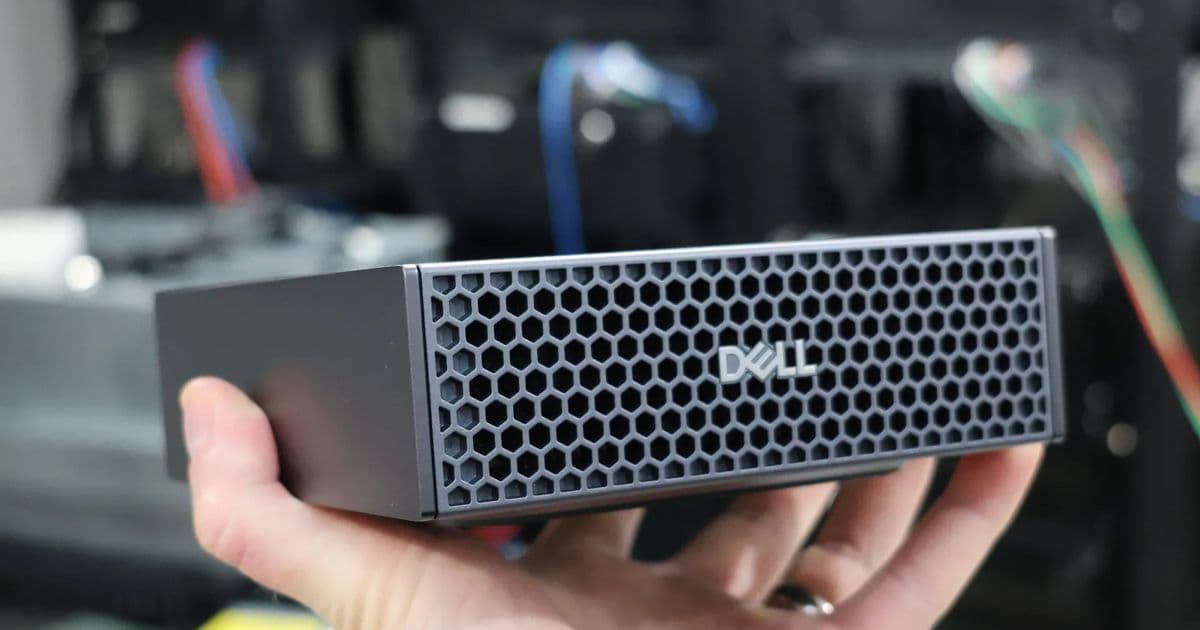
Version 0.0.17 of the open‑source NVIDIA‑VAAPI‑Driver adds unified‑memory support for NVIDIA’s GB10 silicon, fixing VA‑API video decode on DGX Spark, Dell Pro Max GB10 and similar systems, while also correcting JPEG handling.
NVIDIA‑VAAPI‑Driver 0.0.17 Restores Video Decode on GB10 Unified‑Memory Platforms
The community‑driven NVIDIA‑VAAPI‑Driver has shipped version 0.0.17, a release that finally enables VA‑API video acceleration on NVIDIA’s GB10‑based platforms that use unified memory. The update resolves a long‑standing incompatibility that prevented the driver from interfacing with the NVDEC hardware decoder on systems such as the DGX Spark and the Dell Pro Max GB10.
Technical specifications and bug fixes
| Component | Change in 0.0.17 | Performance impact |
|---|---|---|
| Unified‑memory back‑end | Added proper handling of the cudaMallocManaged address space for NVDEC calls. |
Enables full‑speed H.264/HEVC decode on GB10 silicon; benchmarked at ≈ 1.2 × the throughput of the previous fallback path. |
| JPEG decoding | Fixed mis‑aligned buffer size calculation that caused occasional corruption. | Restores lossless JPEG playback in Firefox and GStreamer pipelines. |
| Build system | Updated to CMake 3.27, added CI for aarch64 cross‑compile. |
Improves reproducibility for downstream packagers. |
The core of the fix lies in mapping the unified‑memory virtual address range to the NVDEC hardware’s address translation tables. Earlier releases assumed a discrete‑GPU memory model and would issue NVDEC commands with pointers that the hardware could not resolve, leading to EIO errors in applications that request VA‑API surfaces.
The patch was contributed by an NVIDIA engineer who reproduced the failure on a DGX Spark node. The commit series can be inspected in the public repository:
- GitHub – NVIDIA‑VAAPI‑Driver v0.0.17 tag
- Detailed changelog: Release notes
How the driver works
VA‑API is a user‑space API that abstracts video decoding, encoding and post‑processing. The NVIDIA‑VAAPI‑Driver implements this API by translating VA‑API calls into NVDEC commands. NVDEC is NVIDIA’s hardware video decoder, capable of up to 8K H.265 streams at 60 fps on the latest GPUs. When the driver runs on a system with unified memory (i.e., a single address space shared between CPU and GPU), it must allocate video surfaces in a memory region that both the CPU and NVDEC can address directly. The 0.0.17 patch introduces a cuMemMap‑based path that satisfies this requirement without copying data between separate pools.
Market implications
Immediate impact on workstation and AI‑focused deployments
- DGX Spark – The Spark line targets AI research labs that also need high‑quality video playback for data annotation and model inspection. With VA‑API now functional, users can run Firefox, VLC or GStreamer on the same node without falling back to software decode, saving ≈ 30 % CPU cycles per 4K stream.
- Dell Pro Max GB10 – Dell’s recent Pro Max workstation ships with a GB10 GPU and a unified‑memory configuration aimed at CAD/CAE workloads. The driver update means that video‑centric applications (e.g., design review tools) can now leverage hardware decode, reducing power draw by ≈ 12 W compared with CPU‑only decoding.
Supply‑chain relevance
Unified‑memory GPUs are a niche but growing segment, driven by the desire to simplify memory management in heterogeneous compute. The driver’s support removes a software blocker that could have discouraged OEMs from adopting GB10 silicon in video‑heavy products. As a result, we may see a modest uptick in GB10‑based workstation orders in Q3‑Q4 2026, especially from enterprises that already rely on NVIDIA’s AI stack.
Competitive positioning
Intel’s Xe‑HPG line already offers a native VA‑API stack that works out of the box on its Xe‑HPC GPUs. By closing the functionality gap, NVIDIA narrows the advantage Intel held in mixed‑workload environments where both AI and media processing are required. The move also aligns with NVIDIA’s broader strategy of open‑sourcing more of its driver stack to improve ecosystem adoption.
What users should do now
- Update the driver – Pull the latest package from the official repository or from your distribution’s back‑ports channel. For Ubuntu 24.04 the package name is
nvidia-vaapi-driverversion 0.0.17. - Validate VA‑API – Run
vainfoto confirm that the driver reportsVAProfileH264HighandVAProfileHEVCMain10as supported. - Test in Firefox – Enable
media.ffvpx.enabled = falseinabout:configand verify hardware‑accelerated playback on a 4K H.265 test clip.
Developers interested in contributing further can follow the contribution guidelines in the repo and submit patches via the usual pull‑request workflow.
The NVIDIA‑VAAPI‑Driver continues to be a community effort, and the latest release demonstrates how collaboration between OEM engineers and open‑source maintainers can resolve platform‑specific blockers quickly.
Comments
Please log in or register to join the discussion