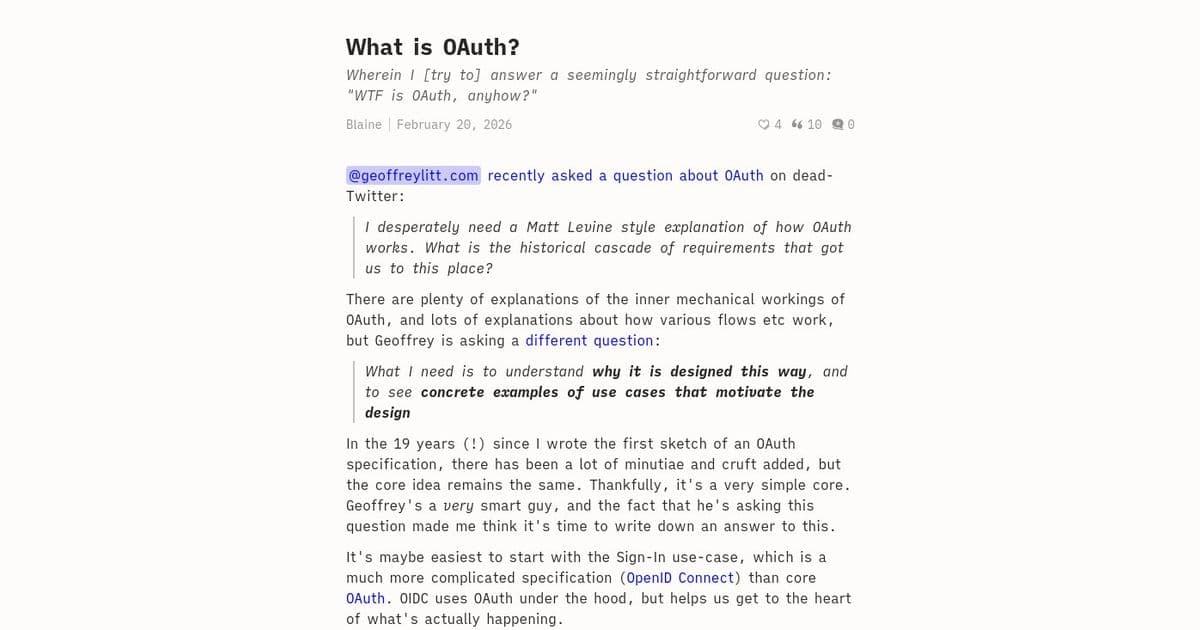
A deep dive into OAuth's origins reveals how it solved web delegation problems by replacing password sharing with token-based access.
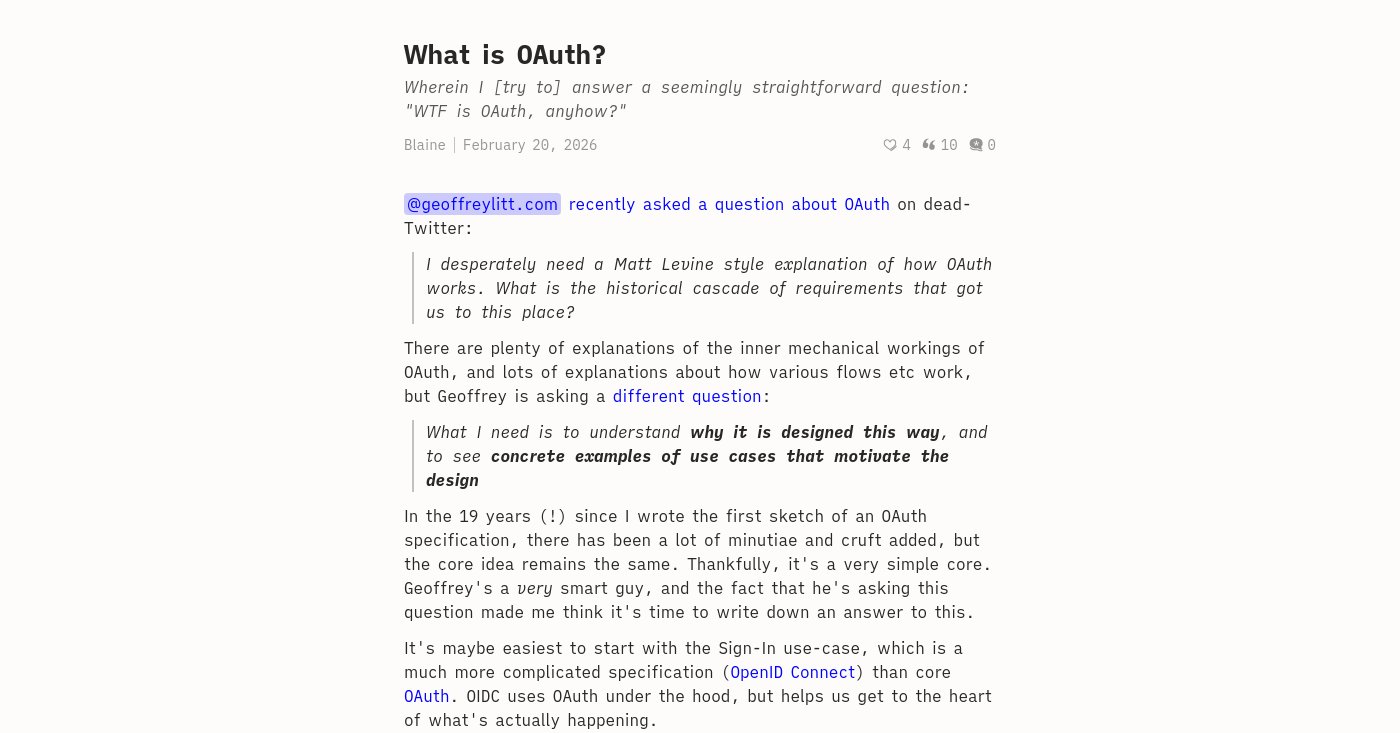
When Geoffrey Litt recently asked for a why behind OAuth—not just its mechanics—it highlighted how the protocol's original purpose gets lost beneath layers of specifications. Blaine Cook, co-creator of OAuth, revisited its 19-year history to clarify the protocol's elegant core idea: a standardized way to delegate access without sharing passwords.
The Problem OAuth Solved
Before OAuth, web services like Flickr, AWS, and early Twitter faced a critical security dilemma. As apps moved beyond browsers (think desktop clients and later mobile), users needed to grant third-party tools access to their accounts. The prevalent solution? Sharing passwords directly—a practice riddled with risks:
- Apps stored plaintext credentials
- Users couldn’t revoke access without changing passwords
- Breaches compromised multiple services
Cook recalls Twitter's 2006 struggle: Implementing OpenID for web sign-in would eliminate passwords, breaking desktop clients overnight. Every major "Web 2.0" company built custom—and insecure—solutions. The need for a universal standard was urgent.
The Elegant Core
OAuth’s foundational concept strips away complexity:
- Consent-Driven Delegation: A user approves limited access for a specific app (e.g., "Allow CalendarBot to view Google Calendar entries").
- Token Exchange: Instead of passwords, the app receives a time-bound, revocable access token.
- Secured Requests: The token acts as a key for API calls, isolatin g risk from primary credentials.
As Cook emphasizes: "The first half exists to send, with consent, a multi-use secret to a known delegate. The other half details how the delegate uses that secret." Everything else—OpenID Connect for authentication, refresh tokens, PKCE—builds atop this principle.
Why Complexity Crept In
Standardizing delegation required addressing real-world constraints:
- User Experience: How to make consent prompts clear without overwhelming users.
- Security: Mitigating threats like token interception or replay attacks.
- Interoperability: Ensuring diverse systems (web/mobile/native) could integrate seamlessly.
The IETF’s OAuth 2.0 framework emerged as a "flexible standard," akin to HTML’s implementer freedom. Later, OpenID Connect layered authentication atop OAuth, fulfilling Cook's original vision—though political and technical debates delayed it for years.
Lasting Impact
OAuth succeeded against the odds, avoiding the fate of XKCD’s competing standards comic. Today, it underpins:
- Social logins ("Sign in with Google/Facebook")
- API access for SaaS integrations
- IoT device authorization
Cook’s reflection resonates: Authentication and authorization remain deeply contextual, tangled in UX and architecture. Understanding OAuth’s why—replacing passwords with delegated tokens—cuts through the specification noise. For developers, this clarity is key: Start with your use case, then apply the "simple mechanics."
Comments
Please log in or register to join the discussion