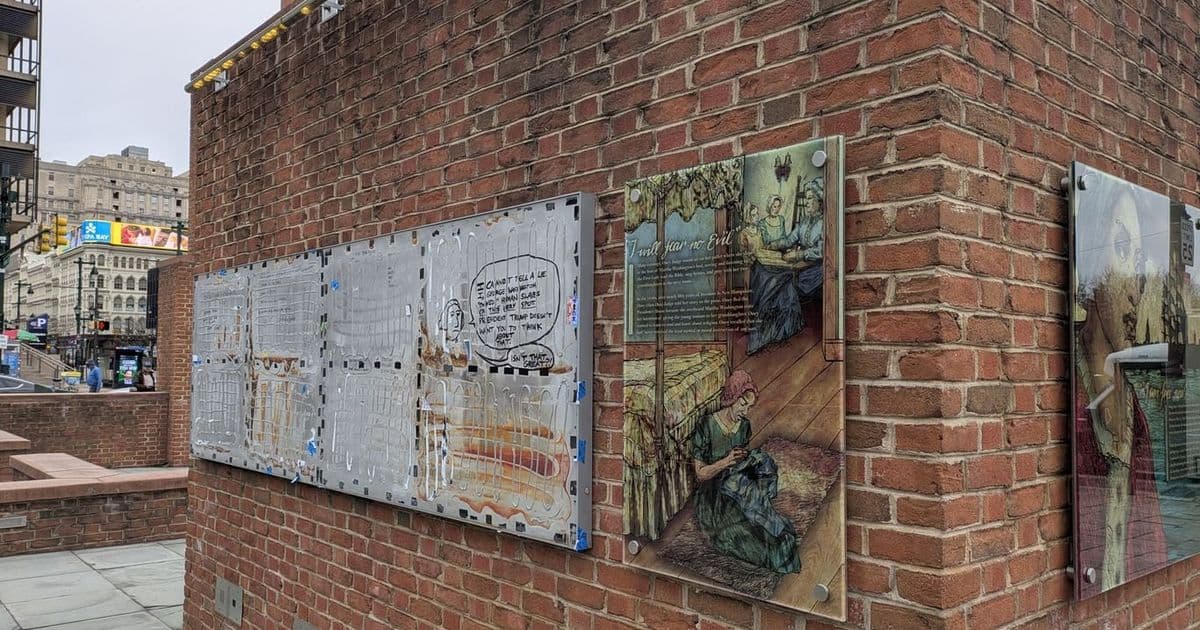
A legal battle over a slavery exhibit at Philadelphia's President's House Site is forcing America to confront how it tells its founding story as the nation approaches its 250th anniversary.
A federal court case over a slavery exhibit at Philadelphia's President's House Site is becoming a flashpoint in how America tells its 250th anniversary story, with preservationists and historians clashing over whether the nation's founding narrative should include the uncomfortable realities of slavery during the Revolutionary era.
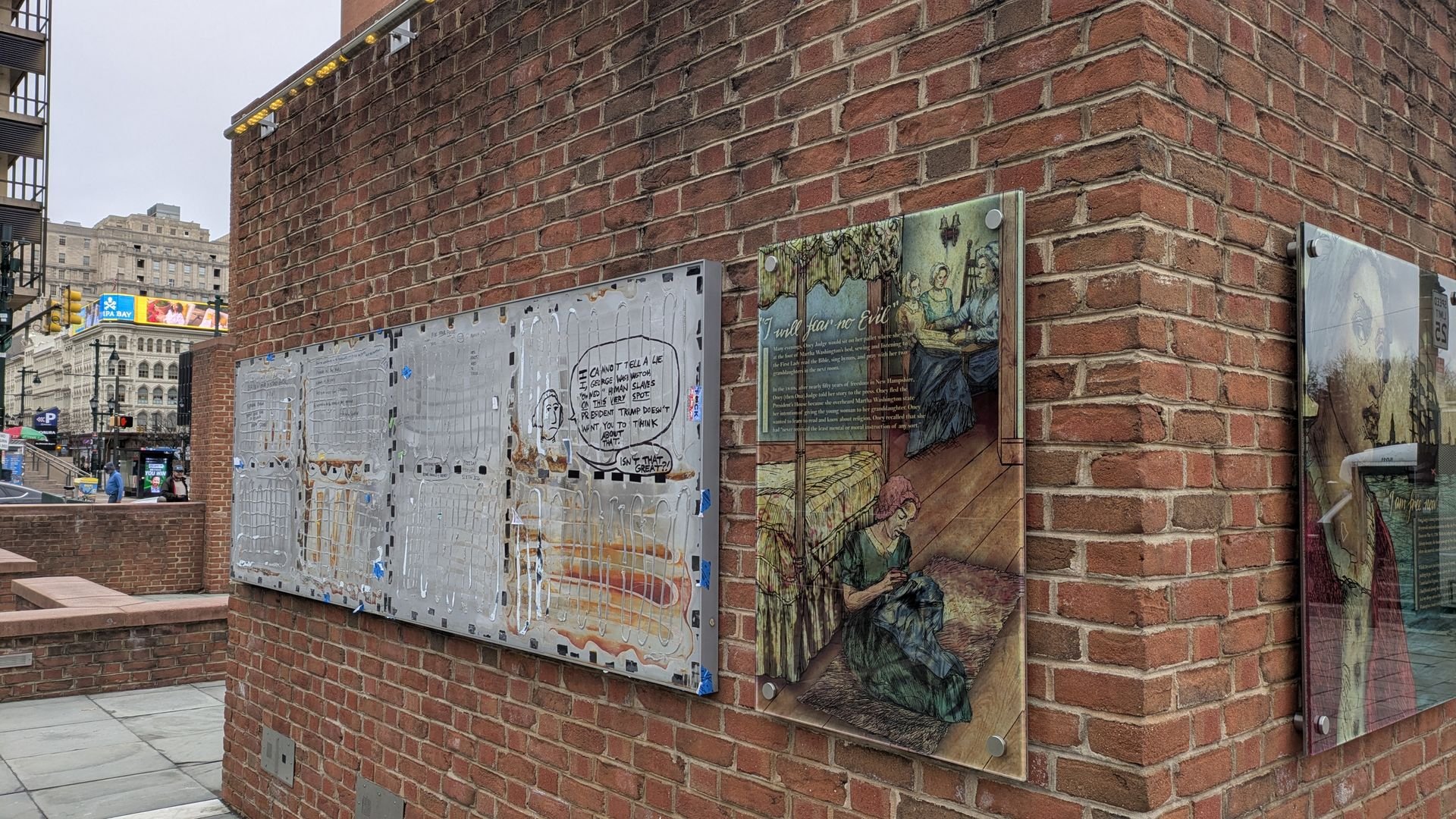
The dispute centers on exhibits at Independence National Historical Park that detail the lives of enslaved people who lived and worked at the site when it served as the executive mansion for Presidents George Washington and John Adams from 1790 to 1800. The National Park Service has been restoring these exhibits, which include archaeological findings and historical documentation about the enslaved individuals who lived on the property.
The legal challenge, filed by a group of historians and descendants of early American families, argues that the slavery exhibits present a revisionist interpretation of the founding era that undermines the traditional narrative of American independence. The plaintiffs contend that while slavery existed during the founding period, the exhibits overemphasize this aspect at the expense of celebrating the achievements of the nation's founders.
"This is about historical accuracy and balance," said one of the lead attorneys in the case. "We're not denying slavery existed, but we believe the exhibits present a one-sided view that doesn't properly acknowledge the context of the times or the progress made by the founders."
Opposing the lawsuit, the National Park Service and several civil rights organizations argue that the exhibits provide crucial context for understanding the full complexity of America's founding. They point to archaeological evidence and historical records that demonstrate the presence of enslaved people at the site, including detailed accounts of their daily lives and work.
"The history of slavery at the President's House is not a footnote—it's central to understanding the contradictions and complexities of our founding," said a spokesperson for the National Park Service. "These exhibits tell the complete story, not just the comfortable parts."
The case has drawn national attention as the United States approaches its 250th anniversary in 2026, raising questions about how the nation will commemorate its founding while grappling with the legacy of slavery and other historical injustices. The timing is particularly significant, as many communities and institutions are planning events and exhibits to mark the milestone.
Legal experts note that the case could set important precedents for how historical sites and museums present controversial aspects of American history. The outcome may influence similar disputes at other locations associated with the founding era, including Mount Vernon, Monticello, and other presidential sites.
The President's House Site in Philadelphia holds particular significance as the location where both the Declaration of Independence and the Constitution were debated and adopted. The site's exhibits aim to present a more complete picture of this history, including the fact that while these documents proclaimed liberty and equality, many of the men who wrote and signed them owned enslaved people.
Archaeological excavations at the site have uncovered foundations of slave quarters and other structures, providing physical evidence that supports the historical accounts. These findings have been incorporated into the exhibits, along with personal stories of individuals like Oney Judge, who escaped from the Washingtons' household, and Hercules Posey, Washington's enslaved chef who also gained his freedom.
The legal battle has sparked broader discussions about historical memory and national identity. Some scholars argue that confronting difficult aspects of history is essential for genuine understanding and progress, while others worry that focusing too heavily on historical injustices could undermine national unity and pride.
"This isn't about erasing history or diminishing the founders' achievements," said a historian supporting the current exhibits. "It's about telling the whole truth. The founders were brilliant and flawed, visionary and limited by their times. That's the real story."
The case is being closely watched by other historical institutions preparing for the 250th anniversary celebrations. Many are grappling with similar questions about how to present a more inclusive and accurate version of American history while respecting traditional narratives and avoiding political controversy.
As the court considers the arguments, the National Park Service has continued its restoration work at the site, maintaining that the exhibits will remain open regardless of the legal outcome. The agency emphasizes that its mission includes preserving and interpreting all aspects of American history, not just the celebratory ones.
The resolution of this case could have lasting implications for how future generations understand the founding of the United States and the complex legacy of slavery in American history. As the nation prepares to mark its 250th birthday, the debate over how to tell this story reflects broader tensions about national identity, historical memory, and the ongoing struggle to reconcile America's ideals with its complicated past.
The court is expected to rule on the preliminary injunction request in the coming months, with a full trial likely to follow if the case proceeds. Meanwhile, the exhibits at the President's House Site remain open to visitors, continuing to present the contested narrative of America's founding era.
Comments
Please log in or register to join the discussion