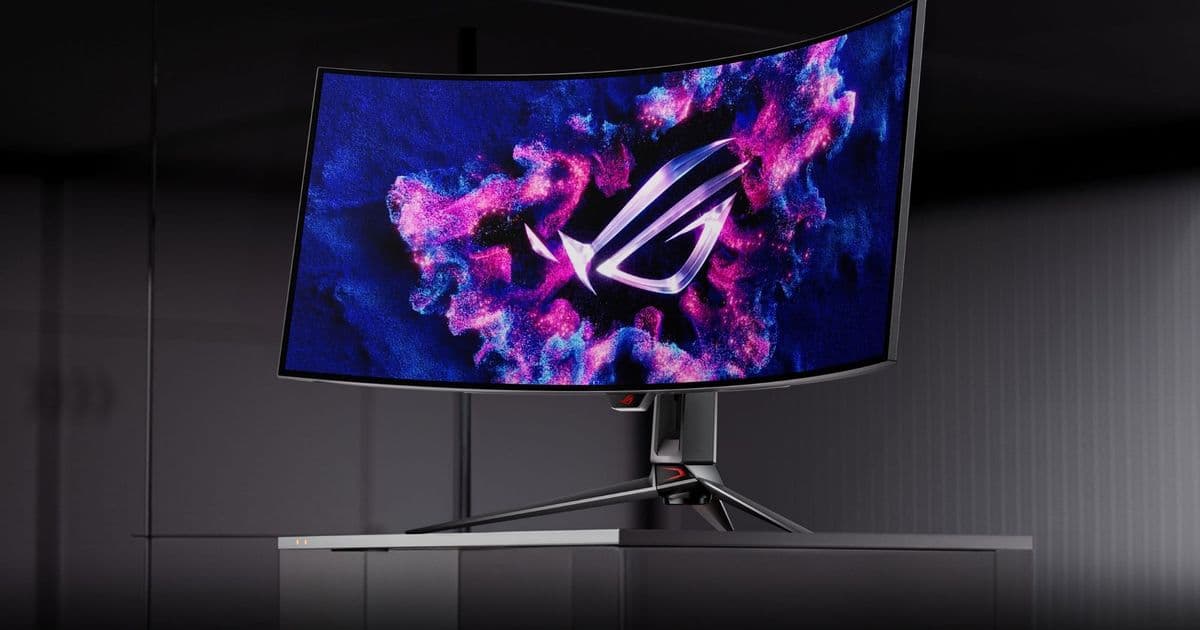
Global OLED monitor shipments surged 92% in 2025 as Asus captured market leadership with 2.7 million units shipped, driven by 240Hz gaming panels and improved durability.
Global OLED monitor shipments exploded to 2.735 million units in 2025, marking a staggering 92% year-over-year increase that signals the technology's transition from premium niche to mainstream gaming essential, according to fresh data from market analysis firm TrendForce.
This explosive growth represents a fundamental shift in how PC gamers and creators approach display technology. The driving forces behind this surge are multifaceted: aggressive brand promotions, the sweet spot of 27-inch 1440p (QHD) panels with blistering 240Hz refresh rates, and perhaps most importantly, the elimination of burn-in anxiety that once plagued early OLED adopters.
Asus Dominates as Samsung Slips to Second
ASUS has officially seized the OLED crown, shipping 2.7 million units and capturing 21.6% market share to dethrone Samsung, which fell to second place with 19.3%. This represents a significant market share swing that reflects ASUS's aggressive strategy in the high-end gaming and creator spaces.
The Taiwanese manufacturer blanketed the market with genuinely competitive screens across multiple price points, successfully appealing to both hardcore gamers seeking every competitive advantage and content creators demanding color accuracy and contrast.
Samsung, while slipping to second, maintained pressure through heavy year-end discounts on its 27-inch panels and ultra-high-end offerings like the 49-inch Odyssey OLED G9 ultrawide. The Korean giant's persistence in the premium segment prevented ASUS from running away with the market entirely.
The Rise of 240Hz Gaming Sweet Spot
The current display market has coalesced around a specific configuration that perfectly balances performance and value: 27-inch QHD panels with 240Hz refresh rates. This combination delivers the pixel density needed for sharp text and detailed gaming environments while providing refresh rates that satisfy competitive gamers across all genres.
Recent models pushing boundaries to 500Hz refresh rates and improved brightness versus older panels have further accelerated adoption. These advancements address two of OLED's traditional weaknesses - motion clarity and peak brightness - making the technology viable for a broader range of use cases beyond dark-room gaming.
Market Consolidation Around Key Players
The top five manufacturers now control 76.5% of the OLED monitor market, with the remaining 23.5% split among various smaller players:
- ASUS: 21.6% - Market leader with aggressive pricing and product diversity
- Samsung: 19.3% - Premium positioning with strong ultrawide offerings
- MSI: 13.1% - Rapid product iteration and budget-friendly options
- LG Electronics: 12.6% - Dominance in massive ultrawide form factors (39" and 45")
- Dell/Alienware: 9.9% - Premium gaming brand with established reputation
MSI's third-place position reflects its aggressive approach over the past year, flooding the market with rapid product iterations across multiple price tiers. The company has successfully targeted budget-conscious gamers while maintaining visibility through smart advertising choices aimed at PC gaming audiences.
LG's strength in the ultrawide segment demonstrates the technology's versatility beyond traditional gaming monitors. The company's near-monopoly on massive 39-inch and 45-inch form factors caters to productivity-focused users and immersive gaming experiences.
Looking Ahead: 51% Growth Projected for 2026
TrendForce projects another 51% jump in total OLED monitor shipments for 2026, suggesting the market is far from saturation. This growth trajectory stands in stark contrast to the broader PC component market, which continues to experience pricing volatility and economic uncertainty.
The monitor market's relative stability and growth reflect several converging factors: improved manufacturing yields reducing costs, panel suppliers expanding capacity, and consumers recognizing OLED's value proposition for both gaming and professional use.
The Burn-in Myth Finally Dies
Perhaps the most significant barrier to OLED adoption has been the persistent fear of burn-in - the permanent image retention that plagued early OLED televisions and monitors. Recent highly publicized durability tests have proven modern OLED panels can withstand years of typical usage without significant degradation.
This psychological barrier's removal has been crucial to mainstream adoption. Gamers who once hesitated to use OLED for fear of UI elements burning in permanently are now embracing the technology for its superior contrast ratios, instant response times, and vibrant colors.
The Upgrade Cycle Accelerates
For users still clinging to aging LCD panels, the hardware gods are practically begging for an upgrade. The combination of improved durability, better brightness, higher refresh rates, and competitive pricing creates what industry analysts call a "perfect storm" for OLED adoption.
This represents potentially the biggest display upgrade many PC users will make this decade. The jump from even high-quality LCD to modern OLED delivers immediate, noticeable improvements in gaming responsiveness, visual quality, and overall user experience.
As the technology continues its march toward mainstream affordability, the question shifts from "should I upgrade to OLED?" to "which OLED should I choose?" - a testament to how far the technology has come in just a few short years.
Comments
Please log in or register to join the discussion