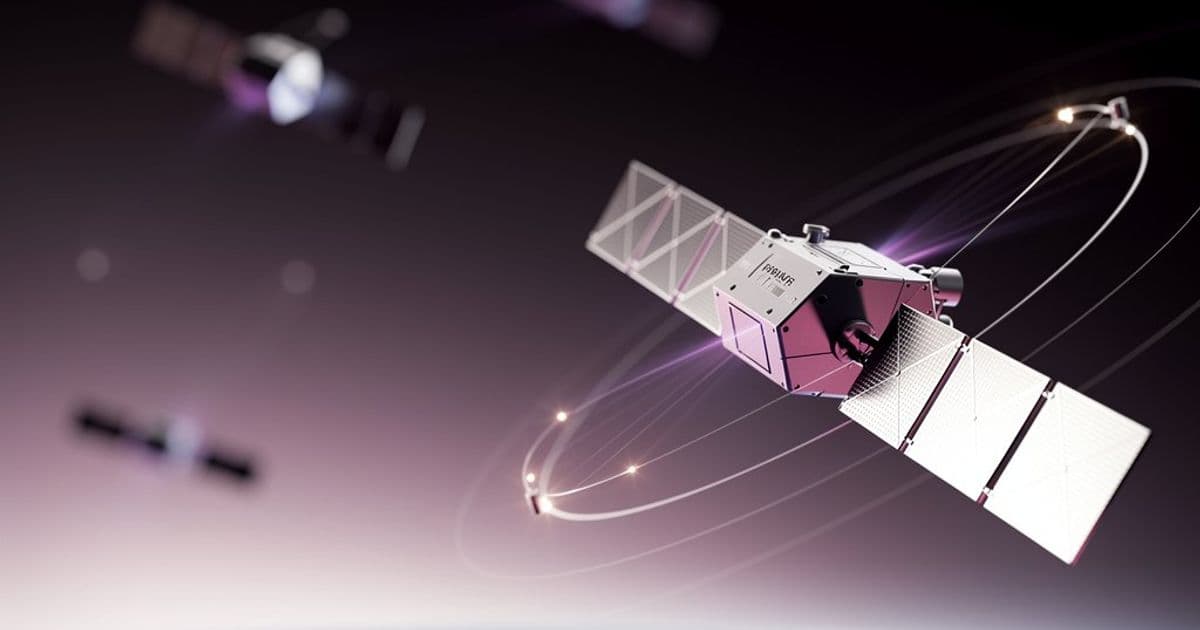
UK satellite startup Open Cosmos secured a contested Ka-band spectrum license in Liechtenstein for high-speed satellite internet, outperforming competitors funded by Peter Thiel.
UK-based satellite operator Open Cosmos has secured a highly contested Ka-band spectrum license from Liechtenstein's regulatory authorities, positioning the company to provide high-speed internet services via low-Earth orbit satellites. The win is notable as Open Cosmos beat out several well-funded competitors backed by billionaire investor Peter Thiel, whose portfolio includes space ventures like Astra and other undisclosed satellite projects.
The Ka-band spectrum (26.5-40 GHz) is crucial for next-generation satellite internet due to its ability to deliver high-bandwidth connections essential for applications requiring low latency, such as video conferencing, cloud computing, and IoT networks. Unlike lower-frequency bands, Ka-band enables faster data transmission rates exceeding 100 Mbps per user terminal, though it requires more sophisticated ground equipment and is more susceptible to signal degradation during heavy rainfall.
Open Cosmos's approach centers on cost-effective satellite deployment and modular spacecraft design. The company's OpenOrbit platform allows for rapid integration of payloads, reducing typical satellite development timelines from years to months. This operational agility likely contributed to their winning bid against rivals emphasizing larger constellations or deeper financial reserves. The company currently operates seven satellites with plans to expand its fleet to 50 by 2027.
The license grants Open Cosmos access to Liechtenstein's orbital slots for 15 years, enabling coverage across Europe. This represents a strategic foothold in a market dominated by SpaceX's Starlink (over 5,000 satellites) and OneWeb (600+ satellites). Industry analysts note that Ka-band licenses remain scarce due to orbital congestion and regulatory complexities—only 12 such allocations exist globally through the International Telecommunication Union's coordination process.
Challenges persist despite the victory. Open Cosmos must now accelerate satellite production to meet deployment milestones while competing against established players' pricing power. Ground infrastructure costs remain high: user terminals for Ka-band services currently retail for $500-$2,000, compared to Starlink's $599 hardware. Additionally, the company faces regulatory scrutiny as the European Union debates stricter space sustainability rules targeting collision risks and signal interference.
The win highlights shifting dynamics in satellite internet, where specialized operators can leverage regulatory expertise and technical specialization to compete against capital-heavy ventures. Open Cosmos CEO Rafel Jordà emphasized their focus on 'precision coverage for enterprise and government clients' rather than consumer broadband, potentially avoiding direct competition with mass-market providers. With Thiel-backed rivals expected to pursue licenses elsewhere, the satellite spectrum landscape remains fiercely contested terrain where technical execution outweighs financial backing alone.
Comments
Please log in or register to join the discussion