
OpenAI has made its groundbreaking Advanced Voice Mode available to all ChatGPT users at no cost, replacing the limited Standard Voice Mode. This conversational AI feature enables natural, human-like interactions with support for pauses, non-linear dialogue, and environmental context – fundamentally redefining voice assistant capabilities beyond traditional rigid command systems.
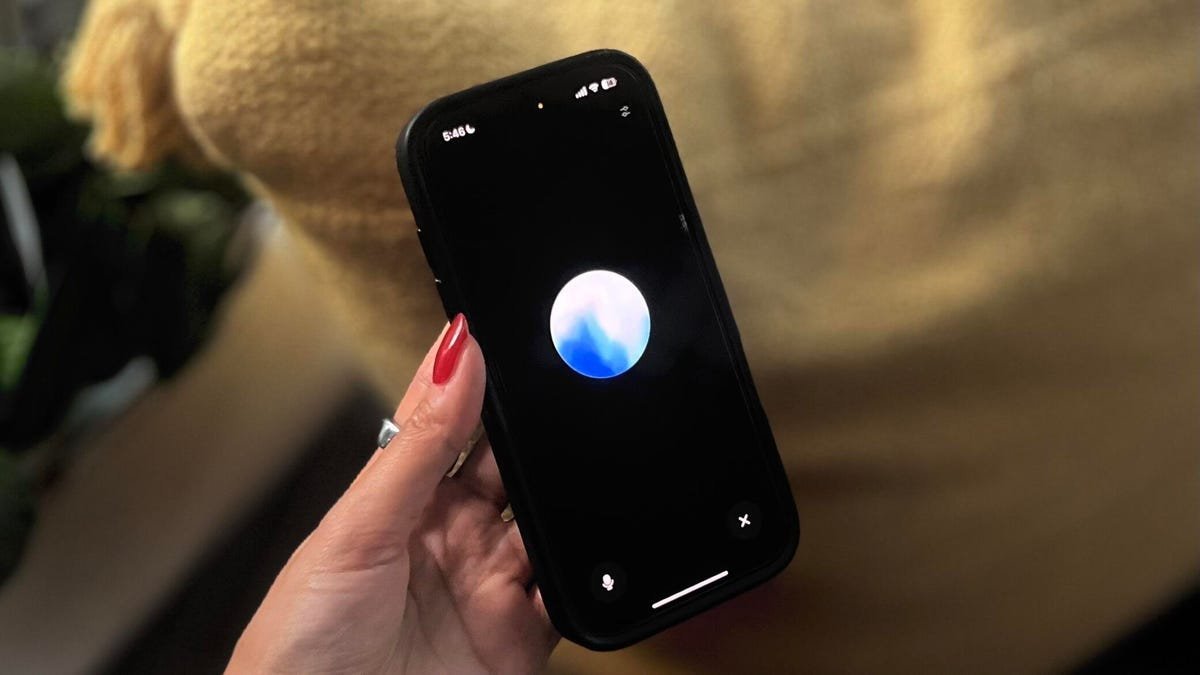
While OpenAI's headline-grabbing GPT-5 launch dominated tech news this week, a quieter revolution unfolded: Advanced Voice Mode – now rebranded as ChatGPT Voice – has been liberated from its paywall. As of OpenAI's summer product release, this sophisticated voice assistant is available to all logged-in users regardless of subscription status, effectively replacing Standard Voice Mode starting September 9.
The Death of Robotic Interactions
Traditional voice assistants like Siri and Alexa operate on rigid command structures requiring precisely phrased requests. ChatGPT Voice shatters this paradigm with three transformative capabilities:
- Natural Conversation Flow: Speak with pauses, interruptions, and train-of-thought tangents without losing context
- Multi-Turn Dialogue: Maintain coherent conversations across extended exchanges without resetting context
- Environmental Awareness: Leverage video and screen-sharing inputs to understand physical context
"You can say, 'I'm hiking in Portland this weekend and need layered clothing options – what weather should I expect?' and it comprehends the nested requests," explains Sabrina Ortiz, ZDNET Senior Editor. "It adapts to your speech patterns in real-time."
Under the Hood: More Than Just Speech-to-Text
Unlike basic voice systems that simply transcribe speech to text, ChatGPT Voice uses multimodal AI architecture to:
- Analyze vocal cadence and emotional tone
- Interpret visual context through device cameras
- Maintain conversational memory across sessions
This technical foundation enables what users describe as "the first voice assistant that doesn't make me feel like I'm talking to a machine."
Access and Implications
 ChatGPT Voice interface (Credit: Sabrina Ortiz/ZDNET)
Activating the feature requires simply clicking the waveform icon beside ChatGPT's text input. Free users gain full functionality though with lower usage limits than paid tiers – OpenAI hasn't yet specified exact thresholds.
For developers, this democratization signals critical shifts:
- Voice Interface Standardization: Expectations for conversational AI will escalate across all platforms
- Accessibility Revolution: Complex AI interactions become available to non-technical users
- New Development Paradigms: Apps may increasingly leverage voice as primary input method
The Silent Game Changer
While large language models capture headlines, ChatGPT Voice represents something more profound: the normalization of human-machine collaboration. By removing subscription barriers, OpenAI hasn't just upgraded a feature – it's accelerating society's adaptation to ambient AI. As voice becomes the default interface for millions, the ripple effects will reshape everything from education to healthcare accessibility. The quietest voices sometimes speak loudest.
Comments
Please log in or register to join the discussion