
OpenAI announces retirement of GPT-4o and other legacy models, citing GPT-5.2's superior performance and user adoption, while highlighting the evolution of AI personalization features.
OpenAI has announced the retirement of its popular GPT-4o model and several other legacy AI models, marking a significant shift in the company's product lineup as GPT-5.2 emerges as the dominant choice for users.
The End of an Era for GPT-4o
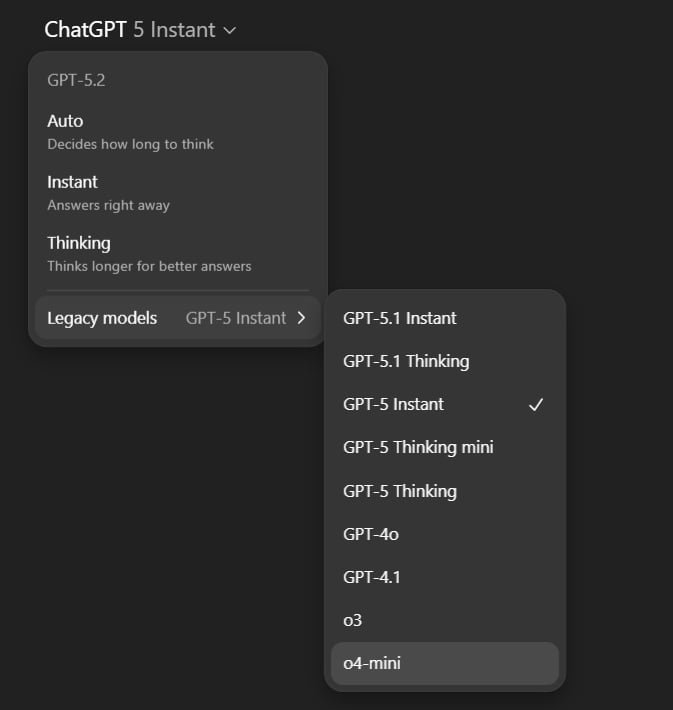
On February 13, 2026, OpenAI will officially retire GPT-4o, GPT-5 Instant, GPT-5 Thinking, GPT-4.1, GPT-4.1 mini, and OpenAI o4-mini from ChatGPT. The company confirmed this decision in a support document, stating that GPT-5.2 has "started to live up to expectations" and has become the preferred model for the vast majority of users.
GPT-4o held a special place in the hearts of many ChatGPT users due to its conversational style and warmth. The model was so beloved that OpenAI had to bring it back after initial backlash when it was first retired. "We brought GPT-4o back after hearing clear feedback from a subset of Plus and Pro users, who told us they needed more time to transition key use cases, like creative ideation, and that they preferred GPT-4o's conversational style and warmth," OpenAI explained.
Why GPT-5.2 Replaced GPT-4o
Despite GPT-4o's popularity, OpenAI reports that only 0.1% of users are still choosing GPT-4o each day, with the vast majority having shifted to GPT-5.2. The newer model offers improved performance and safety features that have made it the go-to choice for most users.
However, the transition hasn't been without trade-offs. Unlike GPT-5.2, which plays it safe, GPT-4o was known for being more "unhinged" and creative. This characteristic explains why many users preferred it for certain use cases, particularly creative ideation and brainstorming sessions.
The Evolution of AI Personalization
Ahead of GPT-4o's retirement, OpenAI rolled out its Personality feature, which allows users to customize their AI experience more effectively. This feature was designed to bridge the gap between GPT-4o's unique conversational style and the more standardized approach of newer models like GPT-5.2.
OpenAI emphasized that feedback from GPT-4o users shaped the development of GPT-5.1 and GPT-5.2, incorporating elements that made the older model special while maintaining the safety and reliability improvements of newer versions.
What This Means for Users
The retirement of GPT-4o represents a broader trend in AI development toward more standardized, safe, and reliable models. While some users may miss the more creative and unpredictable nature of GPT-4o, the industry appears to be moving toward models that prioritize consistency and safety over the more experimental approaches of earlier AI systems.
OpenAI plans to continue working on ChatGPT personalization and integrating new safeguards, suggesting that future models will likely offer even more customization options while maintaining the safety standards that GPT-5.2 has established.
Looking Ahead
As GPT-4o joins the ranks of retired AI models, it leaves behind a legacy of pushing the boundaries of what conversational AI could be. Its influence can be seen in the personalization features that OpenAI continues to develop, ensuring that future models can capture some of the warmth and creativity that made GPT-4o so special to its users.
The retirement also highlights the rapid pace of AI development, where models that were once cutting-edge can quickly become legacy systems as newer, more capable versions emerge. For users who still prefer GPT-4o's style, the Personality feature offers a way to maintain some of that experience within the more modern GPT-5.2 framework.
Related developments in the AI space include OpenAI's testing of the ChatGPT Atlas browser with new actions features, the introduction of unlimited GPT-5.2 Instant access for $8, and the rollout of the Thinking time toggle on mobile devices. These updates suggest that OpenAI is continuing to refine and expand its AI offerings even as it streamlines its model lineup.
The retirement of GPT-4o marks not just the end of a model, but the closing of a chapter in AI development where personality and creativity were prioritized alongside capability. As the industry moves forward, the challenge will be maintaining that human touch while delivering the reliability and safety that users and organizations increasingly demand from AI systems.
Comments
Please log in or register to join the discussion