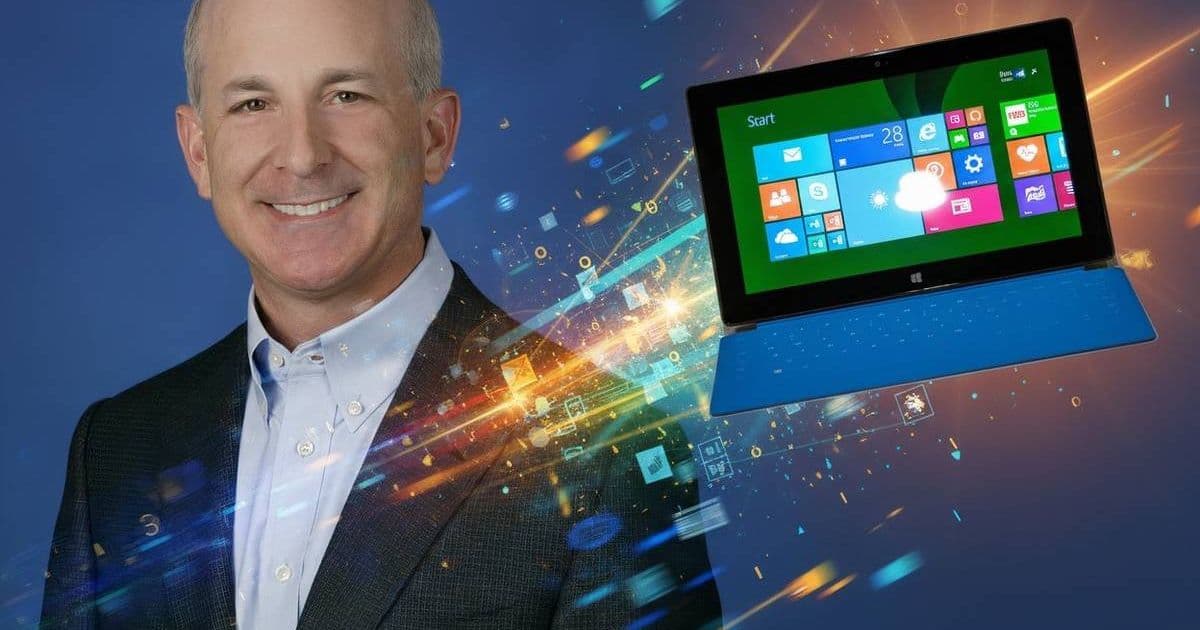
Newly released Epstein files show Microsoft's former Windows chief Steven Sinofsky corresponded with Jeffrey Epstein about his retirement terms, Surface RT's failure, and potential job opportunities at Samsung, revealing behind-the-scenes negotiations during his departure from Microsoft in 2012.
Newly released documents from the U.S. Department of Justice's Epstein files have revealed that former Microsoft Windows chief Steven Sinofsky corresponded with Jeffrey Epstein about his retirement from the tech giant and other business matters. The emails, released between January 30th and 31st, 2026, provide a behind-the-scenes look at Sinofsky's departure from Microsoft in 2012 after 23 years with the company.
Surface RT's Failure and Early Warnings
The documents show that Sinofsky had serious concerns about the Surface RT's prospects well before its commercial failure. In an email dated November 4th, 2012, Sinofsky warned Microsoft CEO Steve Ballmer that the Surface was "about to catastrophically fail in a very public way." He noted that sales were only reaching "1/10th the number of devices as the lowest end of the lowest expectation."
Nine days later, on November 13th, 2012, Sinofsky retired from Microsoft. The Surface RT ultimately became a commercial failure due to its use of Windows RT, a tablet-focused version of Microsoft's operating system that couldn't run traditional desktop software, leading many buyers to feel misled.
Negotiating Retirement Terms with Epstein's Help
According to the Epstein files, Sinofsky sought Epstein's advice on negotiating his retirement agreement with Microsoft. The documents include a "RETIREMENT AGREEMENT AND FULL AND FINAL RELEASE OF CLAIMS" that outlines Sinofsky's retirement terms.
In email exchanges, Epstein advised Sinofsky to request $20 million as part of his retirement package. Sinofsky expressed uncertainty about his leverage, to which Epstein repeatedly responded with "20," indicating the amount Sinofsky should request. Microsoft ultimately offered Sinofsky a $14 million stock deal as part of his retirement package.
Considering Samsung After Microsoft
After leaving Microsoft, Sinofsky explored opportunities at Samsung. However, he was concerned about potential legal action from Microsoft due to his prior agreements. In emails to Epstein, Sinofsky explained that he had been "part of a dozen lawsuits filed after Microsoft people went to competitors" and described the process as "nasty, public, and ultimately Microsoft prevailed in all of them."
Sinofsky noted that Microsoft CEO Steve Ballmer had called Samsung "Our new biggest competitor" because Microsoft depended on other companies to manufacture hardware for their software. He explained that "only two companies that make hardware are executing — apple and Samsung," while other manufacturers like Lenovo, HP, Dell, and Asus were "betting on android big."
Epstein offered to help Sinofsky negotiate with Samsung without angering Ballmer, even proposing a $1 million fee for his services. Sinofsky ultimately did not join Samsung, instead signing a non-compete agreement with Microsoft that allowed him to help the company in lawsuits against competitors.
Microsoft's Response
XDA Developers reached out to Microsoft for comment regarding Sinofsky's interactions with Epstein, but the company stated it had nothing to share at this time. The story will be updated with more information as it becomes available.
The Epstein files continue to reveal extensive correspondence between Epstein and various high-profile individuals across business, politics, and entertainment, shedding light on the financier's wide-ranging network and influence.
Comments
Please log in or register to join the discussion