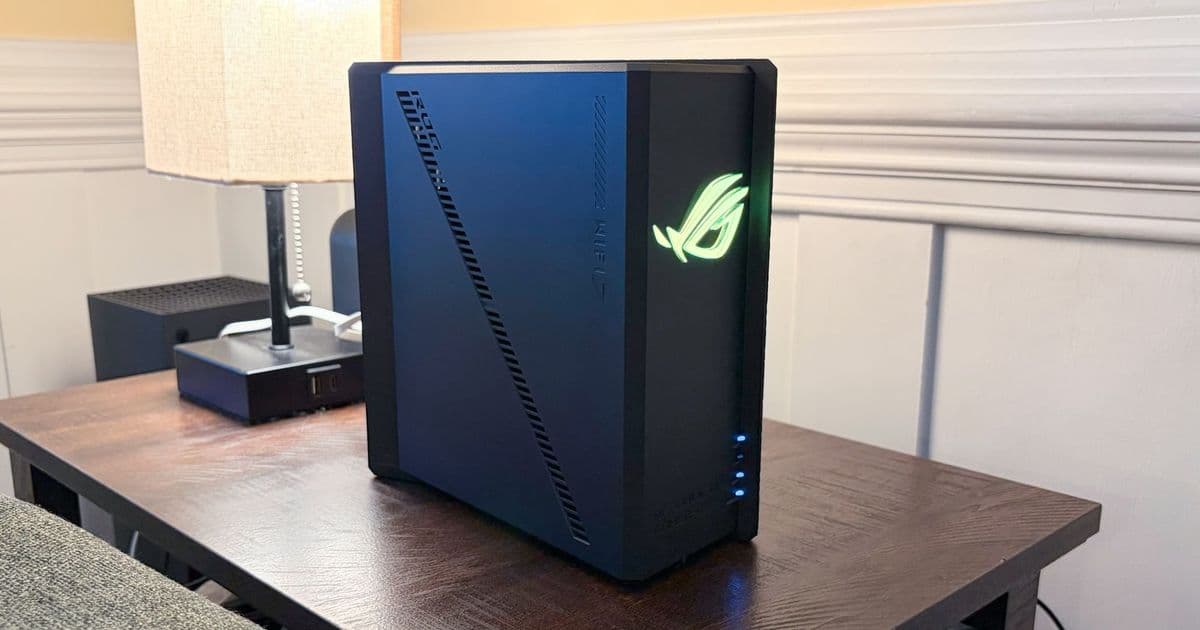
Asus's gaming-focused Wi-Fi 7 router offers seven 2.5 GbE ports and mesh support, but falls short in 2.4 GHz range and lacks 10 GbE connectivity.
The Asus ROG Strix GS-BE18000 represents the company's latest entry into the high-performance gaming router market, bringing Wi-Fi 7 capabilities to enthusiasts who prioritize LAN connectivity and customization options. Priced at approximately $450, this tri-band router packs impressive hardware specifications but delivers performance that doesn't quite match its premium positioning.
Design and Hardware Features
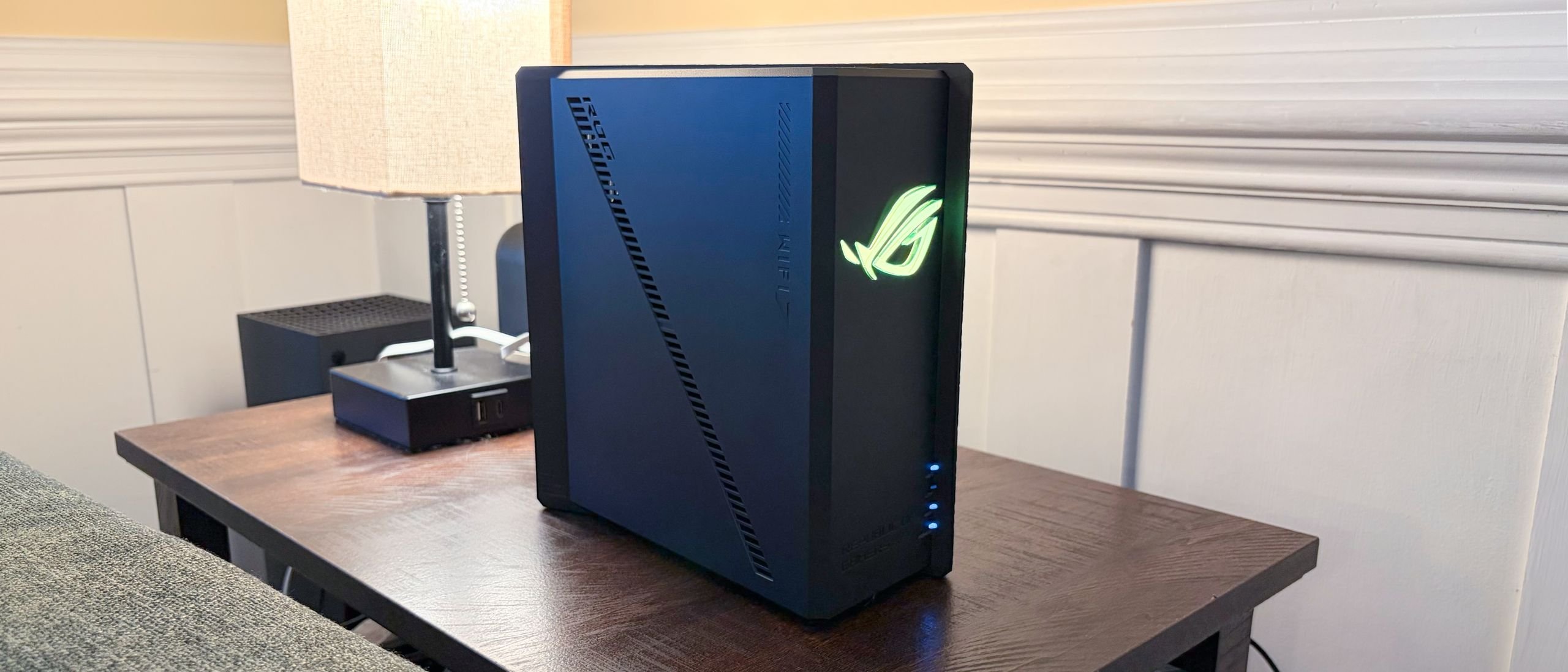
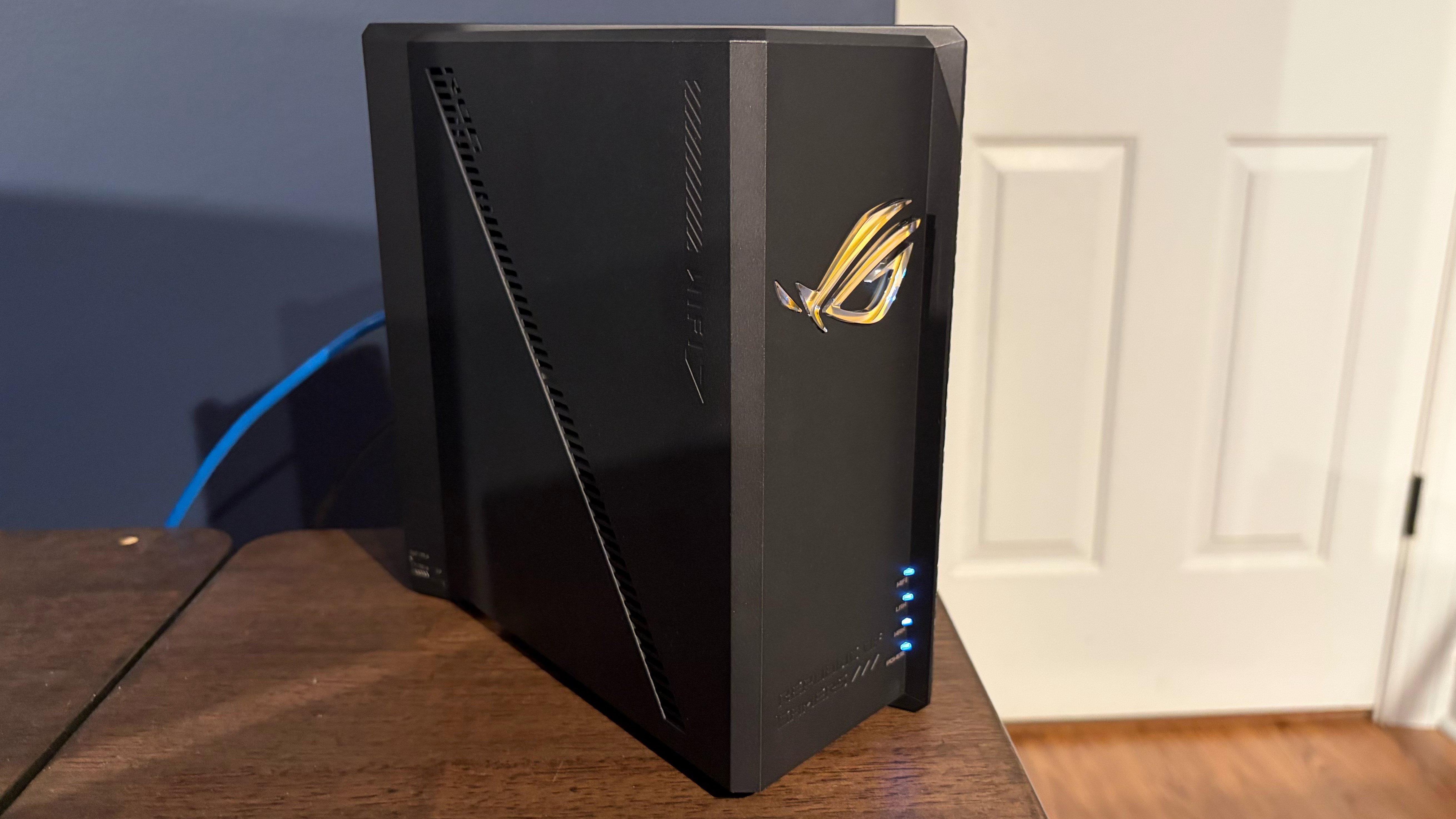
The ROG Strix GS-BE18000 immediately stands out with its distinctive design. Rather than the typical router aesthetic, it resembles a compact desktop PC with its tall, book-style chassis and internal antenna array. The front panel features the signature ROG logo with configurable RGB lighting, along with four status LEDs indicating Wi-Fi, LAN, WAN, and power status.
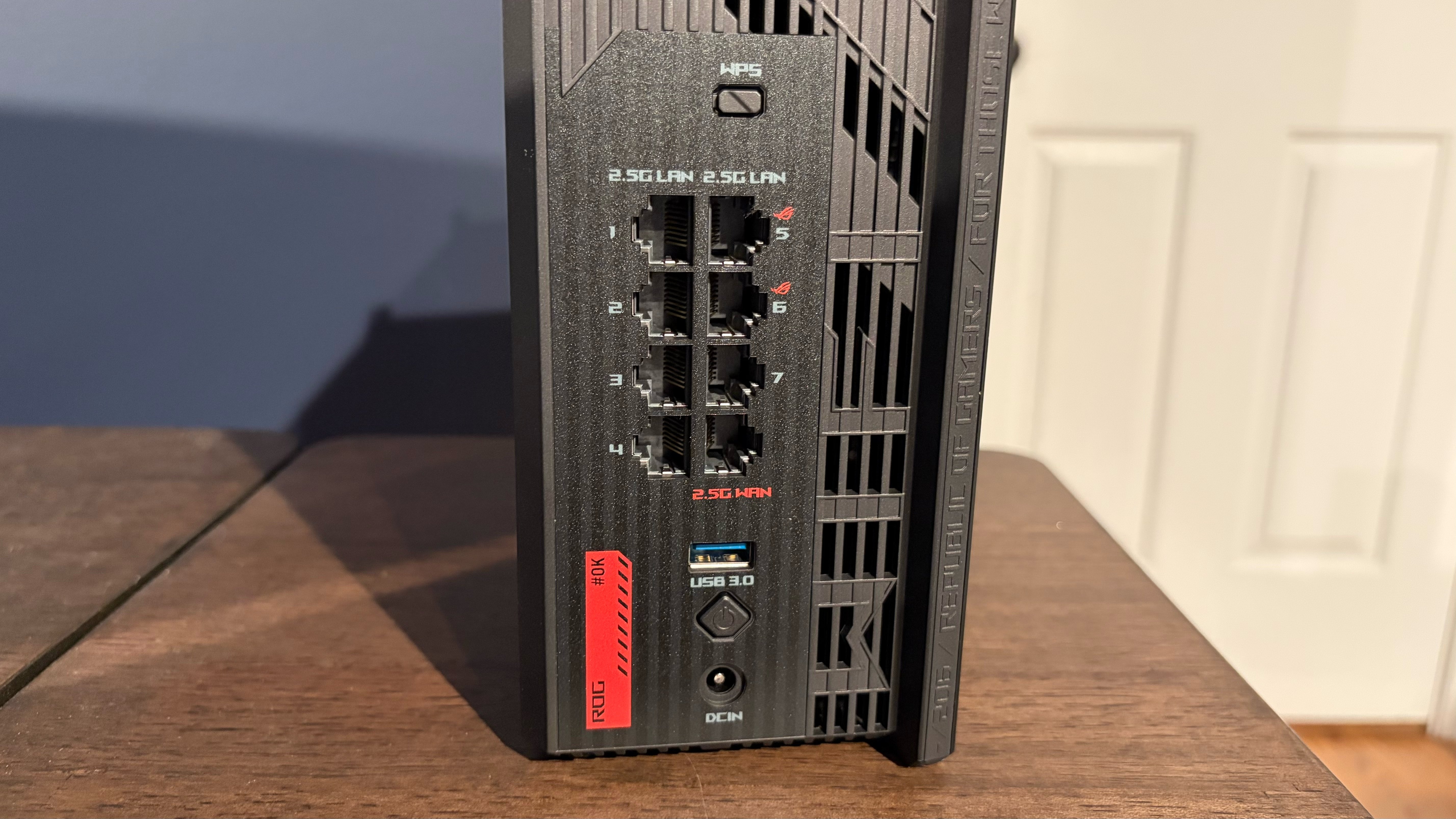
Where the router truly differentiates itself is in its port selection. The rear panel houses an impressive eight Ethernet ports: one 2.5 GbE WAN port and seven 2.5 GbE LAN ports, with two designated as "Gaming ports" featuring automatic network prioritization. Additionally, there's a USB 3.0 port for external storage or cellular modem connectivity.
This extensive port selection addresses a common pain point for gamers and power users who need to connect multiple wired devices without relying on network switches. However, the absence of a 10 GbE port at this price point ($450) is notable, especially when competitors like the TP-Link Archer GE800 ($599) include dual 10 GbE ports.
Wireless Specifications
The router operates as a tri-band Wi-Fi 7 device with the following theoretical maximum speeds:
- 2.4 GHz: 688 Mbps (2x2 configuration)
- 5 GHz: 5,764 Mbps (4x4 configuration)
- 6 GHz: 11,529 Mbps (4x4 configuration)
This configuration represents a step down from the 4x4 arrangement on the RT-BE96U in the 2.4 GHz band, limiting maximum throughput to 688 Mbps compared to 1,376 Mbps. The 5 GHz and 6 GHz bands maintain the same 4x4 configuration as its higher-end sibling.
Setup and Software Experience
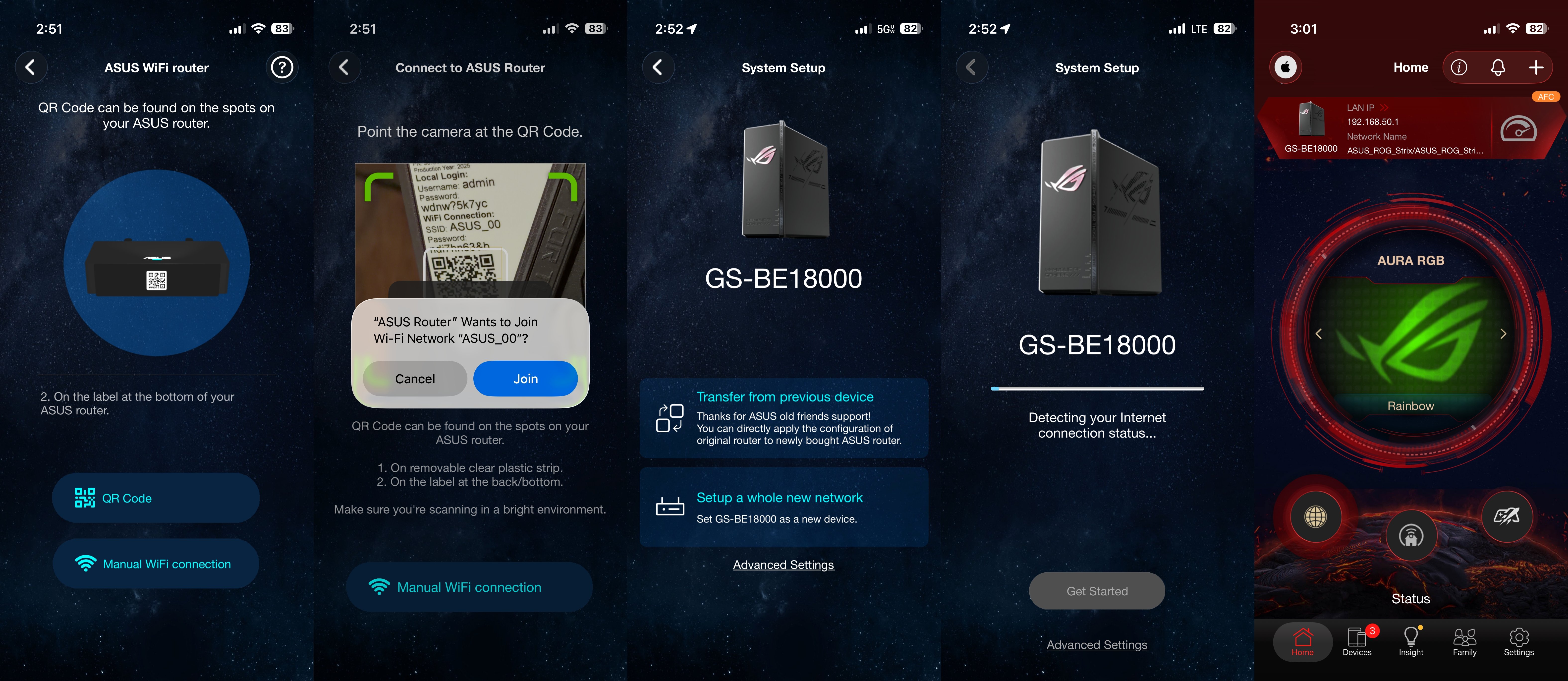
Setup is straightforward through either the desktop web interface or the Asus Router smartphone app. The mobile app proved particularly user-friendly, completing the entire process in approximately five minutes. Users can bind the router to their Asus account for remote management capabilities, enabling control from anywhere with internet connectivity.
The router supports Automated Frequency Coordination (AFC), which can boost 6 GHz band power levels when permitted by local regulations. This feature enhances range and performance in supported regions.
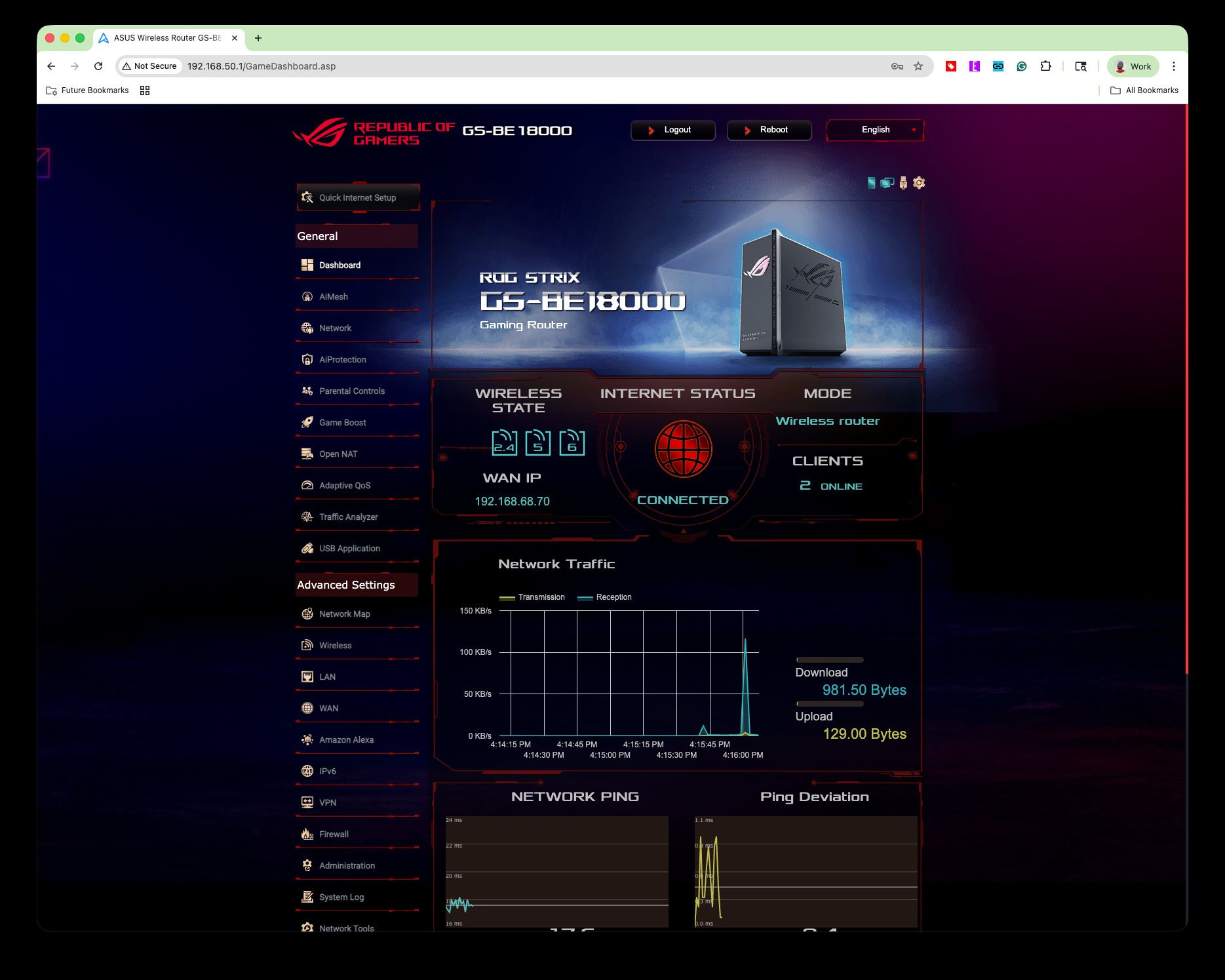
AsusWRT 5.0 powers the software experience with a gaming-oriented interface featuring dark themes and red accents. The dashboard provides comprehensive at-a-glance information including connected clients, connection status, traffic monitoring, and ping times.
Key software features include:
- AiMesh compatibility for mesh network expansion
- AiProtection security suite with Trend Micro integration
- Comprehensive parental controls with per-MAC implementation
- Game Boost for prioritized network traffic
- Adaptive QoS for traffic management
- Amazon Alexa integration
- Advanced USB port functionality including printer server and Time Machine backup support
Performance Testing Results
Testing was conducted using a Wi-Fi 7 client rig with iPerf3 throughput measurements at 6-foot and 25-foot distances, both with and without network congestion from six 4K YouTube streams.
6 GHz Band Performance
- Short range (6 ft): 2,000 Mbps (approximately 1/3 less than RT-BE96U's 3,040 Mbps)
- Long range (25 ft): 1,467 Mbps (25% performance drop)
- With congestion: 1,823 Mbps (short range), 1,400 Mbps (long range)
5 GHz Band Performance
- Short range (6 ft): 1,273 Mbps (significantly outperformed RT-BE96U's 720 Mbps)
- Long range (25 ft): 497 Mbps (RT-BE96U: 565 Mbps)
- With congestion: 1,200 Mbps (short range), 425 Mbps (long range)
2.4 GHz Band Performance
- Short range (6 ft): 122 Mbps (underperformed compared to Archer GE800's 187 Mbps)
- Long range (25 ft): 39 Mbps (Archer GE800: 131 Mbps)
- With congestion: 96 Mbps (short range), 37 Mbps (long range)
The 2.4 GHz performance proved particularly disappointing, with the ROG Strix GS-BE18000 showing significant weaknesses in both raw throughput and range compared to competitors. This could pose challenges for IoT devices or security cameras placed farther from the router.
Competitive Analysis
When compared to key competitors:
Asus RT-BE96U ($549):
- Superior 6 GHz performance (3,040 Mbps vs 2,000 Mbps at short range)
- Better 2.4 GHz performance (1,376 Mbps vs 688 Mbps)
- Includes 10 GbE WAN and LAN ports
- Higher price point
TP-Link Archer GE800 ($599):
- Better overall performance across all bands
- Includes dual 10 GbE ports
- Superior 2.4 GHz range (187 Mbps vs 122 Mbps at short range)
- Higher price but more future-proof connectivity
Conclusion
The Asus ROG Strix GS-BE18000 offers compelling hardware features, particularly its seven 2.5 GbE LAN ports and comprehensive software suite. The router excels in 5 GHz performance and provides excellent configurability for power users and gamers.
However, several factors limit its appeal at the $450 price point:
- Subpar 2.4 GHz performance and range
- Lack of 10 GbE connectivity
- Overall performance that doesn't match more expensive competitors
- Strong competition from TP-Link's Archer GE800
For users who prioritize wired connectivity and don't require extensive 2.4 GHz coverage, the ROG Strix GS-BE18000 offers excellent value. The seven 2.5 GbE ports alone justify consideration for multi-device households or small offices.
However, users seeking the best overall performance, particularly for mixed wireless environments or future-proofing with 10 GbE connectivity, would be better served by the TP-Link Archer GE800 despite its higher price. The RT-BE96U remains a strong alternative for those willing to pay a premium for superior 6 GHz performance and 10 GbE ports.
The ROG Strix GS-BE18000 succeeds as a feature-rich gaming router with exceptional LAN port density, but its performance limitations in key areas prevent it from achieving top-tier status in the competitive Wi-Fi 7 market.
Comments
Please log in or register to join the discussion