
OpenAI is introducing ads to ChatGPT's free and $8 Go tiers while assuring users that sponsored content will remain clearly separated from AI responses. The company emphasizes privacy protections and gives users control over ad personalization, though conversations may still influence ad targeting.
OpenAI is preparing to introduce advertisements to ChatGPT, marking a significant shift in the company's monetization strategy for its popular AI assistant. The rollout, which has been spotted in early testing on Android devices, represents OpenAI's first major step toward generating revenue from its free user base while maintaining its commitment to privacy and user experience.
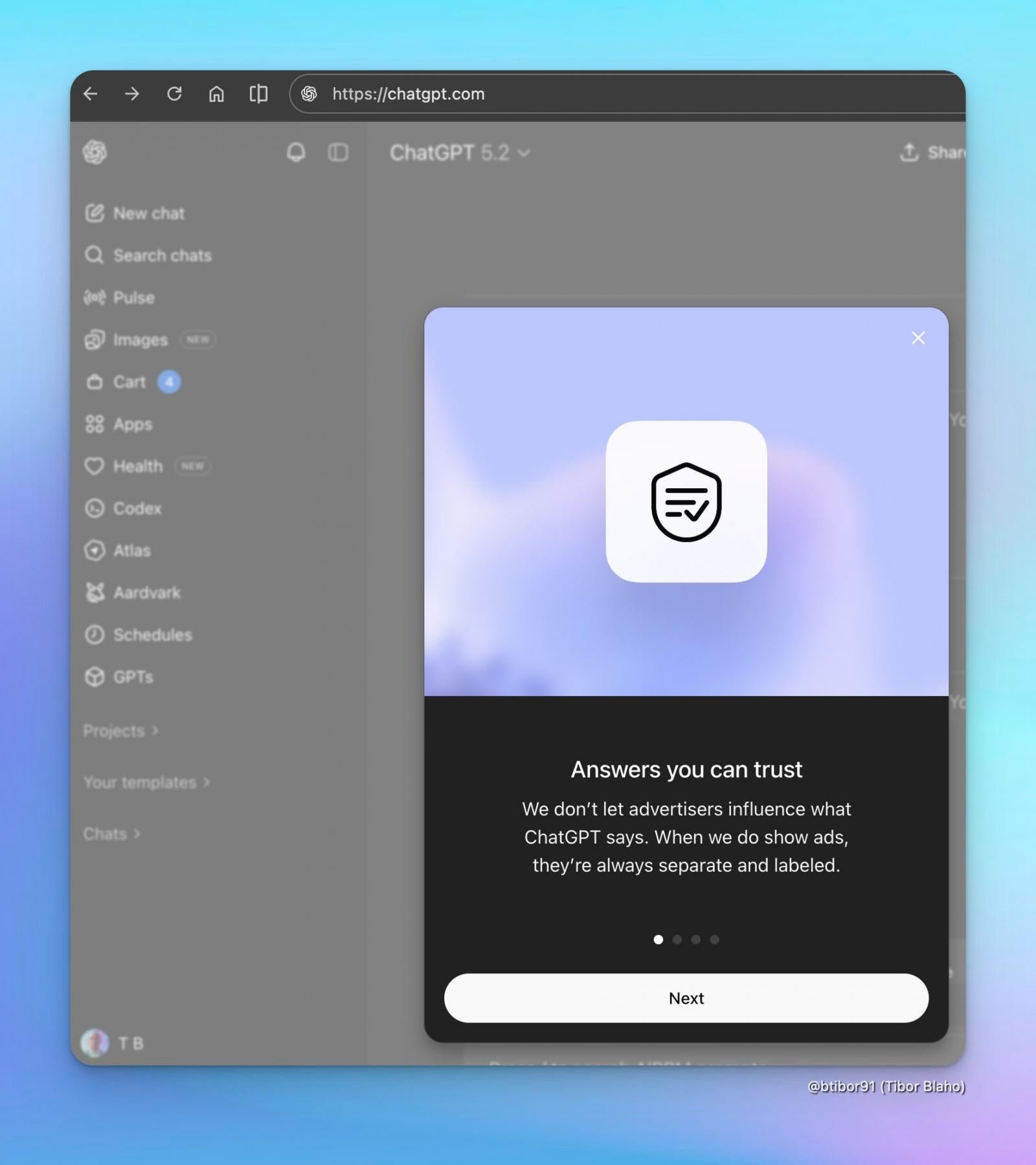
During the onboarding process for ads, OpenAI is presenting users with a full-screen introduction that emphasizes the company's commitment to maintaining the integrity of ChatGPT's responses. According to the company, advertisements will not influence or alter the AI's answers in any way. Instead, sponsored content will appear as clearly labeled "Sponsored" blocks positioned separately from the main response, ensuring users can easily distinguish between organic AI-generated content and paid promotions.
The privacy assurances from OpenAI are particularly noteworthy given the sensitive nature of conversations users have with ChatGPT. The company has explicitly stated that personal information will not be shared with advertisers, and conversations will remain private from third-party marketing entities. This stance aligns with OpenAI's broader mission of ensuring artificial general intelligence benefits all of humanity, with the company framing its advertising approach as a means to make AI more accessible to a wider audience.
However, the implementation does include some personalization elements. While OpenAI won't sell user data or share personal information, the content of current conversations can influence which sponsored ads appear below the AI's responses. This contextual targeting allows advertisers to reach users based on their immediate interests and queries without requiring access to personal data or conversation history beyond the current session.
To address potential user concerns about privacy and ad relevance, OpenAI has built several control mechanisms into the system. Users can hide specific ads they find irrelevant or intrusive, report problematic advertisements, and even ask ChatGPT for more information about why a particular ad was shown. Additionally, a new "Ads controls" page has been added to the settings menu, allowing users to manage their ad-related data independently from their chat history. This separation ensures that clearing ad data won't affect the continuity of conversations with the AI assistant.
The ad personalization toggle gives users the option to turn off personalized advertising entirely, though OpenAI notes that ads may still be influenced by the content of current conversations even with personalization disabled. This approach attempts to balance user privacy preferences with the need for advertisers to reach relevant audiences.
Importantly, OpenAI has drawn a clear line between different tiers of service when it comes to advertising. Users subscribed to Plus, Pro, Business, and Enterprise plans will not see advertisements in their ChatGPT experience. This distinction creates a clear value proposition for paid subscriptions while allowing the company to monetize its free tier without alienating its paying customers.
The introduction of ads comes at a time when OpenAI is making other significant changes to its service offerings. The company recently announced the retirement of its famous GPT-4o model, stating that GPT 5.2 provides sufficient capability for most use cases. Additionally, OpenAI has been experimenting with various pricing strategies, including offering $20 ChatGPT Plus subscriptions for free to select users and introducing the ChatGPT Go tier at $8 per month for unlimited access to GPT-5.2 Instant.
These developments suggest that OpenAI is actively exploring different revenue streams and pricing models as it scales its operations and continues to invest heavily in AI research and infrastructure. The advertising initiative represents a pragmatic approach to monetizing the massive user base of free ChatGPT accounts while maintaining the premium experience for paying subscribers.
For users concerned about the impact of ads on their ChatGPT experience, the company's approach appears designed to minimize disruption while providing transparency and control. The clear labeling of sponsored content, the separation from AI responses, and the robust privacy protections all indicate that OpenAI is taking a measured approach to this new revenue stream.
As the advertising rollout progresses, it will be interesting to see how users respond to this change and whether OpenAI's assurances about the separation of ads from AI responses hold true in practice. The success of this initiative could influence how other AI companies approach monetization, potentially setting a precedent for the industry as a whole.
The move also raises questions about the future of AI monetization more broadly. As companies like OpenAI continue to push the boundaries of what's possible with artificial intelligence, finding sustainable business models becomes increasingly important. Advertising represents one path forward, but it's likely that a combination of subscription services, enterprise offerings, and other revenue streams will be necessary to support the massive computational costs associated with running large language models at scale.
For now, ChatGPT users can expect to see these changes rolling out gradually, with the Android platform serving as the initial testing ground. The company's emphasis on user control and privacy protection suggests that OpenAI is aware of the potential sensitivities around introducing ads to an AI assistant and is taking steps to address them proactively.

Comments
Please log in or register to join the discussion