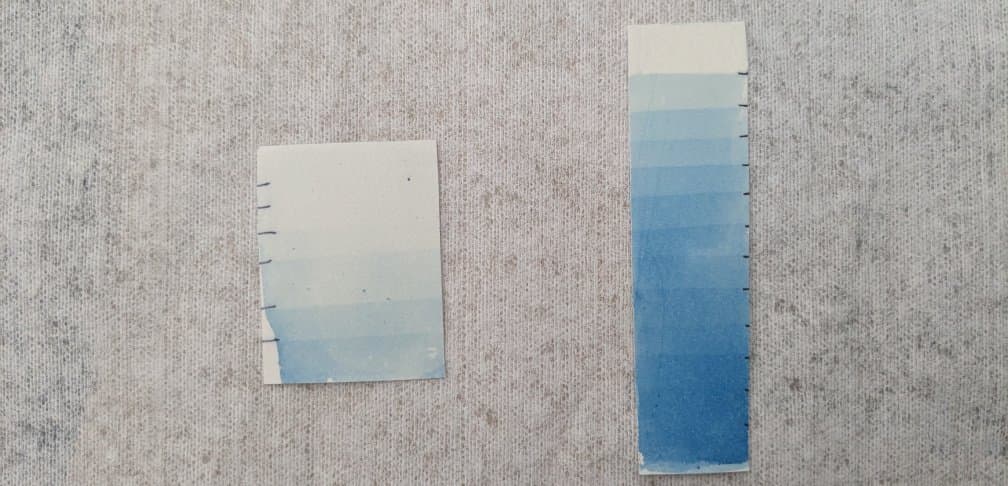
A new cyanotype formulation delivers 5x greater light sensitivity than traditional methods, enabling practical in-camera photography with ISO 0.0001.
Cyanotype, one of photography's oldest alternative processes, has long been limited by extremely low sensitivity. Traditional formulations require hours of exposure, making camera-based photography impractical. Now, an optimized formula pushes cyanotype sensitivity to new levels, achieving ISO 0.0001 - a fivefold improvement over classic methods.
The Formula
Sensitizer (by mass):
- 0.05 Ferric ammonium citrate or Iron(III) chloride
- 0.10 Oxalic acid
- 0.85 Water
Developer (by mass):
- 0.05 Potassium ferricyanide
- 0.01 Citric acid
- 0.94 Water
The sensitizer must be protected from blue/UV light during preparation. The developer shows minimal light sensitivity but remains functional under normal handling conditions.
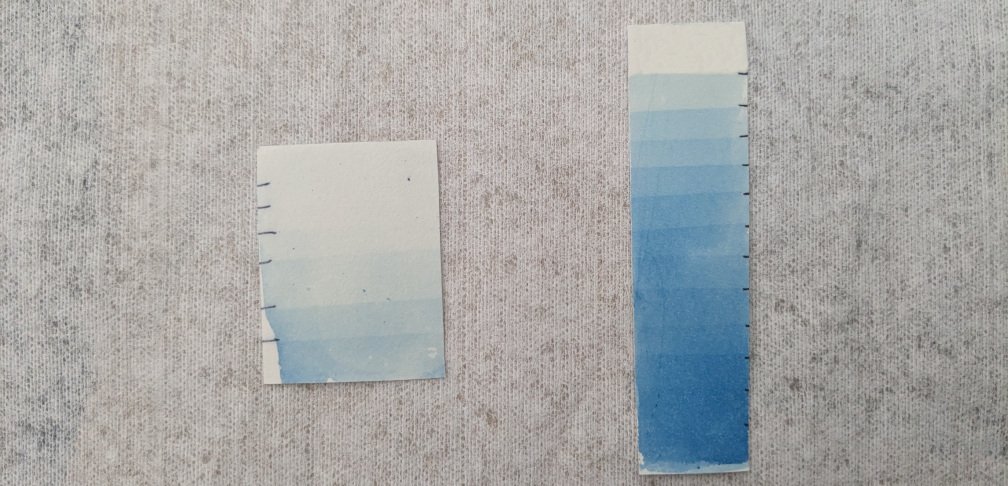 Comparison of exposure tests showing optimized formula (right) vs classic cyanotype (left). Each tick represents 1 second of sunlight exposure.
Practical Performance
- 5x sensitivity increase vs classic cyanotype
- Reduces exposure times from hours to minutes (3 hours → 10 minutes in equivalent conditions)
- Effective ISO: ~0.0001 (vs 0.000005 for classic)
- Optimal exposure range: 100-1000 kilolux seconds in sunlight
While maximum density is slightly lower (dark blue vs near-black), this maintains highlight detail and produces more manageable contrast than traditional cyanotype's characteristic high-contrast results.
Technical Advantages
This formulation solves four persistent cyanotype limitations:
Self-limiting reaction Traditional single-bath cyanotype forms pigment during exposure, blocking light and slowing the reaction. The optimized method uses separate sensitization and development phases.
Pigment washout Oxalic acid promotes larger Prussian blue crystals that resist dislodging during washing.
Paper compatibility Acidic components neutralize alkaline buffers in papers that cause blotching and fading.
Quantum efficiency Iron(III) oxalate (formed in situ) provides superior photoreduction vs traditional citrate complexes.
The developer's citric acid dissolves any residual iron(II) oxalate stain while freeing trapped iron for image formation.
Sensitivity Comparison
From slowest to fastest cyanotype variants:
- Classic formula (18% density at 25s sun exposure)
- Mike Ware's "New Cyanotype" (extrapolated)
- Two-step "Cyanotype Rex"
- Ferric ammonium citrate + citric acid
- Blue sheet variant
- Ferricyanide developer variants
- Optimized formula (18% density at 1s sun exposure)
Reference Formulas
Classic Cyanotype
- 5 Ferric ammonium citrate
- 2 Potassium ferricyanide
- 30 Water
Mike Ware's New Cyanotype
- 30 Ferric ammonium oxalate
- 10 Potassium ferricyanide
- 0.1 Ammonium dichromate (optional)
- 100 Water
Two-Step Acidic Variant Sensitizer:
- 5 Ferric ammonium citrate
- 10 Citric acid
- 95 Water
Developer:
- 5 Potassium ferricyanide
- 1 Citric acid
- 94 Water
This optimized cyanotype formula demonstrates how careful chemical engineering can revitalize historical photographic processes. By addressing fundamental limitations of the traditional method, it transforms cyanotype from contact-printing curiosity to viable camera-based process, all while using readily available chemicals.
Comments
Please log in or register to join the discussion