Seagate begins shipping 32TB HAMR hard drives across its Exos, IronWolf Pro, and SkyHawk AI product lines, expanding capacity and accessibility of heat-assisted magnetic recording technology.
Seagate has initiated shipments of 32TB hard drives utilizing heat-assisted magnetic recording (HAMR) technology. This second-generation HAMR release follows last year's 30TB models and represents Seagate's first capacity increase since the technology's commercial debut.
Three product families now include 32TB variants: Exos for enterprise servers, IronWolf Pro for NAS systems, and notably SkyHawk AI for surveillance applications. The SkyHawk AI inclusion marks a significant expansion, as this line was excluded from the initial HAMR release. 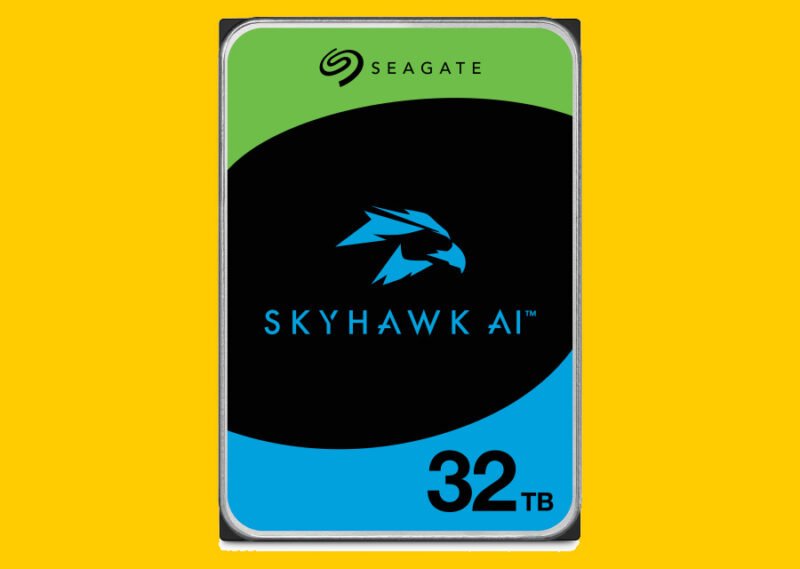 SkyHawk AI now matches competing Seagate brands in maximum capacity after lagging during the 30TB generation.
Technical specifications reveal these drives maintain the Mozaic+ platform foundation of their 30TB predecessors. The 1841Gb/in² areal density remains unchanged according to published specifications. 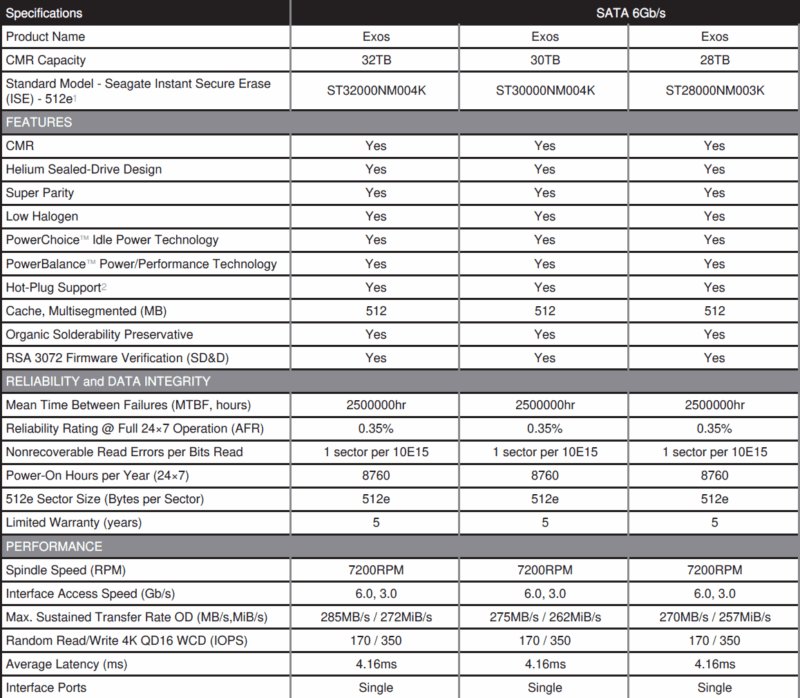 Capacity gains result from utilizing previously unavailable storage space on the same 10-platter helium-filled design rather than physical hardware changes. All models employ conventional magnetic recording suitable for RAID deployments.
Performance shows modest improvement with sequential transfer rates reaching 285MB/second compared to the previous 275MB/second ceiling. The drives target high-capacity economic storage needs across different sectors: Exos for AI infrastructure, IronWolf Pro for network storage, and SkyHawk AI for AI-enhanced surveillance systems.
Pricing shows strategic positioning: SkyHawk AI carries a $700 MSRP, Exos $730, and IronWolf Pro $850. However, Seagate currently sells both SkyHawk AI and IronWolf Pro models at $700 through direct channels, indicating fluid pricing strategies. Market availability shows strong supply for 32TB IronWolf Pro models while 30TB versions have become scarce.
Concurrently, Seagate appears to phase out the "Exos M" sub-brand introduced for early HAMR drives. 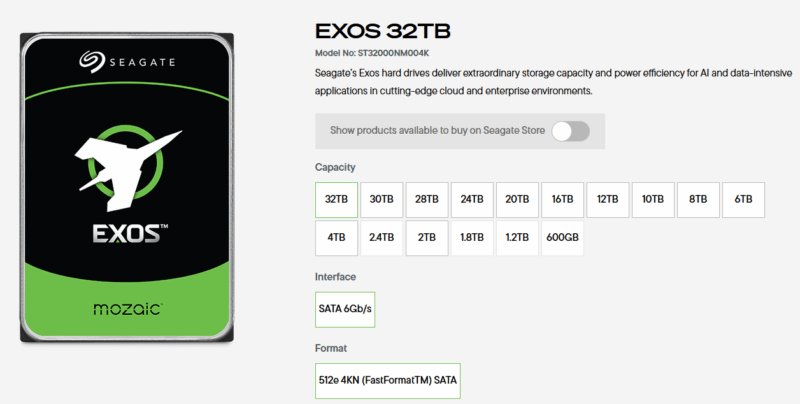 Product pages now integrate HAMR models under the main Exos branding, though documentation retains the M-series designation. This consolidation alongside expanded product availability and capacity growth signals growing market acceptance of HAMR technology after its initial deployment.
Comments
Please log in or register to join the discussion