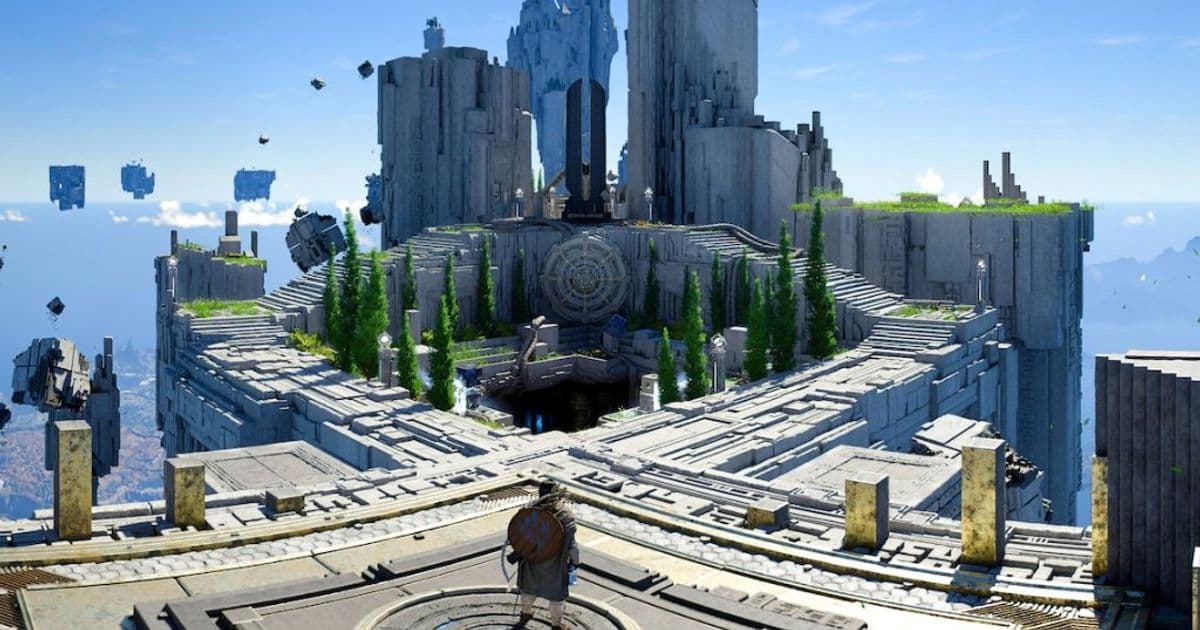
Pocketpair's publishing chief spent seven hours exploring Crimson Desert's open world instead of following the main storyline, calling it 'my dream game' despite widespread criticism of its uneven narrative and clunky controls.
When Crimson Desert launched on March 19, it arrived with mixed reviews on Steam and a generally favorable user score on Metacritic. While many players praised its vast, explorable open world, others criticized the game's clunky controls and uneven story. However, one player's experience stands out from the crowd: John "Bucky" Buckley, publishing chief at Pocketpair (the studio behind Palworld), spent seven hours "goofing around" in the game without touching the main storyline.
Buckley took to X to share his unconventional approach, stating: "Clocked 7 hours in Crimson Desert today, mostly goofing around and not doing the story. The game is made for me." His enthusiasm was palpable, though he acknowledged the game's divisive nature: "Totally understand all the criticism, and I agree that the game is not for everyone, but… this is my dream game. Loving it. Will update after the weekend."
This perspective offers an interesting lens through which to view Crimson Desert's reception. Many players approach open-world adventure games expecting both compelling narrative building and solid gameplay mechanics. Buckley, however, found his niche by ignoring the main objectives and focusing purely on exploration within Pywel's world.
The game's development history provides context for its rough edges. Pearl Abyss spent years developing Crimson Desert as a follow-up to Black Desert Online, and the studio's ambitious scope may have contributed to the uneven final product. The game features challenging mechanics and a storyline that many find mediocre or confusing when approached traditionally.
What makes Buckley's experience particularly noteworthy is how it highlights a different way to engage with the game. By treating Crimson Desert as an open-world sandbox rather than a story-driven title, players might discover aspects that work far better than the narrative-focused elements. This approach aligns with how some players enjoy games like The Legend of Zelda: Breath of the Wild or Elden Ring, where exploration and player-driven discovery take precedence over linear storytelling.
Pearl Abyss has addressed player complaints about the game's control scheme, with the PR and marketing director comparing it to learning to ride a bike: "Think of it like riding a bike; it comes naturally after you learn it. It just takes a minute. I agree with you, it takes time to learn, but it comes naturally after you do."
Buckley's seven-hour exploration session raises an interesting question about how we evaluate games. Should a game be judged primarily on its intended experience, or can alternative approaches to gameplay reveal hidden strengths? For players frustrated with Crimson Desert's narrative, Buckley's experience suggests that the game might still offer substantial enjoyment through pure exploration and sandbox-style play.
The contrast between Buckley's enthusiasm and the broader critical reception demonstrates how subjective gaming experiences can be. What one player finds frustrating, another might find liberating. In Buckley's case, the freedom to ignore the story and simply explore appears to have unlocked the game's appeal for him.
As Crimson Desert continues to evolve post-launch, it will be interesting to see whether more players discover alternative ways to enjoy the game beyond its intended narrative path. Buckley's experience suggests that sometimes the best way to appreciate a game is to approach it on your own terms, even if that means skipping the story entirely.
For those curious about Crimson Desert, the game is available on Amazon and other digital platforms. Whether you choose to follow the story or explore at your own pace, Buckley's experience reminds us that there's often more than one way to enjoy a game, even one with acknowledged flaws.
Comments
Please log in or register to join the discussion