As organizations like Microsoft and Aflac embrace passkeys to replace vulnerable passwords, we dissect the cryptographic backbone of this authentication shift. While passkeys eliminate phishing and reuse risks, device dependency and legacy integration challenges reveal a complex transition ahead.
For decades, passwords have been the Achilles' heel of cybersecurity. Verizon’s 2025 Data Breach Investigations Report reveals 88% of breaches involved stolen credentials, spotlighting an urgent need for alternatives. Enter passkeys—cryptographic authenticators championed by the FIDO Alliance and adopted by tech giants. But beneath the hype lies a critical question: Do they truly deliver unhackable security?
The Cryptographic Engine Behind Passkeys
Passkeys replace memory-based passwords with asymmetric cryptography. Here’s the mechanism in action:
1. Key Pair Generation: At registration, your device creates a linked public-private key pair.
2. Public Key Storage: The service (e.g., Gmail) stores only the public key.
3. Private Key Security: The private key remains *exclusively* on your device, guarded by biometrics or a PIN.
4. Challenge Response: During login, the service sends a cryptographic challenge.
5. Signature Verification: Your device signs it with the private key; the service validates it with the public key.
Unlike passwords, passkeys are immune to phishing, brute-force attacks, and credential stuffing since secrets never leave your device or traverse networks. Even database breaches yield useless public keys.
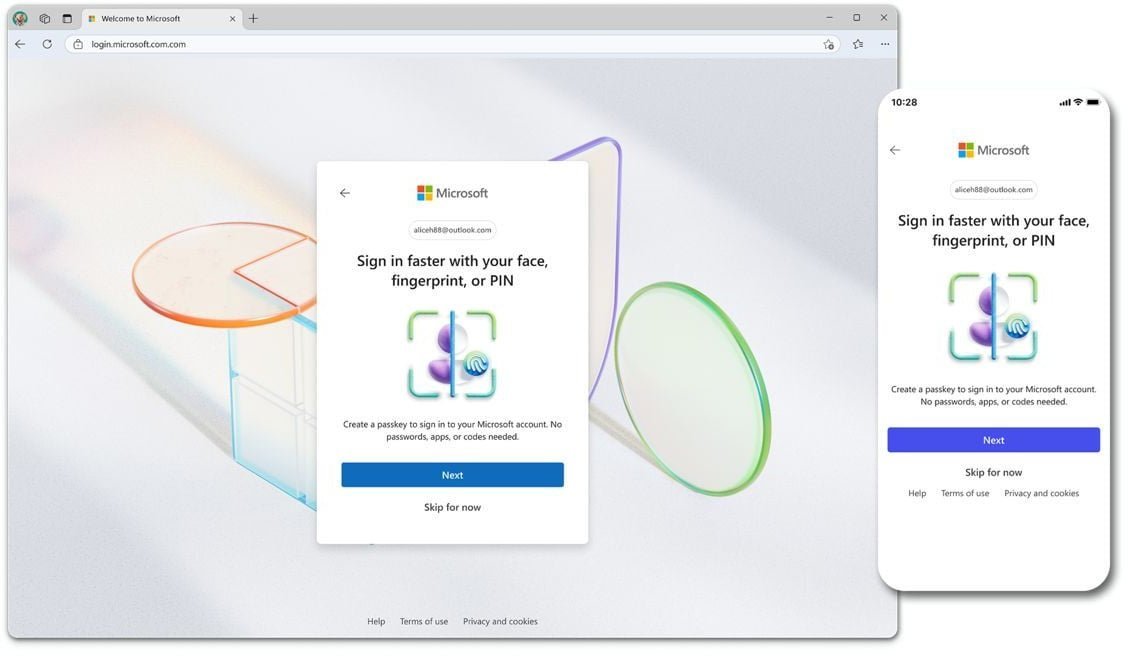 Microsoft’s passkey-driven sign-in page reflects its "passwordless by default" shift for new accounts.
Adoption Surge: Real-World Impact
- Microsoft: Reports 1 million daily passkey registrations with a 98% login success rate—triple the password success rate. Passwords are now optional at sign-up.
- Aflac: The insurer slashed password recovery requests by 32% and avoids 30,000 monthly identity-related support calls after FIDO-based rollout.
Why Passkeys Win (and Where They Stumble)
Strengths
"Passkeys eliminate the weakest link—human-generated secrets—while making authentication frictionless," notes a FIDO Alliance architect.
- Security: No shared secrets = no phishing or credential theft.
- UX: Biometric logins replace password memorization.
- Cost: 40%+ reduction in password-reset support tickets.
Limitations
- Device Lock-in: Lose your phone? Account recovery becomes complex.
- Legacy Incompatibility: Mainframe-era systems can’t integrate FIDO standards, forcing hybrid models.
- Deployment Hurdles: 43% of enterprises cite setup complexity; 33% highlight costs (FIDO Alliance).
The Hybrid Reality: Passkeys Aren’t Killing Passwords Yet
While passkeys excel for mobile/web apps, legacy systems and budget constraints prolong password dependence. During this transition:
- Hybrid authentication will dominate, requiring robust password policies as a fallback.
- User education gaps must close—53% of users trust passkeys more but lack technical understanding.
The Bottom Line
Passkeys mark a quantum leap in authentication security but face adoption friction. For now, organizations must fortify password hygiene while migrating to passwordless. As FIDO standards evolve, resolving device dependency and legacy gaps will determine if passkeys become ubiquitous—or remain a high-security niche.
Source: Based on reporting from BleepingComputer. Sponsored content considerations noted.
Comments
Please log in or register to join the discussion