
Panthalassa secures $140M in Series B funding to develop offshore AI compute nodes powered by ocean wave energy, addressing the growing electricity demands of artificial intelligence with sustainable solutions.
Peter Thiel Backs $140M Wave-Powered AI Data Center Startup Panthalassa
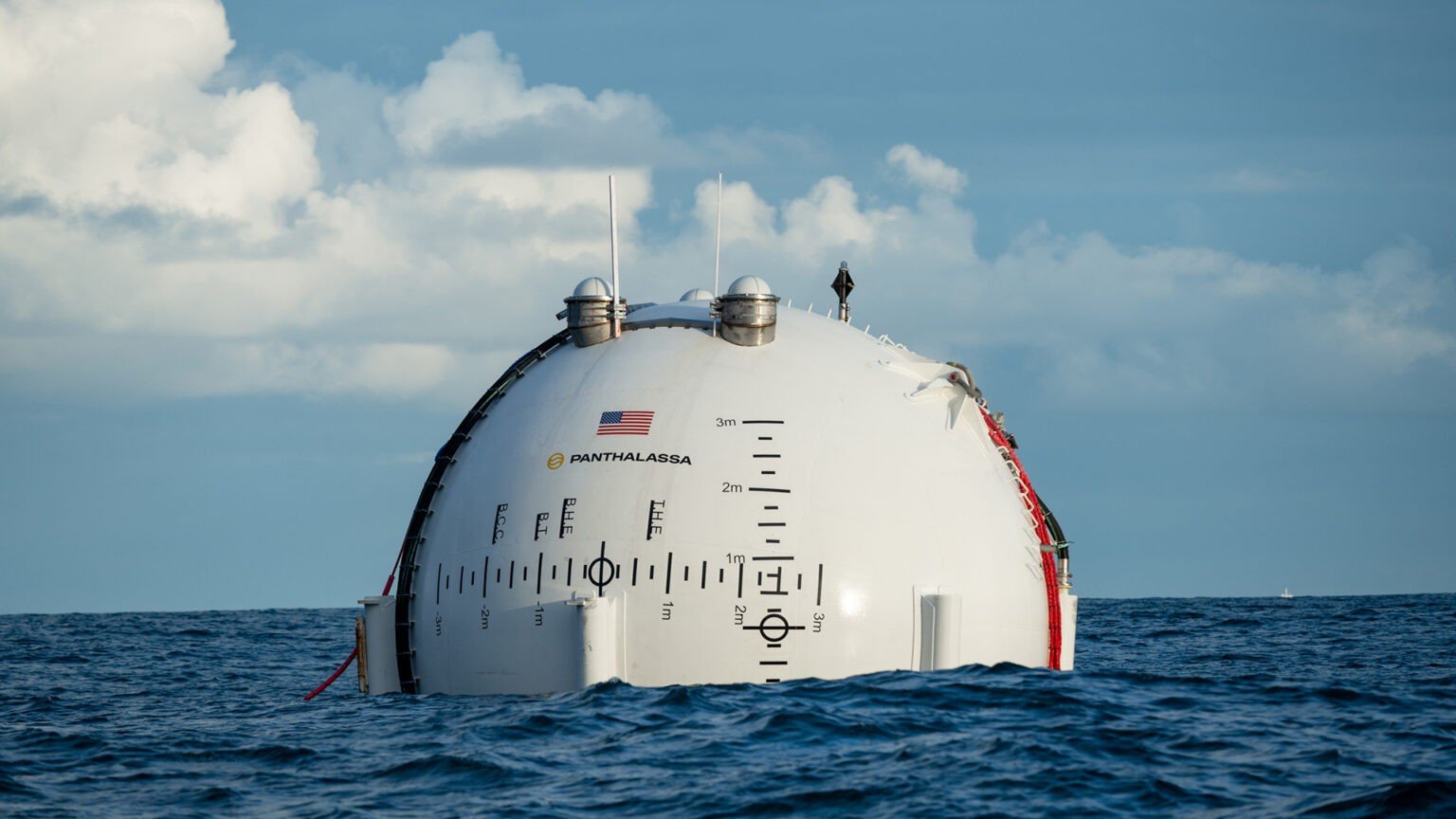
The semiconductor and AI industries continue to seek innovative solutions to power exponentially growing computational demands, with Panthalassa emerging as a pioneering force in this space. The Portland-based renewable energy and ocean technology company has secured $140 million in Series B financing, led by notable investor and Palantir co-founder Peter Thiel, alongside several other undisclosed investors. This substantial investment will accelerate Panthalassa's development of autonomous offshore data centers powered entirely by ocean wave energy.
Funding and Strategic Vision
The Series B round represents a significant vote of confidence in Panthalassa's technology and market positioning. Peter Thiel, known for his early investments in transformative technologies, commented on the potential of ocean-based computing solutions: "The future demands more compute than we can imagine. Extra-terrestrial solutions are no longer science fiction. Panthalassa has opened the ocean frontier."
Garth Sheldon-Coulson, Co-Founder and CEO of Panthalassa, articulated the company's ambitious vision: "There are three sources of energy on the planet with tens of terawatts of new capacity potential: solar, nuclear, and the open ocean. We've built a technology platform that operates in the planet's most energy-dense wave regions, far from shore, and turns that resource into reliable, clean power. We're now ready to build factories, deploy fleets, and provide a sustainable new source of energy for humanity."
Technical Architecture of the Ocean-3 Nodes
Panthalassa's core innovation lies in its Ocean-3 series nodes—autonomous platforms designed to house and power data centers for AI inference computing at sea. Each node features a distinctive lollipop-shaped design comprising a buoyant spherical head connected to a long, submerged vertical tube and structural frame.
The system operates on a sophisticated principle of energy conversion:
- As ocean waves pass, the node's buoyant head bobs up and down
- The surrounding water moves only in small orbital paths, creating relative motion
- This relative motion induces oscillations within the submerged tube
- The oscillating flow is channeled into the spherical chamber through a high-pressure jet
- The water passes through internal turbines, generating electricity
- The water then recirculates back into the tube to repeat the cycle
This closed hydraulic loop continuously extracts energy from wave-induced motion, providing consistent power generation as the ocean never stops moving. The system's autonomous nature is further enhanced by satellite data transmission, eliminating the need for physical tethering to shore infrastructure.
Cooling Efficiency and Operational Advantages
One of the most significant advantages of Panthalassa's offshore approach is the natural cooling provided by the surrounding ocean. Data centers, particularly those supporting AI workloads, generate substantial heat that requires expensive and energy-intensive cooling systems on land. The ocean acts as a massive heat sink, providing free supercooling that addresses one of the biggest engineering challenges in land-based data centers.
Each node incorporates advanced propulsion and station-keeping systems, allowing it to maintain optimal positioning or operate as part of a distributed offshore network. This design effectively couples renewable energy generation directly with modular AI compute at sea, creating a self-sufficient ecosystem for computational workloads.
Market Context and AI Energy Challenges
Panthalassa's emergence comes at a critical time when AI's electricity demand is rising much faster than conventional power infrastructure can accommodate. Grid operators in many regions are already struggling to meet existing demands, while communities increasingly resist new power developments due to concerns about land use, noise, and environmental impact.
According to various industry analyses, AI workloads could account for 3.5% of global electricity consumption by 2026, up from less than 1% in 2020. This exponential growth has created an urgent need for innovative energy solutions that don't rely solely on traditional grid infrastructure.
Panthalassa's approach represents one of several unconventional solutions being explored to meet these demands. Just last month, Meta announced a partnership with an energy startup to beam solar energy from space, enabling continuous 24/7 power generation. Other companies are researching off-planet data centers and advanced nuclear solutions to power the AI revolution.
Development Roadmap and Commercial Deployment
After extensive research and development spanning several years and multiple iterations of their technology, Panthalassa is now focused on manufacturing and deployment. The company plans to complete its pilot manufacturing facility in Oregon and deploy its Ocean-3 pilot node series in the northern Pacific Ocean.
These initial deployments will demonstrate AI inference capabilities while refining the manufacturing process in preparation for commercial operations scheduled to begin in 2027. The company aims to establish a fleet of these nodes, creating a distributed network of offshore compute facilities powered entirely by renewable wave energy.
Broader Implications for Semiconductor and AI Infrastructure
Panthalassa's technology could have profound implications for the semiconductor industry and AI development. By providing a reliable, sustainable power source for offshore data centers, the company may help alleviate constraints on AI development posed by terrestrial power limitations and cooling challenges.
The approach also offers potential advantages for data sovereignty and security, as offshore facilities could be positioned in international waters, operating under different regulatory frameworks. Additionally, the modular nature of the nodes allows for scalable deployment that can match growing computational demands.
As the race to develop more powerful AI models continues, innovations like Panthalassa's wave-powered data centers may become essential components of the technological infrastructure that supports next-generation artificial intelligence. The intersection of renewable energy and advanced computing represents one of the most promising frontiers in sustainable technology development.
For more information about Panthalassa's technology and development progress, interested readers can visit the company's official website when available, though detailed public resources remain limited as the company advances toward commercial deployment.
Comments
Please log in or register to join the discussion