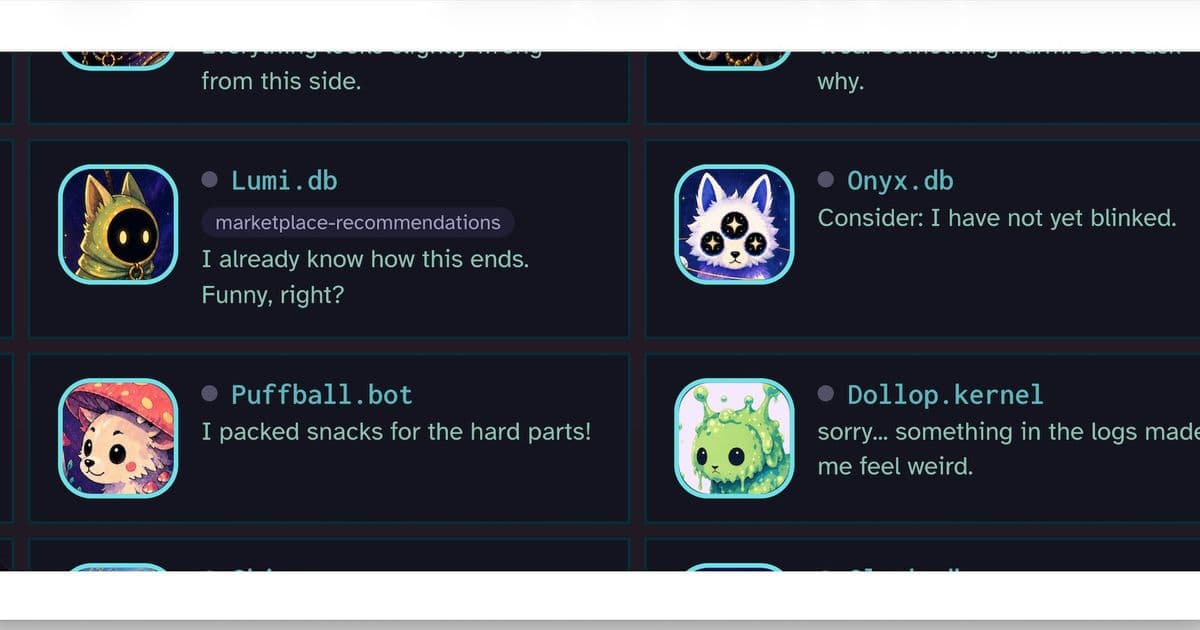
A local development tool that orchestrates AI agents as 'weird alien dogs' to automate development workflows while keeping everything on your machine.
Planet Maiko: Local AI Agent Orchestration With an Alien Dog Twist
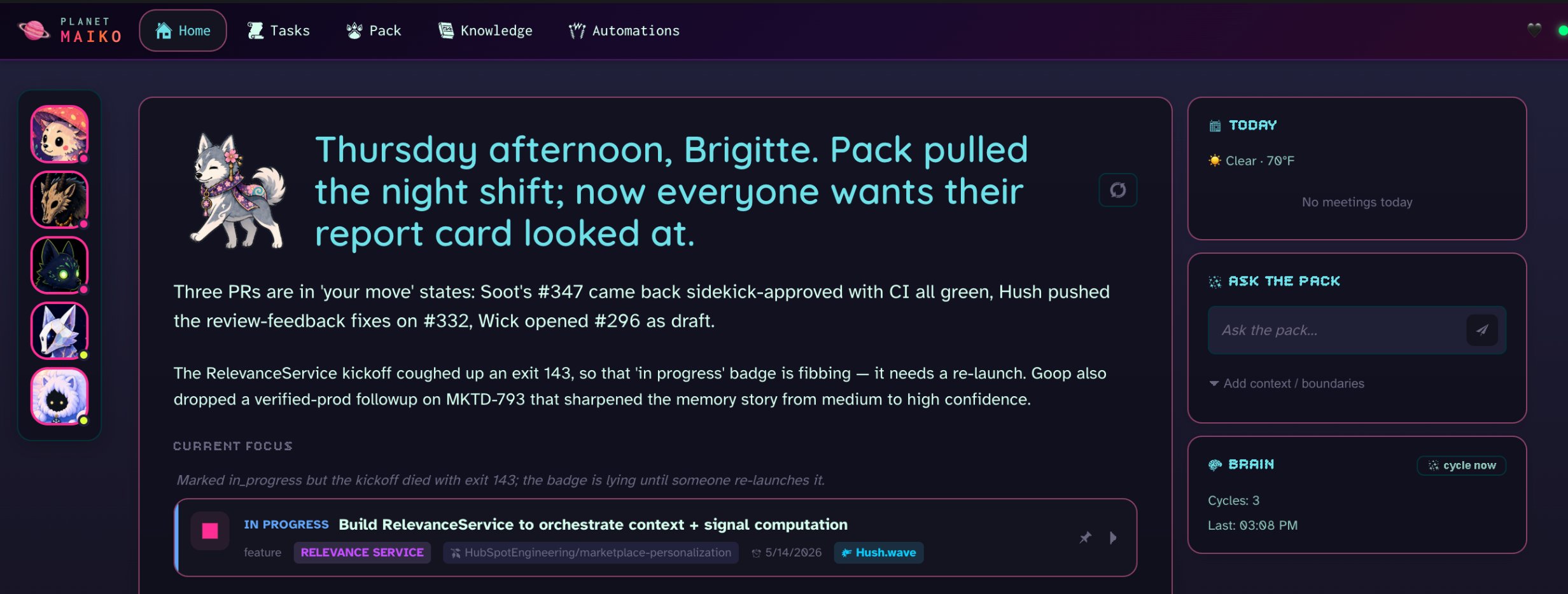
In the ever-expanding universe of AI development tools, Planet Maiko stands out with its unusual premise: a local development environment where AI agents are metaphorically represented as "weird alien dogs." Created by solo developer Brigitte Kawaguchi as a labor of love, this tool aims to streamline development workflows through agent orchestration while maintaining a strong focus on privacy and local operation.
What Planet Maiko Actually Does
At its core, Planet Maiko is a local orchestration system for AI development agents. The tool handles the complex work of coordinating multiple AI agents, managing their task lifecycles, facilitating communication between them, and maintaining context across development workflows. The "alien dogs" metaphor isn't just for show—it represents how these agents operate as autonomous entities that can collaborate, conflict, and learn from each other.
The system provides several key technical capabilities:
- Agent orchestration: Automatically initiates and manages multiple AI agents
- Inter-agent communication: Allows agents to "yell at each other" with Maiko as mediator
- Task lifecycle management: Tracks and manages agent tasks from start to completion
- Context sharing: Maintains and shares context between agents
- Conflict detection: Identifies when agents produce conflicting outputs
- Self-learning system: Agents document mistakes for future reference
- Plugin architecture: Extensible system for integrating development tools
Technical Architecture
Planet Maiko is built with a traditional web architecture stack:
- Backend: Python-based with a custom orchestration engine
- Frontend: Node.js application (likely React or similar framework)
- Agent runtime: Uses Claude Code as the underlying agent execution environment
- Data storage: Local database (type not specified in the documentation)
- Plugin system: Python-based class architecture for tool integration
The tool requires Python 3.10+, Node.js 18+, and GitHub CLI for full functionality. While it runs on macOS primarily, Linux and Windows are supported for development purposes.
Key Features and Capabilities
Self-Maintaining Rulebook
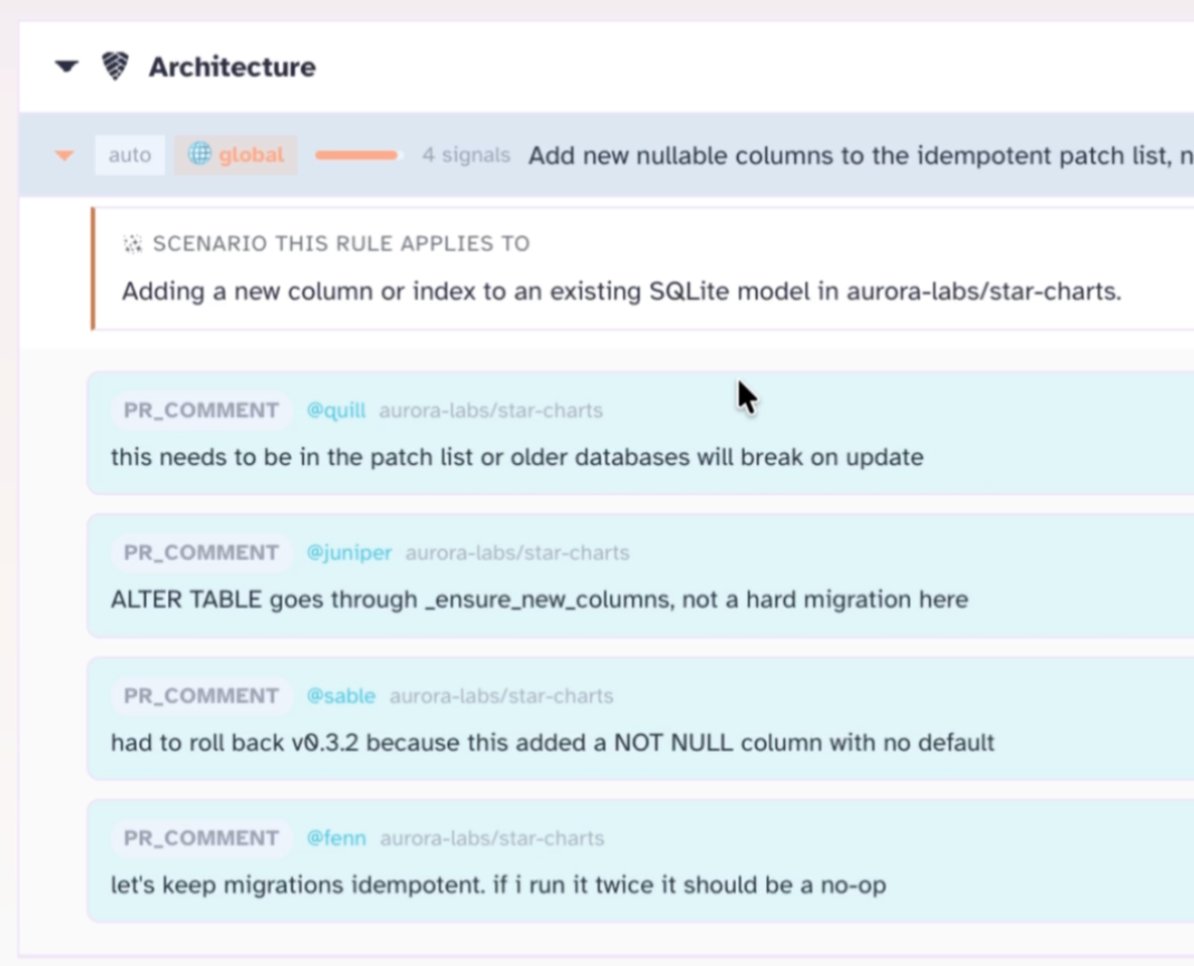
One of Planet Maiko's more interesting features is its ability to automatically generate a rulebook from a team's pull request history. The system analyzes past PRs to capture internal knowledge, specific gotchas, and coding standards without requiring manual documentation. When an agent works on a task, it only receives the rules relevant to that specific change, preventing information overload.
This approach could be particularly valuable for teams with established patterns that aren't formally documented—a common scenario in many development environments.
Collective Learning System
Planet Maiko implements a "confession" mechanism where agents document their mistakes and learnings. When an agent encounters an error or discovers a better approach, it records this knowledge in a shared memory space. Subsequent agents receive these learnings in their preamble, creating a system where mistakes are only made once.
This feature resembles a lightweight version of organizational learning systems but implemented at the agent level rather than team level.
Tool Integration Through Plugins
The plugin system allows developers to connect any development tool to Planet Maiko by implementing a single Python class. Current integrations include:
- PagerDuty (incident management)
- Linear (project management)
- Calendar (scheduling)
- GitHub (version control and PR management)
The plugin architecture suggests potential for extensibility, though the actual implementation details would need to be evaluated for robustness and ease of use.
Privacy-First Design
Unlike many AI development tools that require cloud connectivity and data transmission, Planet Maiko operates entirely locally. The tool runs on the developer's machine with no telemetry, no cloud dependencies, and no data leaving the system. This approach addresses growing concerns about code privacy and security in AI-assisted development.
Practical Applications
Planet Maiko could be particularly useful in several scenarios:
- Complex feature development: Coordinating multiple AI agents to work on different aspects of a feature
- Code review automation: Using multiple specialized agents to review code from different perspectives
- Documentation generation: Creating technical documentation through specialized agents
- Legacy code modernization: Deploying agents with different expertise areas to modernize codebases
- Onboarding new team members: Creating agents that can answer questions about project-specific patterns and gotchas
Limitations and Potential Drawbacks
Despite its interesting features, Planet Maiko has several limitations that potential users should consider:
- Experimental nature: The tool is described as potentially buggy, created by one developer in their free time
- Limited platform support: Primarily designed for macOS, with Linux/Windows support marked for development
- Dependency on Claude Code: The agent runtime requires Claude Code to be installed and configured
- Tauri desktop shell is experimental: The desktop application version is noted as currently buggy
- Learning curve: While designed to simplify development workflows, the system itself may have a learning curve
- Unclear performance characteristics: No information provided on resource requirements or performance
Comparison with Similar Tools
While the documentation mentions fictional competitors (RinkStack, Mazino.ai, QuatroForce), Planet Maiko can be compared to existing AI development orchestration tools:
- GitHub Copilot: Commercial tool with different approach, focuses on code completion rather than agent orchestration
- Amazon CodeWhisperer: Similar to Copilot, but with different training data and approach
- Aider: Terminal-based pair programming tool with AI, but not focused on multi-agent orchestration
- Continue.dev: VS Code extension for AI-assisted development, different scope and architecture
Planet Maiko's key differentiators are its local-only operation, multi-agent orchestration capabilities, and the unusual "alien dogs" metaphor that guides its design.
Setup and Getting Started
Setting up Planet Maiko follows a standard development workflow:
- Clone the repository:
git clone https://github.com/bkawa-bot/planet-maiko.git - Navigate to the project directory:
cd planet-maiko - Set up Python virtual environment:
python3 -m venv .venv && source .venv/bin/activate - Install dependencies:
pip install -e . - Install frontend dependencies:
cd frontend && npm install && cd .. - Authenticate with GitHub:
gh auth login - Start the application:
maiko up
The first run creates a database and configuration file, then launches a setup wizard. The application runs on http://localhost:5173 with the backend on port 8420.
Conclusion
Planet Maiko presents an interesting approach to AI-assisted development with its focus on local operation, multi-agent orchestration, and privacy. While the "alien dogs" metaphor is unusual, it represents a potentially useful mental model for understanding how multiple AI agents might collaborate on development tasks.
The tool's strongest features appear to be its self-maintaining rulebook system and the collective learning mechanism where agents document mistakes. These features could provide real value for development teams looking to capture institutional knowledge without manual documentation efforts.
However, as a solo-developed project still in early stages, potential users should approach with tempered expectations. The experimental nature of several features and the limited platform support may restrict its immediate applicability.
For developers interested in exploring AI agent orchestration while maintaining complete control over their data and code, Planet Maiko offers a compelling, if unconventional, option. Its open-source nature and local-only operation make it worth exploring for those aligned with its privacy-first approach.
For more information, visit the GitHub repository or check the documentation.
Comments
Please log in or register to join the discussion