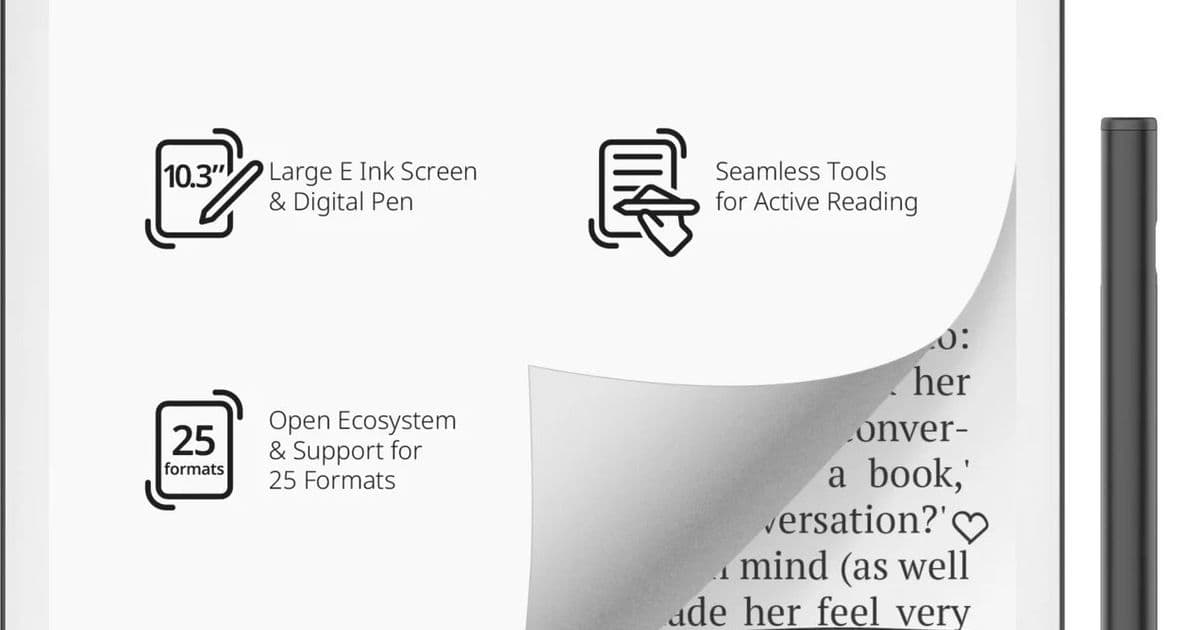
PocketBook's InkPad One combines a large E Ink display with stylus support for a paper-like writing experience, targeting students and professionals who need extensive digital note-taking capabilities.
The digital note-taking landscape continues to evolve, with E Ink technology finding new applications beyond traditional e-readers. PocketBook, a company known for its e-reading devices, has entered the writing tablet market with the InkPad One, a 10.3-inch device designed specifically for those who prefer the feel of pen on paper but want the convenience of digital storage and organization.
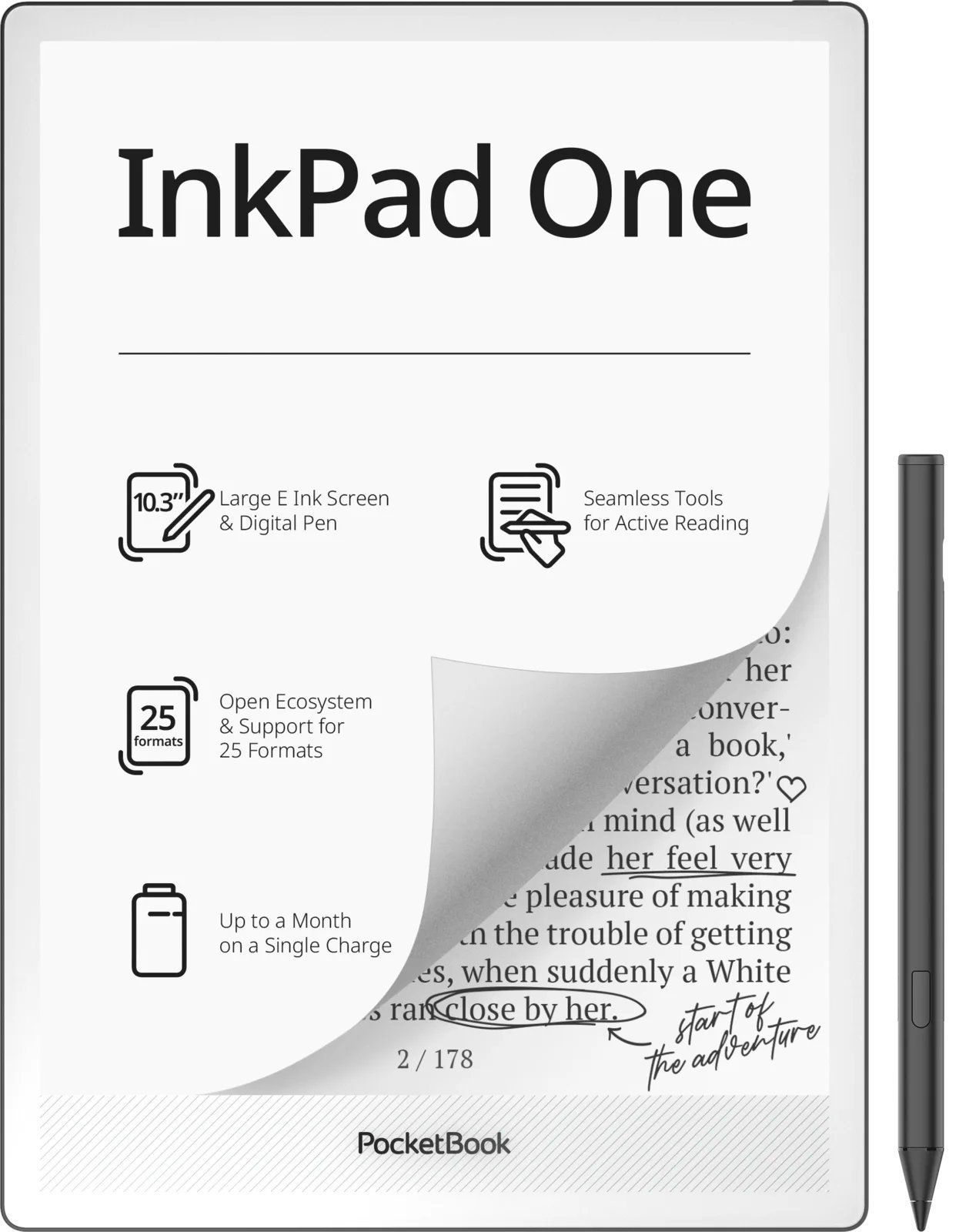
The InkPad One features a 10.3-inch E Ink Carta display with a resolution of 1404 x 1872 pixels, resulting in a sharp 227 PPI density. This size places it in the same category as other popular writing tablets like the reMarkable 2 and the Kobo Elipsa, offering ample space for note-taking, sketching, and document annotation. The E Ink technology provides several advantages for writing applications: extremely low power consumption, excellent readability in direct sunlight, and a paper-like appearance that reduces eye strain during extended use.
What sets the InkPad One apart is its focus on the writing experience. The device comes with a Wacom EMR (Electro-Magnetic Resonance) stylus that offers 4096 levels of pressure sensitivity and tilt detection. This combination provides a natural writing feel with minimal latency, addressing one of the primary concerns users have when switching from paper to digital note-taking. The stylus doesn't require charging or pairing, making it immediately ready for use whenever inspiration strikes.
Under the hood, the InkPad One is powered by a quad-core processor with 1GB of RAM and 16GB of internal storage. While these specifications might seem modest compared to typical tablets, they're more than adequate for the device's intended purpose. The 16GB of storage can hold thousands of notes and documents, and the device supports microSD cards for additional expansion. A 1,200mAh battery provides weeks of use on a single charge, thanks to E Ink's power-efficient display technology.
The software experience is centered around note-taking and document management. The device supports various file formats including PDF, EPUB, and TXT, allowing users to annotate documents directly on the screen. The note-taking application offers multiple pen types, colors, and page templates, catering to different writing styles and needs. Notes can be organized into folders and exported in various formats, including PDF and image files, for sharing or backup.
Connectivity options include Wi-Fi for syncing notes to cloud services and transferring files, though the device lacks cellular connectivity. This design choice keeps the device focused on its core function as a distraction-free writing tool. The absence of a web browser or app store further reinforces this focus, creating an environment conducive to concentration and productivity.
For students and professionals who rely heavily on handwritten notes, diagrams, and annotations, the InkPad One offers a compelling alternative to traditional pen and paper. The ability to search handwritten notes, easily organize and access years of notes in a slim device, and seamlessly share or export content provides significant advantages over physical notebooks. The large display size is particularly beneficial for those who work with complex diagrams, mathematical equations, or need to view and annotate full-page documents.
The device also includes features like text conversion, allowing users to convert their handwritten notes to typed text for easier sharing and searching. This OCR (Optical Character Recognition) capability, while not perfect, can significantly speed up the process of digitizing handwritten content.
Priced competitively within the writing tablet market, the InkPad One represents PocketBook's entry into a growing segment that bridges the gap between e-readers and full-featured tablets. As remote work and digital learning continue to shape how we interact with information, devices like the InkPad One offer a middle ground for those who value the tactile experience of writing but want the benefits of digital organization and storage.
The PocketBook InkPad One is available now through various retailers and directly from PocketBook's website. For those interested in a dedicated writing device with a large, paper-like display and natural writing experience, it presents a worthy option to consider alongside established players in the digital note-taking space.
Comments
Please log in or register to join the discussion