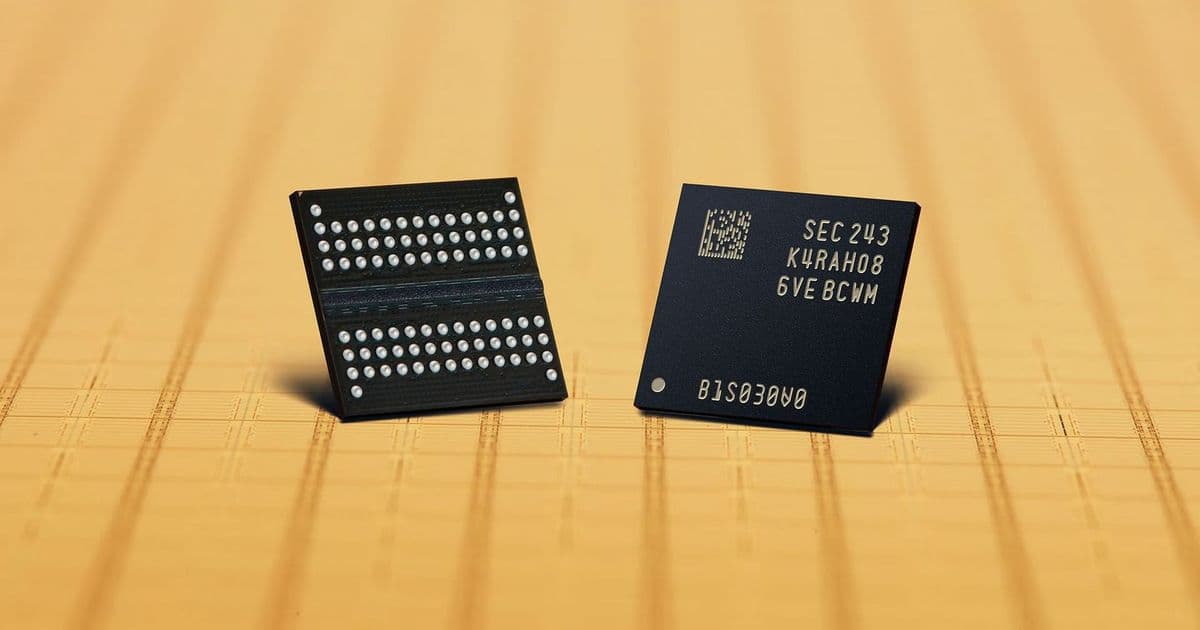
AI-driven demand for high-performance memory is set to double revenue for memory makers compared to contract chip manufacturers by 2026, according to TrendForce forecasts.
Memory makers are poised to capture the lion's share of AI infrastructure spending, with revenue forecasts suggesting they'll earn more than twice as much as contract chip manufacturers by 2026. According to TrendForce estimates, while global foundry revenue is expected to reach $218.7 billion, 3D NAND and DRAM revenue will surge to $551.6 billion, driven by unprecedented demand from AI data centers.
AI Supercycle Creates Perfect Storm for Memory Makers
The artificial intelligence supercycle is fundamentally reshaping the semiconductor landscape, creating conditions that heavily favor memory manufacturers over traditional foundries. This shift stems from several converging factors that have created a perfect storm for memory pricing and profitability.
TrendForce attributes the dramatic revenue disparity to structural market changes caused by AI infrastructure buildouts. The massive scale of AI cluster deployments has created elevated demand for specific types of high-performance memory, leading to shortages across the entire memory spectrum. This scarcity has triggered price increases that ripple through the entire industry, affecting even commodity memory devices that aren't directly used in AI applications.
Price Surge Reflects Market Dynamics
Recent pricing data illustrates the dramatic market shift. The spot price of a 16 Gb DDR5 chip at DRAMeXchange reached $38 on average, with daily highs hitting $53 and lows at $25. This represents a staggering increase from just one year ago when the same chip averaged $4.75, with session lows of $3.70 and highs of $6.60.
Similar price escalations have occurred in the 3D NAND market over recent quarters, reflecting the broader memory shortage affecting the industry. These price movements demonstrate how quickly memory markets can respond to supply constraints and demand surges.
Different Business Models, Different Outcomes
Memory makers and foundries operate under fundamentally different business models that explain their divergent revenue trajectories. Memory devices, particularly 3D NAND and DRAM, are commodities traded on spot markets where prices react almost immediately to supply and demand fluctuations. This creates opportunities for rapid revenue growth during periods of high demand.
By contrast, foundries typically operate under long-term agreements that smooth out price fluctuations and prevent the sharp swings characteristic of memory markets. Even during periods of strong demand, foundry pricing adjustments occur gradually, resulting in slower revenue growth compared to memory vendors.
Historical Context and Future Projections
TrendForce identifies the AI trend as a "supercycle," indicating its overwhelming ubiquity and potential longevity. The memory industry has experienced similar growth patterns only twice in recent decades: during the 2017-2018 hyperscaler data center buildouts (+62% in 2017, +27% in 2018) and the 2020-2021 PC purchasing surge amid the COVID-19 pandemic.
However, the current AI supercycle differs significantly from past cycles. Unlike previous demand spikes that eventually subsided, AI infrastructure requirements continue to grow as companies build increasingly powerful training clusters and inference systems. This sustained demand creates a fundamentally different market dynamic.
Revenue Growth Projections
Memory revenue growth is projected to accelerate dramatically following the 2022-2023 downturn:
- 2024: 80% increase
- 2025: 46% growth
- 2026: 134% surge
Foundry revenue growth, while strong, follows a more gradual trajectory:
- 2024: 19% year-over-year increase
- 2025: 25% growth
- 2026: 25% growth
This disparity means memory vendors will earn more than twice as much as logic chip producers this year alone, primarily because they're not constrained by long-term contracts that limit pricing flexibility.
HBM4 and Capacity Constraints
The introduction of HBM4 memory devices, which use four times more silicon than typical DRAM ICs, highlights the capacity constraints facing the industry. Memory makers cannot meet all existing demand due to insufficient manufacturing capacity, which continues to drive price adjustments upward.
The Fundamental Question
The biggest question facing the industry is determining how much of the current commodity 3D NAND and DRAM price increases are driven by genuine supply constraints versus typical commodity market behavior. In commodity markets, customers often accelerate purchases when prices rise, anticipating further increases—a self-reinforcing cycle that can amplify price movements beyond what pure supply and demand fundamentals might suggest.
The AI supercycle has created unprecedented opportunities for memory makers, with their commodity-based business model and pricing flexibility positioning them to capture the majority of AI infrastructure spending through 2026 and beyond.
Comments
Please log in or register to join the discussion