
Veteran engineer Steve Yegge shares why AI adoption will trigger massive industry disruption, how 'vibe coding' changes productivity expectations, and why large companies face existential threats despite AI advancements.
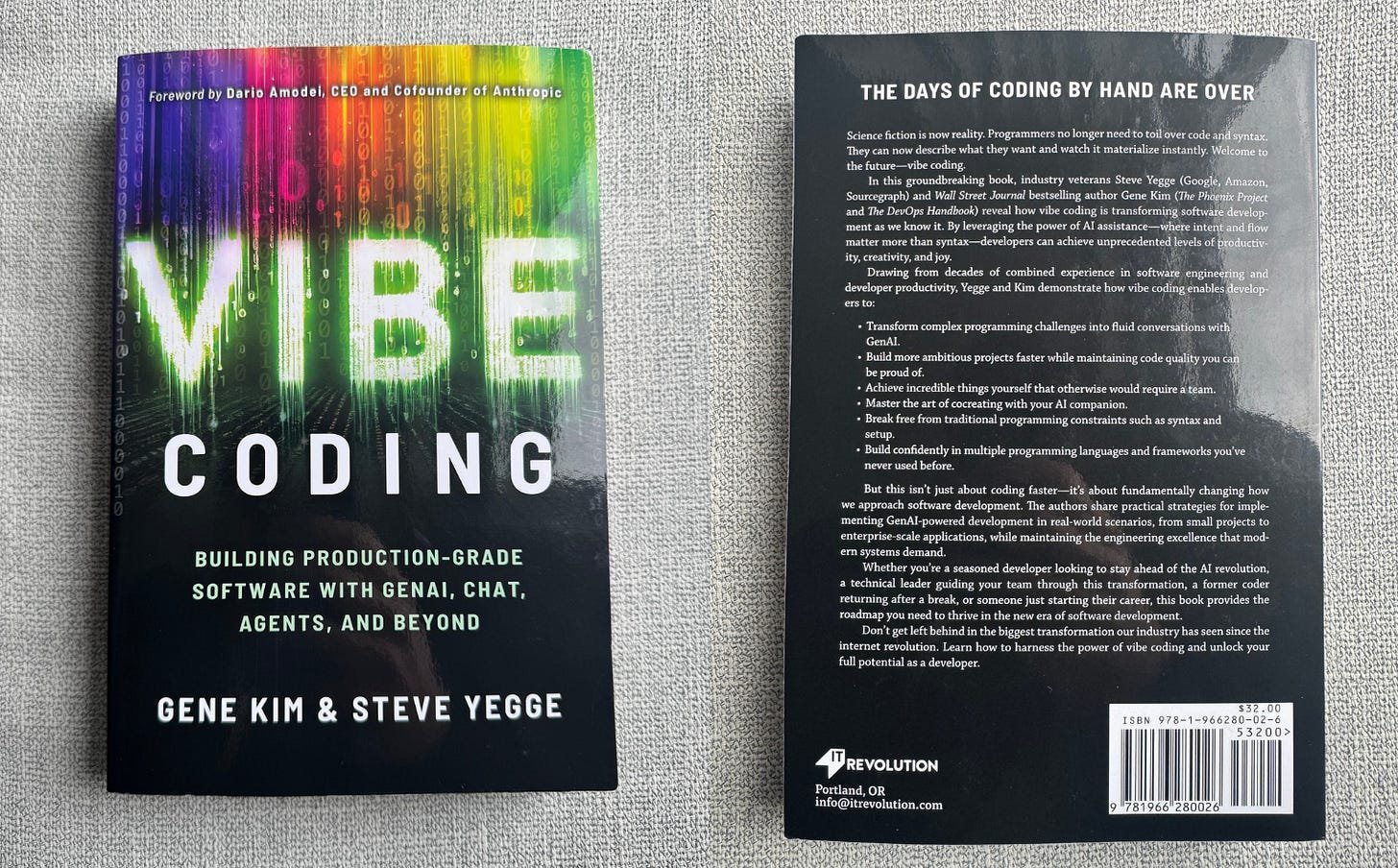
Software veteran Steve Yegge, with over 40 years at companies including Amazon and Google, recently discussed the seismic shifts AI brings to software engineering. Based on his experience building Gas Town (an open-source AI agent orchestrator) and authoring "Vibe Coding," Yegge presents urgent implications for engineering teams.

1. The Exponential Adoption Curve
Yegge initially doubted LLMs' capabilities but became convinced after using Anthropic's Claude Code. "When rumors emerged about Anthropic's internal coding tool, I said 'no, it's not!' Then I used it and realized we're all doomed," he recalls. This led him to predict the "death of the junior developer" role.
The industry now enters what Yegge calls the "steep part" of the exponential curve. Model iteration cycles have accelerated from quarterly to monthly releases, with each version eliminating previous limitations. "Opus 4.5 is already two months old," Yegge notes. "The next model will make people freak out."
2. The 50% Workforce Reduction
Yegge predicts enterprises will cut engineering staff by approximately 50% to fund AI tooling costs. "Every company has a dial from zero to a hundred. The default setting is cutting half your engineers to pay for the rest to use AI," he states. This would eclipse pandemic-era layoffs, with Amazon's recent 16,000-person reduction being just the start.
Paradoxically, this contraction coincides with an innovation explosion. "AI enables non-programmers to build software, while empowered small teams can outpace bureaucratic enterprises," Yegge explains.
3. Eight Levels of AI Adoption
Yegge categorizes engineers by their AI usage patterns:
- No AI
- IDE agent with permissions
- IDE agent in "YOLO mode" (high trust)
- Reduced code review, focus on agent conversation
- Agent-first workflow (IDE secondary)
- Multiple concurrent agents
- 10+ manually managed agents
- Custom orchestrators for agent coordination
"Engineers below level 4 risk obsolescence," Yegge warns. "I know brilliant engineers still manually reviewing every AI suggestion - they'll be left behind."
4. The Dracula Effect
Intensive AI usage causes physical drain dubbed the "vampire effect." Yegge observes: "People at startups nap during the day. We're getting tired and cranky." He argues companies must recalibrate expectations: "You might only get three productive 'vibe coding' hours daily from engineers, but that output dwarfs pre-AI productivity."
Failure to adjust causes burnout: "Companies are set up to extract value until you break. Engineers must learn to say no, and leaders must recognize the physiological limits of AI-augmented work."
5. Big Company Inevitable Decline
Despite productivity gains, Yegge believes large organizations can't leverage AI effectively. "Big companies may have hyper-productive engineers, but the organization can't absorb that output. Downstream bottlenecks cause engineers to quit."
He compares this to cloud computing's disruption: "Innovation only happens at the fringes now due to the innovator's dilemma. We're looking at big, dead companies - they just don't know it yet."
6. Shifting Engineering Values
The AI era nullifies traditional engineering status markers. "'Engineers are special' is gone," Yegge states bluntly. While coding skill becomes less differentiatin, he maintains that AI augmentation makes building software "more fun than ever."
For teams navigating this transition, Yegge recommends exploring orchestration tools like Gas Town and participating in communities like Gas Townhall. As models advance exponentially, adapting workflows and expectations isn't optional - it's existential for engineering teams.
Comments
Please log in or register to join the discussion