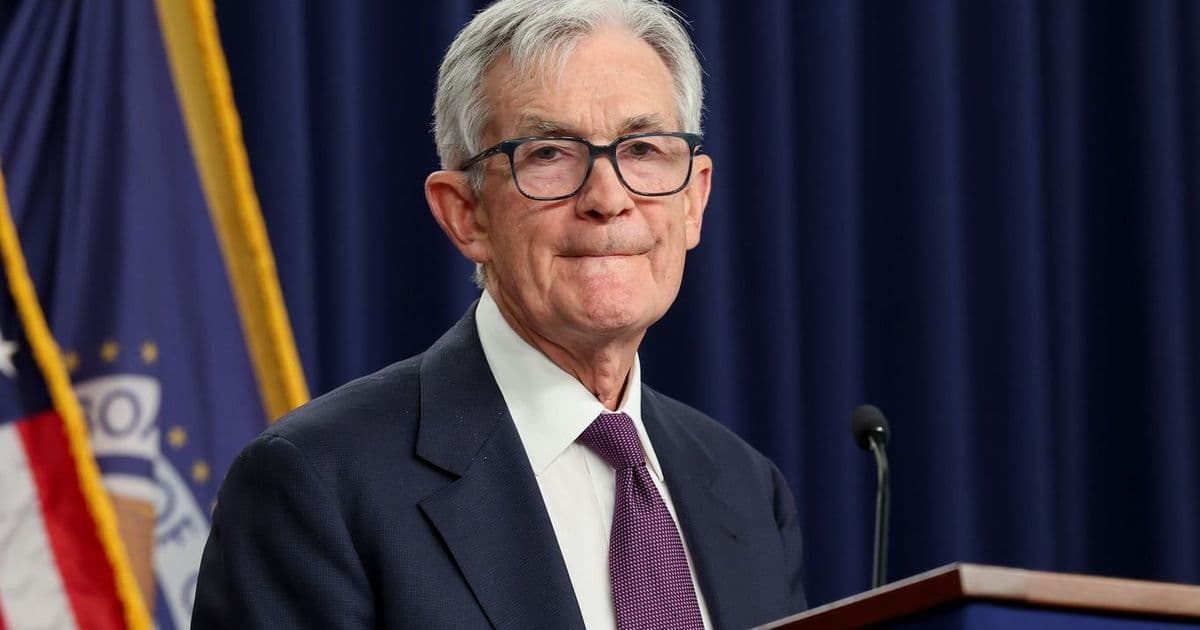
Federal Reserve Chair Jerome Powell indicates the central bank hasn't decided whether to 'look through' the economic effects of ongoing conflicts, leaving markets uncertain about future rate decisions.
Federal Reserve Chair Jerome Powell signaled that the central bank remains undecided on how to approach the economic fallout from ongoing global conflicts, specifically whether to "look through" their impact on inflation and growth when making monetary policy decisions.
In recent remarks, Powell acknowledged the significant uncertainty surrounding how prolonged geopolitical tensions and military conflicts might affect the U.S. economy. The Fed chair's comments come as markets grapple with persistent inflation, slowing growth, and the potential for further economic disruption from international crises.
When central bankers "look through" certain economic factors, they essentially choose to ignore temporary or external shocks in their policy calculations, focusing instead on underlying economic fundamentals. Powell's hesitation to commit to this approach suggests the Fed sees the current situation as more complex than a simple temporary disruption.
The timing of Powell's statement is particularly noteworthy. With inflation remaining above the Fed's 2% target and recent economic data showing mixed signals, the central bank faces a delicate balancing act. The prospect of "looking through" war-related impacts could imply a more accommodative stance, potentially delaying further interest rate hikes or even opening the door to rate cuts.
However, Powell's equivocation also reflects the Fed's concern about the risk of inflation becoming entrenched. If the central bank were to dismiss current price pressures as war-related and temporary, it could allow inflation expectations to drift higher, making future price stability more difficult to achieve.
Market participants are closely watching for any signals about the Fed's next moves. The federal funds rate currently sits at a 23-year high, and traders have been debating whether the central bank will maintain its restrictive stance, pause, or potentially pivot toward easing depending on how economic conditions evolve.
The Fed's decision-making process now involves weighing multiple competing factors: the direct economic costs of conflicts, potential supply chain disruptions, energy price volatility, and the psychological impact on businesses and consumers. Powell's acknowledgment that no decision has been made on the "look through" approach suggests the Fed is taking a cautious, data-dependent approach rather than committing to a predetermined path.
This uncertainty from the Fed's leadership adds another layer of complexity to an already challenging economic environment. For businesses and investors, it means continued volatility and the need for flexible strategies that can adapt to various potential policy outcomes.
As Powell and his colleagues continue to assess incoming economic data, the question of whether to "look through" or directly address the war's economic impact remains unresolved, leaving markets in a state of heightened anticipation for the Fed's next moves.
Comments
Please log in or register to join the discussion