
Three hundred physicists gathered where quantum theory was born to confront its enduring enigma. A century after Heisenberg's breakthrough, they grapple with whether quantum states describe reality or mere knowledge—and why measurement remains physics' greatest puzzle.

In June 2025, 300 physicists—including Nobel laureates and pioneers of quantum computing—crowded a Hamburg banquet hall, then sailed to the windswept North Sea island of Helgoland. Their mission: Celebrate the 100th anniversary of quantum mechanics and confront the theory’s unresolved paradoxes. The location was symbolic. In 1925, a 23-year-old Werner Heisenberg, suffering from hay fever, retreated here and emerged with the first complete formulation of quantum mechanics—a theory that upended our understanding of reality itself.
The Helgoland Breakthrough: Abandoning Intuition
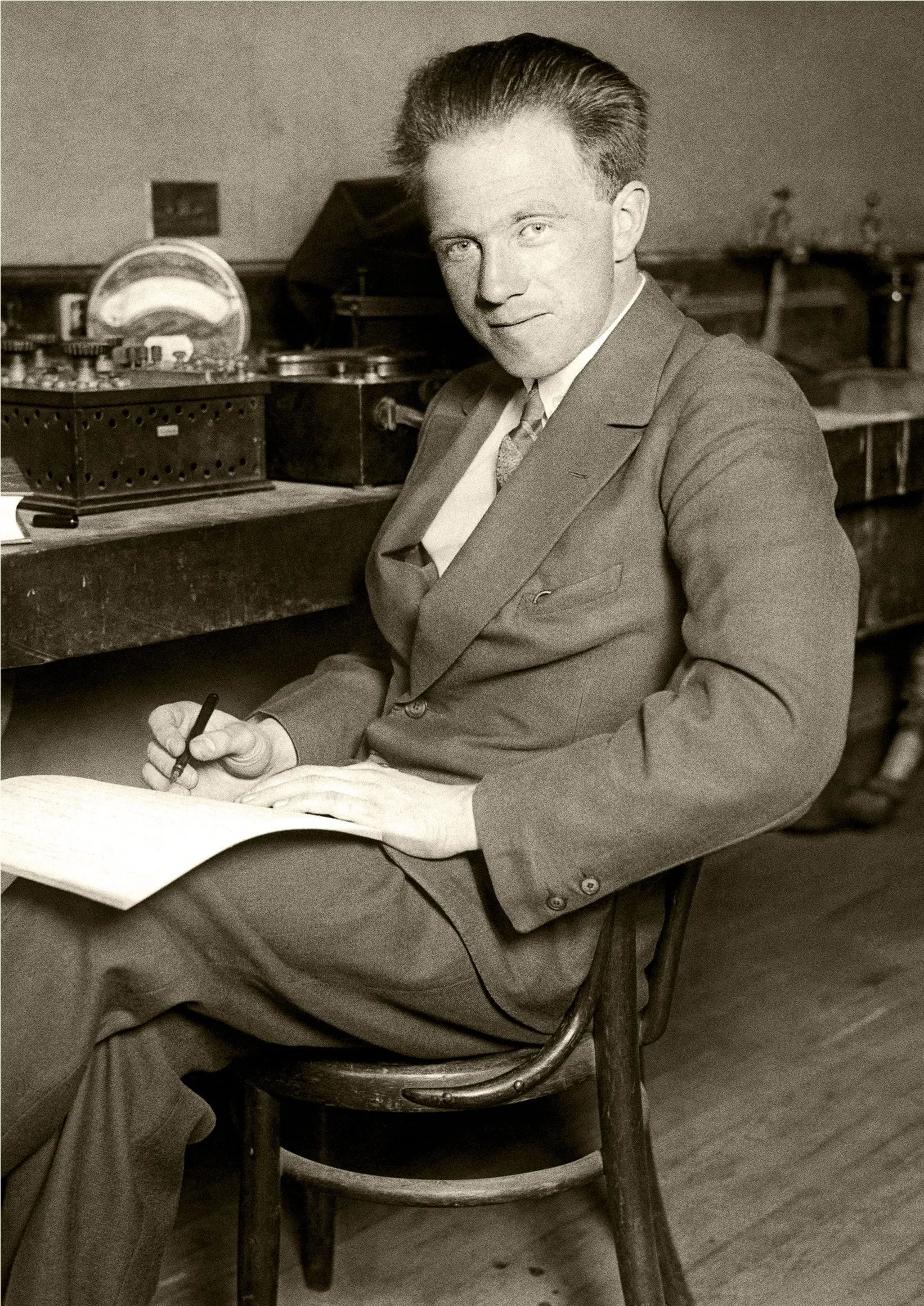 Heisenberg’s insight was radical: He abandoned the quest to visualize atoms as miniature solar systems. Instead, he focused solely on measurable outcomes—like the color and intensity of light emitted by atoms. His matrix-based math (later formalized with Max Born and Pascual Jordan) revealed a shocking truth: Properties like position and momentum couldn’t be simultaneously defined with arbitrary precision. This "noncommutativity"—where the order of operations changes the result—became quantum theory’s core. As Heisenberg later wrote, particles form "a world of potentialities or possibilities rather than one of things or facts."
The Measurement Problem: Quantum’s Enduring Crisis
Quantum mechanics works flawlessly. It powers atomic clocks, quantum sensors, and promises revolutionary computers. Yet its central mystery—the "measurement problem"—persists. The theory describes particles via a quantum state (ψ), evolving smoothly via Schrödinger’s equation until measured. At that instant, ψ "collapses" from multiple possibilities into one outcome. Why? How? Does ψ represent physical reality or just our knowledge?
- Copenhagen Interpretation (36% adherence): Bohr and Heisenberg’s pragmatic view—ψ reflects what we can know, not an underlying reality. "There is no quantum world," Bohr insisted.
- QBism: Chris Fuchs champions this perspective: "ψ is a catalog of my degrees of belief." It’s a user manual for agents placing bets on outcomes, not a description of the world.
- Many-Worlds: All ψ possibilities exist simultaneously in branching universes—a solution physicist Lucien Hardy darkly notes means "terrible things will happen" in alternate realities.
Anton Zeilinger (Nobel laureate for experimental Bell tests) remains steadfastly Copenhagenist: "We can only rely on our knowledge. It’s the only thing we have." Yet frustration simmers. "It’s embarrassing we don’t have a story about what reality is," lamented moderator Carlton Caves.
Entanglement: The Defeat of Einstein’s Reality
Einstein rejected quantum indeterminacy, proposing "hidden variables" to restore classical certainty. His 1935 EPR paradox argued entangled particles must have predefined properties. But John Bell’s 1964 theorem—verified experimentally by Zeilinger and others—proved otherwise. Entangled particles influence each other instantly across vast distances, defying locality. "Our world is not the world Einstein expected," notes the article. Reality is either nonlocal or lacks definite properties.
New Paths Forward: Gravity, Ignorance, and Causality
With interpretations multiplying, researchers seek fresh approaches:
- Gravity’s Role: Quantum mechanics lacks a theory of gravity. Lucien Hardy explores merging it with general relativity, where space-time itself may become quantum. This could ignite a "conceptual bonfire," potentially forcing multiple realities (à la many-worlds) or revealing new principles.
- Knowledge Gaps: Gemma De les Coves and Robert Spekkens show that classical models with limited agent knowledge reproduce quantum phenomena like teleportation. "Much of quantum weirdness stems from ignorance," Spekkens suggests.
- Causal Structures: Spekkens posits reality may lie in causal relationships between events, not particle states: "The essence of reality is causal connections."

The Unfinished Revolution
As physicists departed calm seas for Hamburg, the debate continued unabated. Michel Devoret (Yale) observed: "This was the first conference where people spoke openly about quantum mechanics missing something." Heisenberg relinquished visualizing the subatomic world a century ago. Today’s researchers, armed with quantum computers and deeper math, still seek to bridge the abstract and the tangible. Robert Spekkens captured the enduring challenge: "We’re privileged to live when the great prize of making sense of quantum theory is still there for the taking."
Source: Adapted from Charlie Wood's 'It’s a Mess': A Brain-Bending Trip to Quantum Theory’s 100th Birthday Party in Quanta Magazine.
Comments
Please log in or register to join the discussion