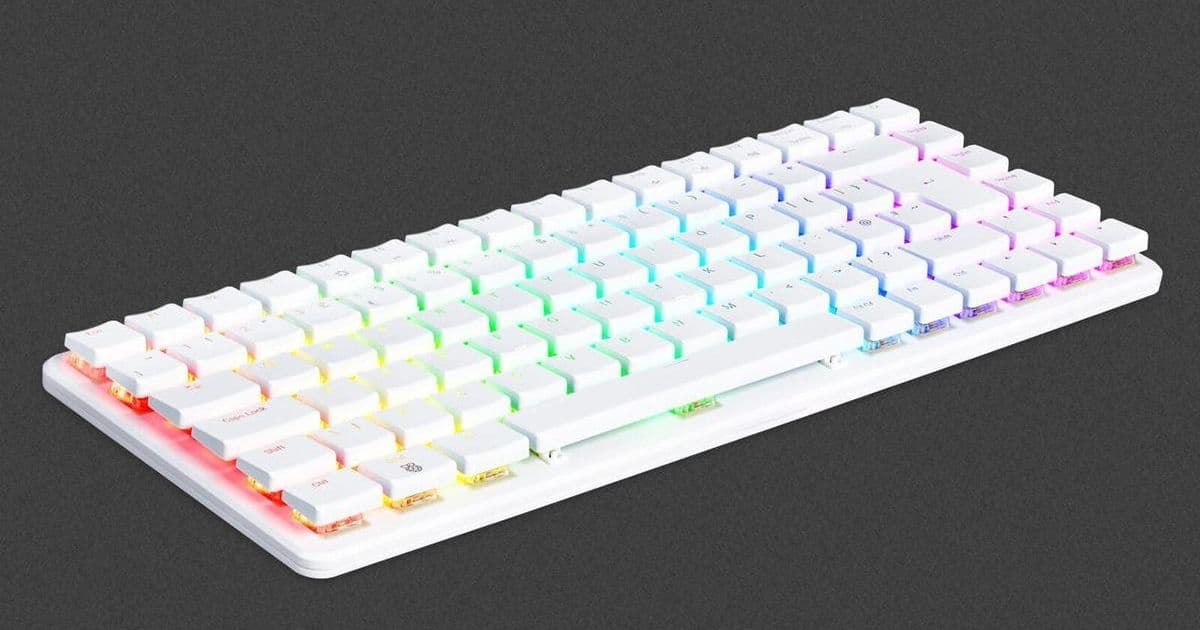
The Raspberry Pi Foundation has launched the Raspberry Pi 500+, a significant upgrade integrating a 16GB RAM Pi 5, user-replaceable 256GB M.2 SSD, and a premium mechanical keyboard into a single desktop form factor. This release transforms the Pi from a prototyping board into a legitimate compact workstation capable of handling AI workloads and intensive multitasking. Priced at $200 standalone ($220 for a full kit), it offers unprecedented power and customization for developers and makers.
The Raspberry Pi has long been the cornerstone of maker projects and embedded applications, but its latest iteration takes a decisive leap toward desktop viability. The newly launched Raspberry Pi 500+ integrates a full Raspberry Pi 5 with substantial hardware upgrades into a keyboard enclosure, signaling a strategic shift towards professional and power-user environments.
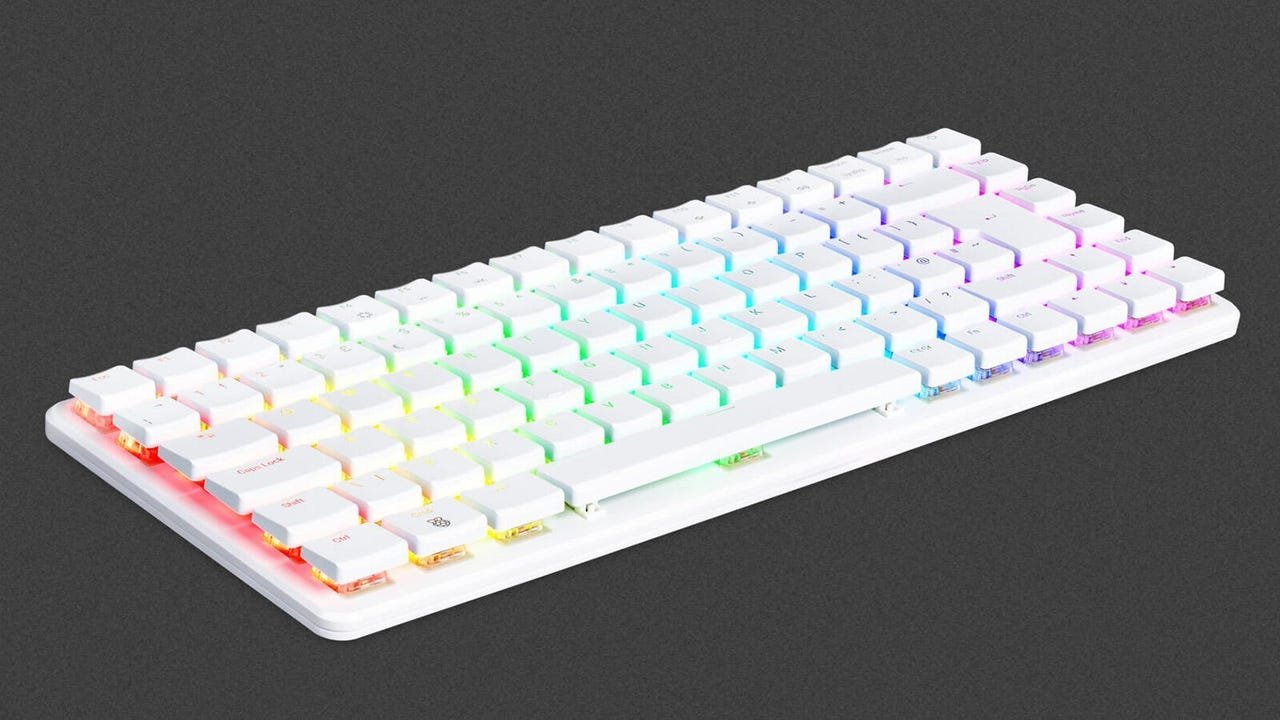 Caption: The Raspberry Pi 500+ integrates a Pi 5 with 16GB RAM and M.2 storage into a keyboard chassis with hot-swappable mechanical switches. (Credit: Raspberry Pi Foundation)
Key Technical Upgrades:
16GB LPDDR4X-4267 SDRAM: This quadruples the maximum RAM previously available on Pi 5 boards, directly addressing a critical limitation for memory-intensive tasks. Developers can now realistically run:
- Local AI/ML model inference
- Complex containerized applications
- Browsers with dozens of tabs
- Heavy multitasking workflows
256GB M.2 NVMe SSD (User-Replaceable): Moving beyond SD card or USB-attached storage, the integrated 2280 M.2 slot provides PCIe 2.0 x1 bandwidth (approx 500MB/s). The pre-installed 256GB drive isn't soldered, allowing straightforward upgrades to higher capacities or faster NVMe drives—a major boon for performance-sensitive applications and OS flexibility.
Professional-Grade Keyboard: The enclosure features Gateron KS-33 Blue mechanical switches with custom RAL 7001 silver gray stems, offering tactile feedback and audible confirmation. Crucially, it supports:
- Hot-swap sockets: Keyswitches can be replaced without soldering
- Standard MX-compatible keycaps: Compatibility with aftermarket sets
- Per-key RGB backlighting: Programmable via software (can be disabled)
- Included keycap puller facilitates customization
Why This Matters Beyond Specs:
The 500+ isn't just a spec bump; it represents the Raspberry Pi Foundation’s recognition of its platform's evolution. Developers and engineers increasingly use Pis as lightweight servers, edge compute nodes, or development workstations. The 16GB RAM threshold makes resource-intensive tasks like compiling large codebases, running databases, or testing container clusters feasible. The M.2 SSD eliminates the I/O bottleneck of microSD cards, enhancing reliability and speed for OS and application loads.
The mechanical keyboard transforms user experience from a compromise to a premium feature, appealing to professionals spending hours at the device. The hot-swap sockets and standard keycap support cater directly to the customization ethos of the Pi community while elevating build quality.
Availability & Ecosystem:
Priced at $200 for the base unit, the 500+ offers remarkable value. The $220 Desktop Kit adds significant practicality:
- Raspberry Pi Mouse
- 27W USB-C Power Supply (supporting high-power peripherals)
- 2m micro HDMI to HDMI Cable
- Raspberry Pi Beginner’s Guide, 5th Edition
Available through authorized resellers like PiShop.us, Micro Center, and CanaKit, the 500+ bridges the gap between experimental tinkering and legitimate desktop utility. For developers seeking a compact, repairable, and highly capable Linux workstation—or a powerhouse for edge computing prototypes—this release fundamentally changes what a sub-$250 computer can achieve.
Source: Based on reporting from ZDNet (https://www.zdnet.com/article/the-most-powerful-raspberry-pi-just-launched-with-serious-power-and-an-rgb-keyboard/)
Comments
Please log in or register to join the discussion