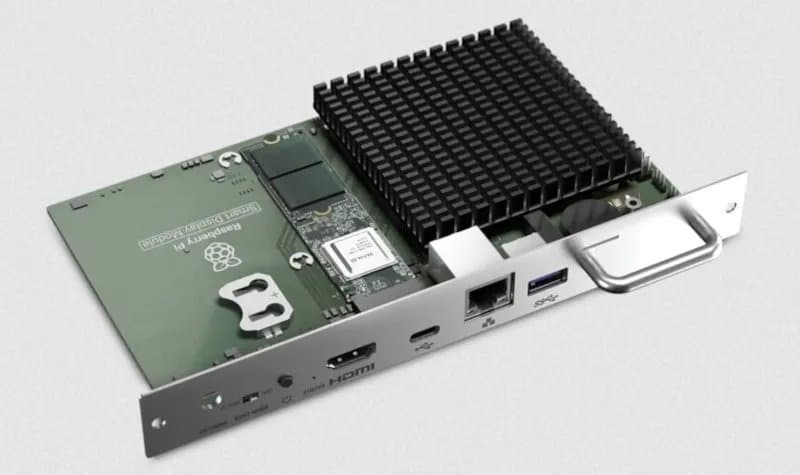
Raspberry Pi is preparing to launch a Smart Display Module that transforms the Compute Module 5 into a professional signage solution with dual display outputs and AI acceleration capabilities.
Raspberry Pi is expanding beyond its traditional single-board computer lineup with an intriguing new product: the Raspberry Pi Smart Display Module. This adapter board, designed specifically for the Compute Module 5, represents the company's entry into the professional digital signage market, targeting applications from airport flight information displays to retail signage and industrial control panels.
The Smart Display Module was recently teased ahead of its showcase at ISE 2026 in Barcelona, Spain, where Raspberry Pi will demonstrate the technology to potential commercial partners. The product aims to bridge the gap between the powerful yet efficient Compute Module 5 and the demanding requirements of professional display systems.
Technical Specifications and Features
The Smart Display Module offers several compelling features for professional display applications:
Dual Display Support: The module provides native display connectivity while also adding HDMI output capability, allowing for two independent video streams. This dual-output configuration is particularly valuable for applications requiring both a primary display and a secondary output for monitoring or redundancy.
Intel SDM Compliance: By conforming to Intel's Smart Display Module specifications, Raspberry Pi ensures compatibility with a wide range of professional display panels and mounting systems already deployed in commercial environments. This standardization should simplify integration for system integrators and reduce deployment friction.
M.2 Expansion for AI Acceleration: One of the most interesting aspects is the inclusion of an M.2 expansion slot, which can accommodate AI accelerator modules. This opens up possibilities for edge AI applications in signage, such as real-time content optimization, audience analytics, or intelligent content management without requiring cloud connectivity.
Low-Power Design: Built around the Compute Module 5, the Smart Display Module inherits the platform's reputation for power efficiency. This makes it suitable for always-on applications where energy consumption and heat dissipation are critical considerations.
Target Applications
Raspberry Pi has identified several key markets for this product:
Flight Information Systems: Airport and transportation hubs require reliable, high-visibility displays that can operate continuously with minimal maintenance. The Smart Display Module's dual output capability could support both the main information display and a backup or control interface.
Retail Signage: Digital price tags, promotional displays, and interactive kiosks in retail environments could benefit from the module's compact form factor and AI acceleration capabilities for personalized content delivery.
Corporate Signage: Office buildings and corporate campuses often deploy digital directories, meeting room displays, and informational screens that need to be both reliable and easily configurable.
Industrial Displays: Manufacturing floors, warehouses, and other industrial settings require ruggedized displays for monitoring systems, displaying operational data, or serving as human-machine interfaces.
Market Positioning and Competition
The professional signage market has traditionally been dominated by specialized hardware from companies like BrightSign, IAdea, and various Intel-based solutions. Raspberry Pi's entry with the Smart Display Module represents a significant shift, potentially offering a more cost-effective and flexible alternative.
By leveraging the Raspberry Pi ecosystem, the Smart Display Module benefits from:
- Extensive software support and community development
- Familiar programming environments for custom applications
- Lower total cost of ownership compared to proprietary solutions
- The ability to run full Linux distributions for maximum flexibility
However, the product will need to compete on reliability, long-term support, and integration capabilities with existing signage management systems. Professional environments often require 24/7 operation, remote management capabilities, and guaranteed supply chains for years-long deployments.
Availability and Pricing Considerations
While Raspberry Pi has confirmed the product's development and showcased it at ISE 2026, critical details remain undisclosed. The pricing strategy will be crucial for market adoption, as professional signage solutions often involve not just the hardware cost but also integration, installation, and ongoing support expenses.
Given Raspberry Pi's history of offering competitive pricing for their compute modules and accessories, the Smart Display Module could potentially disrupt the professional signage market by making sophisticated display solutions more accessible to smaller businesses and organizations that previously couldn't justify the investment in traditional proprietary systems.
Technical Integration and Development
For developers and system integrators, the Smart Display Module opens up new possibilities:
Custom Application Development: The full Raspberry Pi software ecosystem becomes available, allowing developers to create custom signage applications using familiar tools and languages.
Remote Management: Integration with existing Raspberry Pi remote management solutions could simplify deployment and maintenance of large-scale signage networks.
Content Management: The dual display capability enables sophisticated content management scenarios, such as showing different content on each display or using one as a control interface for the other.
Edge AI Applications: The M.2 slot for AI acceleration modules could enable advanced features like facial recognition for audience measurement, gesture control, or intelligent content adaptation based on environmental conditions.
Future Implications
The introduction of the Smart Display Module suggests Raspberry Pi's strategic expansion beyond hobbyist and educational markets into professional and commercial applications. This move could have several implications:
Ecosystem Growth: As more businesses adopt Raspberry Pi-based solutions, the ecosystem around professional applications will likely grow, attracting more developers and third-party hardware manufacturers.
Market Validation: Success in the professional signage market could pave the way for Raspberry Pi to tackle other commercial sectors, such as industrial automation, medical devices, or smart building systems.
Technology Evolution: The integration of AI acceleration capabilities hints at Raspberry Pi's vision for edge computing, where intelligence moves closer to where data is generated rather than relying on cloud processing.
Conclusion
The Raspberry Pi Smart Display Module represents an exciting evolution for the Raspberry Pi platform, bringing its accessible computing power to professional display applications. By combining the Compute Module 5's efficiency with dual display outputs, AI acceleration capabilities, and Intel SDM compliance, Raspberry Pi has created a compelling solution for digital signage and related applications.
While pricing and availability details remain to be announced, the product's specifications suggest it could offer a unique combination of flexibility, performance, and cost-effectiveness in the professional signage market. As businesses increasingly seek customizable, intelligent display solutions, the Smart Display Module positions Raspberry Pi as a serious contender in this space.
The coming months will reveal whether this product can successfully bridge the gap between the maker community and professional commercial applications, potentially opening up new markets for Raspberry Pi while providing businesses with more accessible and capable display solutions.
Comments
Please log in or register to join the discussion