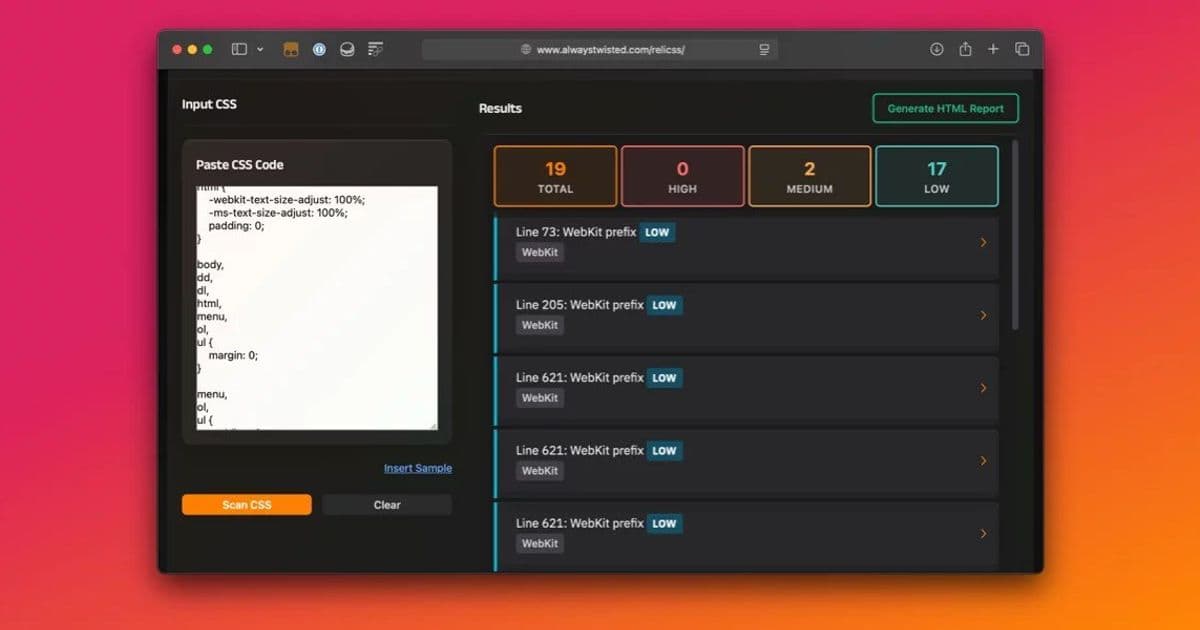
Stu Robson's ReliCSS tool helps developers identify and remove outdated CSS relics, from dangerous IE6 hacks to modern vendor prefixes, making your stylesheets cleaner and more maintainable.
We all have a few skeletons in our CSS closets. There's probably that one-off !important where you can now manage that more effectively with cascade layers. Or maybe a dated Checkbox Hack that :has() has solved. Perhaps it's been a long while since your last site redesign and it's chock-full of vendor-prefixed properties from 2012. Thar be demons!
Stu Robson's ReliCSS (clever name!) tool can excavate outdated CSS in your codebase that have modern CSS solutions. Each relic is assigned a level of severity.
As Stu explains it:
High Severity: True "fossils". Hacks for (now) unsupported browsers (IE6/7) or "dangerous" techniques. High-risk, obsolete, should be first targets for removal.
Medium Severity: The middle ground. Hacks for older unsupported browsers (IE8-10). They work but they're fragile. Hacks to review to see if they're still relevant for your actual users.
Low Severity: Modern artifacts. Usually vendor prefixes (-webkit-, -moz-). Safe mostly, but better handled by automated tools like Autoprefixer. They're an opportunity to improve your build process.
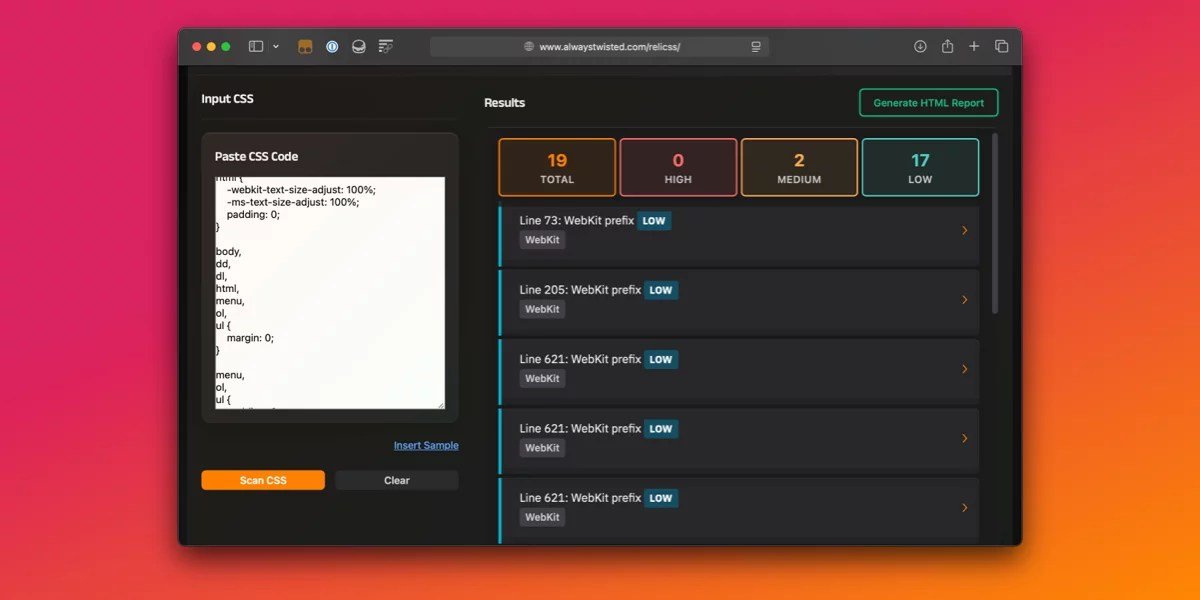
It's been a little while since my personal site got an overhaul. Not to toot my own horn, but heyyyyyy! Seriously, though. I know there are things in there I'm embarrassed to admit. But what if we do archeological dig on CSS-Tricks? I mean, it's been at least five years since this place has gotten the love it deserves. I'm almost afraid to look. Here goes… 🫣
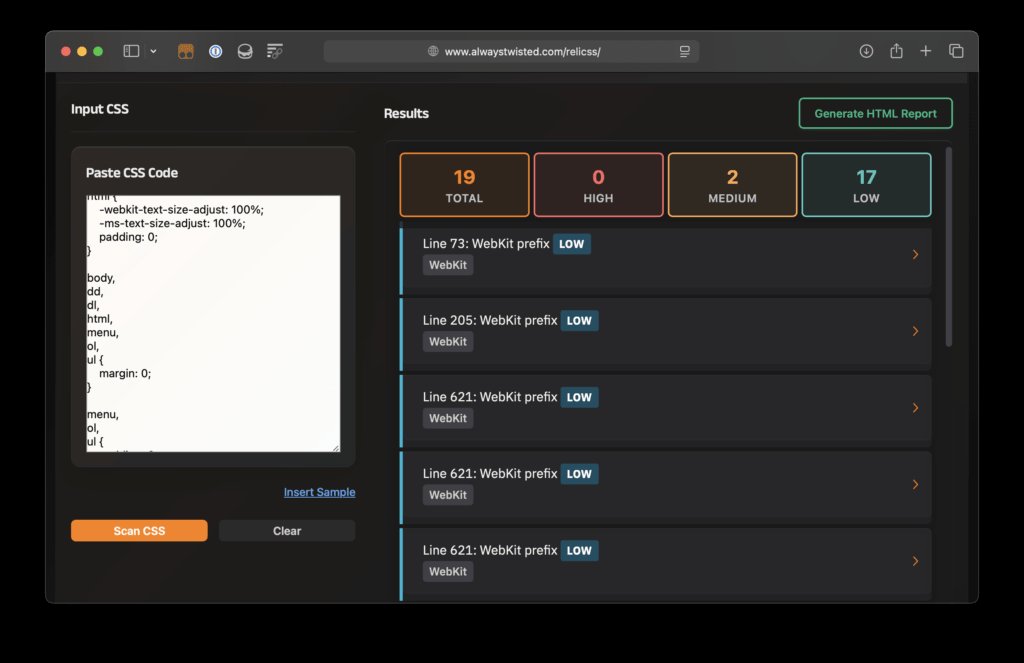
OK, not as bad as I imagined. It's largely vendor prefixing, which I'm sure comes courtesy of an older Autoprefixer configuration.
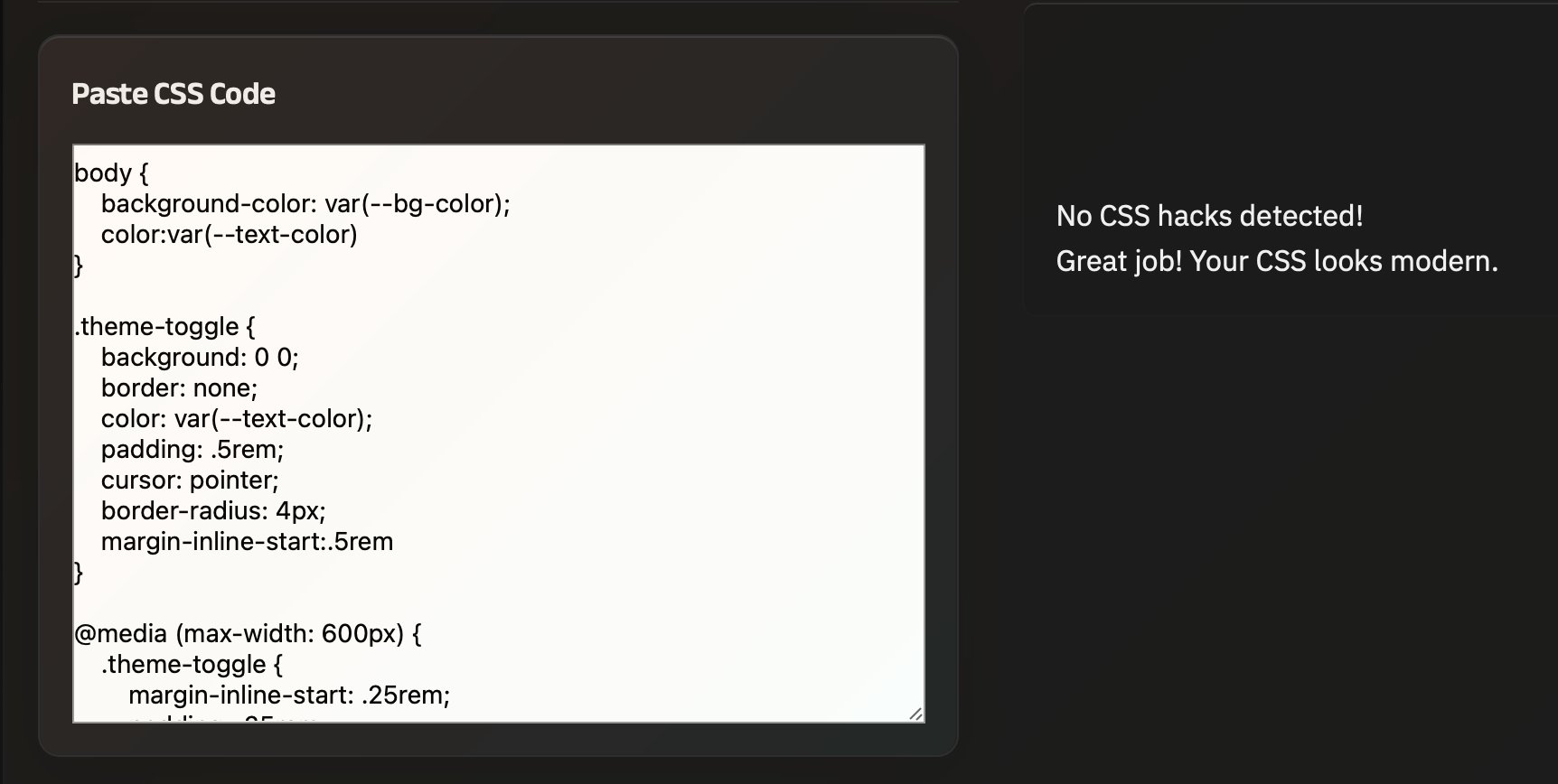
The tool found 19 total relics on CSS-Tricks, which is actually pretty good for a site that hasn't been fully redesigned in years. Most of the issues were low-severity vendor prefixes, which is exactly what you'd expect from an older build process.
What's particularly useful about ReliCSS is how it categorizes these issues by severity. High-severity relics like IE6/7 hacks are the first things you should remove—they're actively harmful and serve no purpose on modern browsers. Medium-severity items might still be serving a purpose for your user base, so they warrant investigation before removal. Low-severity vendor prefixes are the easiest wins—they're safe to remove and can be handled automatically by modern build tools.
For developers maintaining legacy codebases or sites that haven't been updated in a while, ReliCSS provides a clear roadmap for modernization. Instead of guessing what's safe to remove or spending hours manually auditing CSS, you get a prioritized list of what needs attention and why.
Comments
Please log in or register to join the discussion