House Republicans face a complex legislative challenge in restoring Department of Homeland Security funding after a budget standoff, with multiple competing proposals and political pressures complicating the path forward.
House Republicans are grappling with a complex legislative challenge to restore Department of Homeland Security funding after a budget standoff that has left critical security operations in limbo. The impasse stems from a broader fiscal dispute over federal spending priorities, with DHS funding caught in the crossfire of competing budget proposals.
The Budget Standoff
The funding crisis emerged when Congress failed to reach agreement on a comprehensive spending package, leading to a partial shutdown of certain DHS operations. Key agencies affected include Customs and Border Protection, Immigration and Customs Enforcement, and the Transportation Security Administration, though essential personnel continue to work without pay.
Sources familiar with the negotiations indicate that House Republicans are divided between two primary approaches: a standalone DHS funding bill that would restore operations immediately, and a broader omnibus package that addresses multiple agencies but faces longer odds of passage.
Legislative Options
Speaker Mike Johnson has floated several potential paths forward:
- A clean DHS funding bill that could pass with bipartisan support
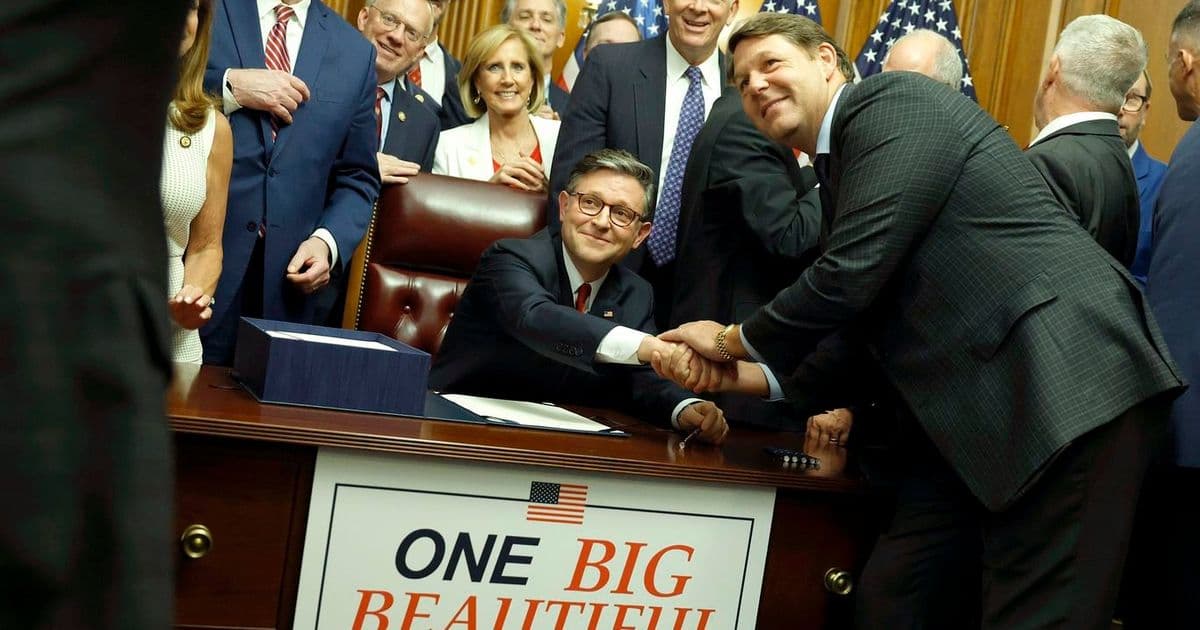
- A modified version of the "One Big Beautiful Bill Act" that includes targeted DHS provisions
- A continuing resolution that maintains current funding levels while negotiations continue
Each option carries distinct political risks. A clean funding bill might pass the House but could face opposition from conservative members who want to use the funding as leverage for broader policy changes. The omnibus approach, while comprehensive, requires consensus on contentious issues ranging from defense spending to social programs.
The Senate presents an additional hurdle, with Democrats signaling they will not support any package that includes controversial immigration enforcement provisions that some House Republicans are demanding.
Economic Impact
The funding uncertainty has already begun affecting DHS operations. Border processing times have increased by an average of 15-20% at major entry points, and cybersecurity monitoring systems face potential degradation if the impasse continues past the next funding deadline.
Industry groups have warned that prolonged uncertainty could disrupt supply chains and trade, with the National Retail Federation estimating that every week of reduced DHS capacity costs the economy approximately $1.2 billion in delayed commerce.
Political Calculations
For Republicans, the timing creates particular pressure. With midterm elections approaching, party leaders are acutely aware that voters typically punish incumbents for government dysfunction. However, hardline members argue that maintaining fiscal discipline outweighs short-term political considerations.
The White House has maintained that it will not negotiate on core DHS functions, calling the funding standoff "reckless" and warning that national security could be compromised.
Path Forward
Behind closed doors, Republican leadership is exploring whether a compromise can be reached that satisfies both fiscal conservatives and moderates who prioritize government functionality. One emerging proposal would fund DHS at current levels for 90 days while establishing a bipartisan commission to review long-term funding needs.
Time is running short, with the next major funding deadline approaching in three weeks. Congressional sources suggest that if no agreement is reached by then, Republicans may be forced to accept a less favorable deal or risk shouldering the blame for a more severe funding crisis.
What's Next
The coming days will be critical as party leaders attempt to gauge support for various proposals and determine whether a path exists to restore DHS funding without triggering a larger political crisis. The outcome will likely set the tone for the remainder of the congressional session and could influence the trajectory of the 2026 midterm campaigns.
The challenge for Republicans is finding a solution that addresses legitimate fiscal concerns while avoiding the political damage that comes from being perceived as undermining national security operations. As one senior GOP aide put it, "We need to thread the needle between fiscal responsibility and functional governance, and that's never an easy needle to thread."
Comments
Please log in or register to join the discussion