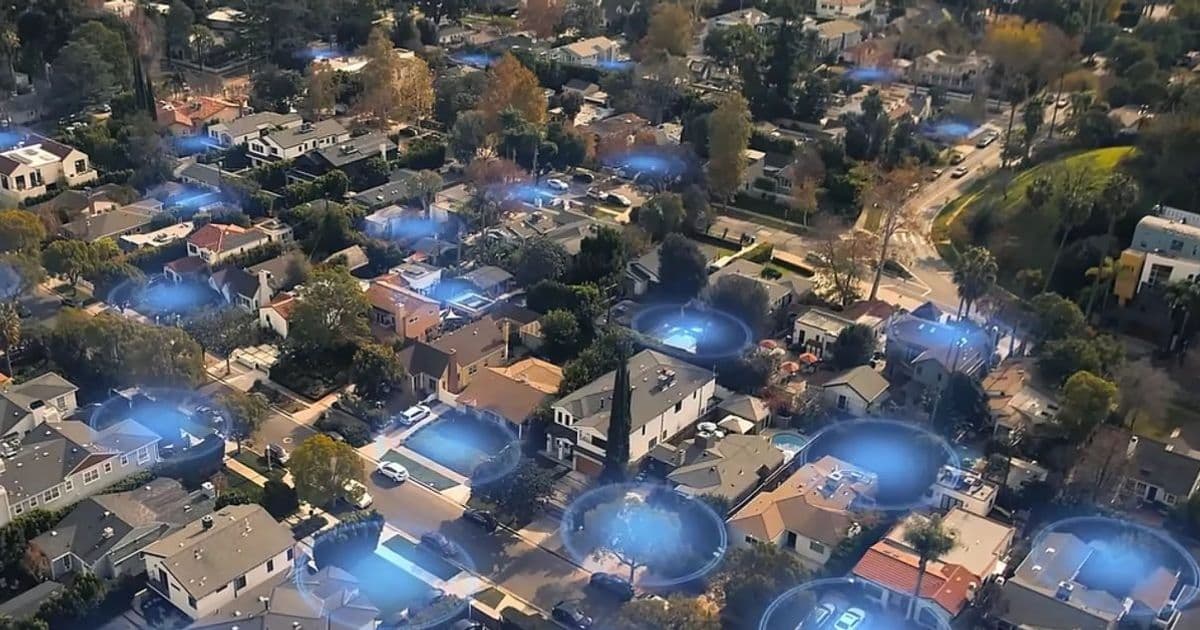
Amazon's Ring promotes a feature to find lost pets using neighborhood surveillance cameras, but critics warn it normalizes mass monitoring and could be easily repurposed for tracking people amid rising ICE enforcement concerns.
Amazon's Ring is facing significant public backlash over its newly expanded "Search Party" feature, designed to help locate lost dogs using the company's network of neighborhood surveillance cameras. The feature, prominently promoted during a 30-second Super Bowl ad, has been widely criticized as "dystopian" and tone-deaf given the current climate of nationwide protests against ICE operations.
How the Search Party feature works
The Search Party for Dogs feature allows pet owners to send a photo and description of their lost dog to other nearby Ring doorbell users. When the Ring camera's AI detects a dog matching the description, it alerts the homeowner. If confirmed, the system connects the finder with the pet owner. Since its launch, the feature has helped reunite more than one dog per day with their owners.
Ring has now expanded the feature beyond Ring camera owners, making it available through the Ring app to anyone who shares a lost dog post in the Neighbors app. "Before Search Party, the best you could do was drive up and down the neighborhood, shouting your dog's name in hopes of finding them," said Jamie Siminoff, Ring's chief inventor. "Now, pet owners can mobilize the whole community—and communities are empowered to help—to find lost pets more effectively than ever before."
Privacy concerns and dystopian comparisons
The timing of this promotion has proven particularly problematic. With facial recognition capabilities already rolled out for Ring video doorbells, critics have drawn immediate connections between pet surveillance and potential human monitoring. As 404 Media bluntly stated: "It does not take an imagination of any sort to envision this being tweaked to work against suspected criminals, undocumented immigrants, or others deemed 'suspicious' by people in the neighborhood."
This criticism comes against the backdrop of Ring's Neighbors app already having a reputation for misuse. The platform has been criticized for years as a space where users share reports of "suspicious" individuals, often with racial undertones. The app has become known for posts where people share reports of supposedly suspicious-looking individuals whose only commonality was their skin color.
The backlash intensified on social media platforms like X (formerly Twitter), where a quick search reveals the prevailing view is one of concern and criticism. Senator Ed Markey and other public figures have joined the chorus of voices expressing alarm at the feature's implications.
The broader surveillance context
Ring's expansion of neighborhood surveillance capabilities comes at a time when public trust in such systems is already strained. The company's recent rollout of facial recognition technology for its video doorbells has raised additional privacy concerns, making the Search Party feature appear as part of a broader trend toward increasingly sophisticated and potentially invasive monitoring systems.
The feature essentially turns every Ring camera in a neighborhood into part of a coordinated surveillance network, using AI to scan for specific targets. While currently limited to finding lost pets, the infrastructure and public acceptance being built could easily be repurposed for other uses, critics warn.
Public reaction and corporate response
Rather than the warm reception Amazon apparently anticipated, the Search Party feature has been met with widespread skepticism and criticism. The company's decision to promote the feature during the Super Bowl—one of television's most-watched events—has been interpreted by many as tone-deaf given current social and political tensions.
Ring has not yet issued a comprehensive response to the criticism, though the company continues to promote the feature as a community-building tool that helps reunite families with their pets. The contrast between this messaging and the public's concerns about surveillance and privacy highlights the growing tension between convenience technologies and civil liberties.
As smart home and surveillance technologies continue to evolve, the Search Party controversy underscores the challenges companies face in balancing innovation with privacy concerns and social responsibility. The incident serves as a reminder that even well-intentioned features can be perceived as threatening when they leverage existing surveillance infrastructure in new ways.
Comments
Please log in or register to join the discussion