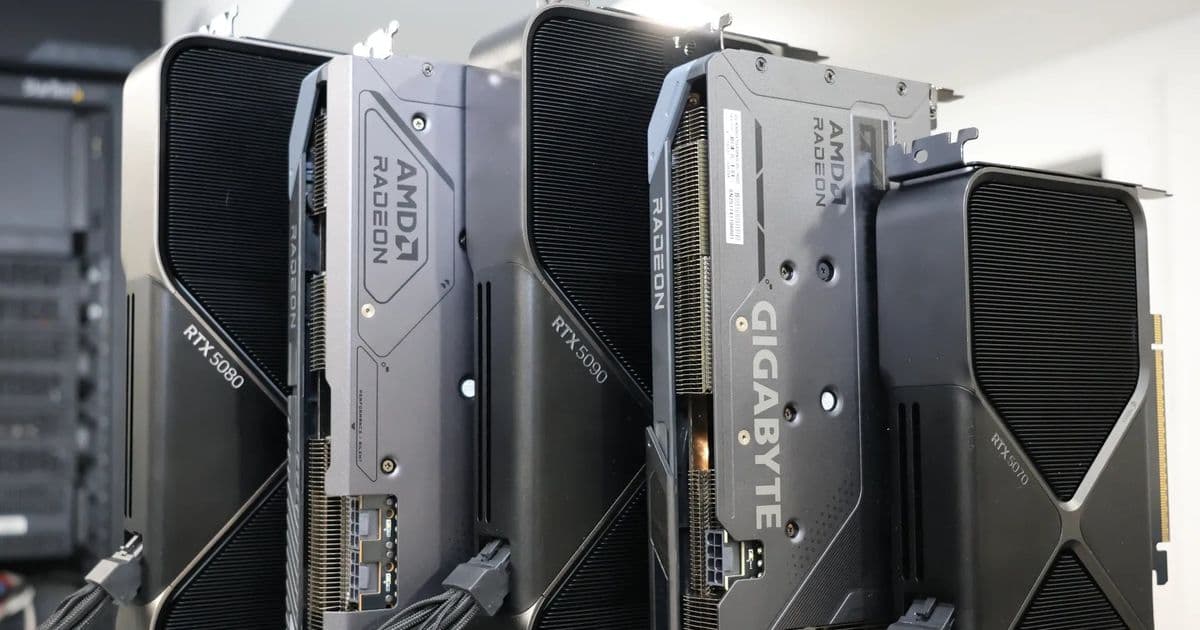
Mesa 26.0 brings significant performance improvements to AMD's RADV driver, particularly for ray-tracing workloads, along with numerous Vulkan extensions and driver enhancements across the ecosystem.
Mesa 26.0 has officially arrived, bringing substantial performance improvements to the open-source graphics stack used across Linux systems and beyond. The latest release focuses heavily on Vulkan ray-tracing optimizations for AMD's RADV driver, with contributions from Valve's team driving many of the performance gains.
RADV Ray-Tracing Performance Breakthrough
The headline feature of Mesa 26.0 is undoubtedly the dramatic improvement in Radeon ray-tracing performance. Valve's engineers have implemented numerous optimizations that significantly boost RADV's ray-tracing capabilities, making AMD GPUs more competitive in ray-tracing workloads. These improvements come at a crucial time as more games and applications adopt real-time ray-tracing techniques.
Vulkan Extension Support Expands
Beyond performance, Mesa 26.0 introduces extensive new Vulkan extension support across multiple drivers:
- PanVK gains VK_EXT_external_memory_acquire_unmodified and VK_EXT_device_memory_report
- NVK (NVIDIA's open-source driver) adds VK_EXT_discard_rectangles
- HoneyKrisp (Apple Silicon) receives VK_KHR_present_id, VK_KHR_present_id2, VK_KHR_present_wait, and VK_KHR_present_wait2
- PowerVR gets VK_KHR_dynamic_rendering support
- Panfrost now supports GL_EXT_shader_pixel_local_storage on v6+
Driver-Specific Enhancements
Several drivers receive targeted improvements in this release:
RADV and RadeonSI:
- AMD's ACO compiler backend now defaults for RadeonSI Gallium3D
- VK_VALVE_video_encode_rgb_conversion support added
- VK_EXT_custom_resolve implementation
Intel ANV and Iris:
- VK_KHR_maintenance10 promotion
- VK_EXT_shader_uniform_buffer_unsized_array support
NVK:
- VK_KHR_maintenance10 promotion
- VK_EXT_shader_uniform_buffer_unsized_array support
- VK_EXT_discard_rectangles implementation
PanVK:
- Driver caching improvements for better performance
- VK_EXT_image_drm_format_modifier support
- VK_KHR_sampler_ycbcr_conversion implementation
Hardware Support Updates
The release also expands hardware support:
- Qualcomm Adreno Gen 8 graphics are now ready for Snapdragon X2 laptops
- PowerVR Vulkan driver receives multiple improvements
- Venus Vulkan driver gains mesh shader support
- HDR fixes improve color accuracy across multiple drivers
Platform-Specific Additions
Mesa 26.0 adds several platform-specific surface extensions:
- PowerVR receives VK_KHR_xcb_surface and VK_KHR_xlib_surface
- PanVK v10+ supports sparse residency features including sparseResidencyImage2D and sparseResidencyStandard2DBlockShape
Performance Implications
For Linux gamers and professionals using AMD Radeon hardware, Mesa 26.0 represents a significant upgrade. The ray-tracing optimizations should translate to measurable performance gains in supported titles and applications. The expanded Vulkan extension support also means better compatibility with newer games and professional graphics applications that rely on these features.
Intel GPU users will benefit from the continued improvements to ANV and Iris drivers, while NVIDIA users with supported hardware can take advantage of the maturing NVK driver. The PanVK improvements are particularly noteworthy for ARM-based systems and mobile platforms.
Release Timing and Availability
Mesa 26.0 arrives shortly after the Linux 6.19 kernel release, maintaining the project's steady release cadence. The drivers are available now through standard package managers on most Linux distributions, with backports likely coming to stable branches of major distributions.
Phoronix has indicated that fresh Mesa graphics driver benchmarks will be published soon, providing concrete performance data to quantify the improvements promised in this release.

The comprehensive nature of Mesa 26.0 demonstrates the continued maturation of open-source graphics drivers. With significant contributions from major players like Valve, Intel, and AMD, the ecosystem is rapidly closing the gap with proprietary alternatives while maintaining the flexibility and transparency that open-source software provides.
The focus on ray-tracing performance is particularly significant as this technology becomes increasingly mainstream in gaming and professional visualization. AMD GPU owners should see immediate benefits in supported applications, while the broader extension support ensures better compatibility with cutting-edge graphics features across the entire ecosystem.
Comments
Please log in or register to join the discussion