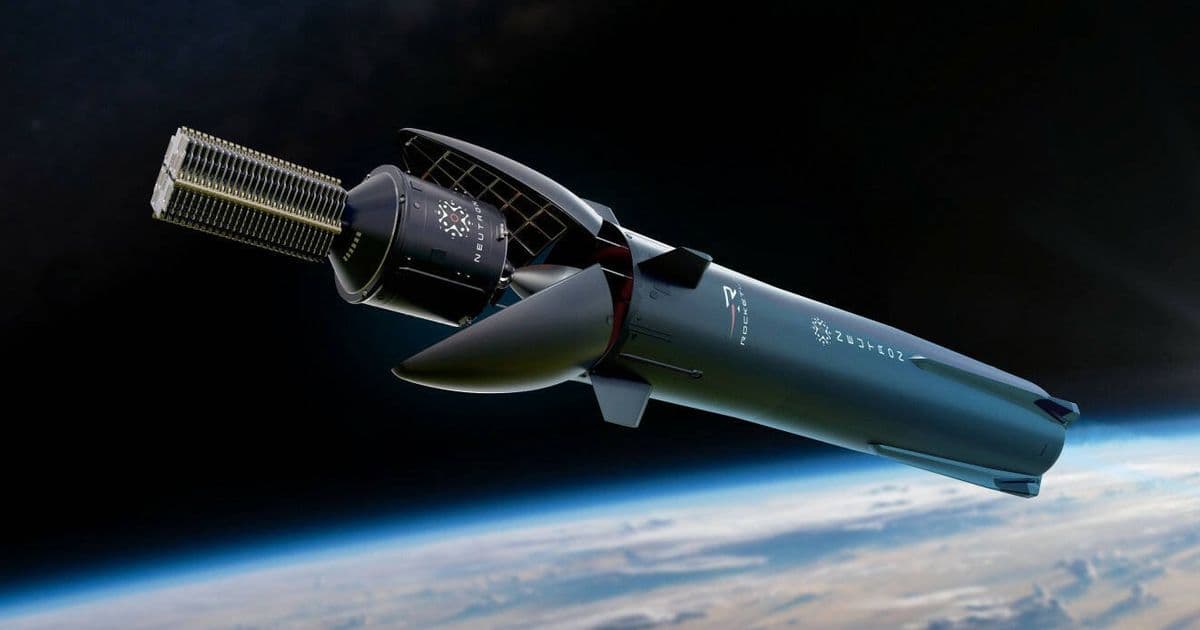
Rocket Lab's ambitious Neutron launch vehicle program hit a snag when a Stage 1 tank ruptured during a hydrostatic pressure test at its Maryland facility. The test was conducted to design limits, but the unexpected failure raises questions about the composite structure's integrity and could impact the rocket's planned maiden flight in 2026.
Rocket Lab's Neutron program, the company's bid to compete in the medium-lift launch market, has encountered a significant setback. Overnight, a Stage 1 tank ruptured during a hydrostatic pressure test at the company's Space Structures Complex in Middle River, Maryland. The test was part of the validation process for the rocket's structural integrity.
Hydrostatic testing is a standard procedure in aerospace where a component is filled with water and pressurized to verify it can withstand operational loads and safety margins. Rocket Lab confirmed the test was conducted "to design limits," a common practice to validate structural integrity. However, the tank's failure indicates it did not meet the required safety margins at that pressure level. The company stated there were no injuries and "no significant damage to the test structure or facilities," but the tank itself is a total loss.
The Neutron Design and Its Composite Construction
Neutron represents a significant technological leap from Rocket Lab's Electron rocket. While Electron is a small-lift vehicle primarily for dedicated smallsat missions, Neutron is designed as a medium-lift, partially reusable launcher capable of delivering 13,000 kg to low Earth orbit. For context, this places Neutron between Electron and SpaceX's Falcon 9 (which can lift ~22,800 kg to LEO) in terms of payload capacity.
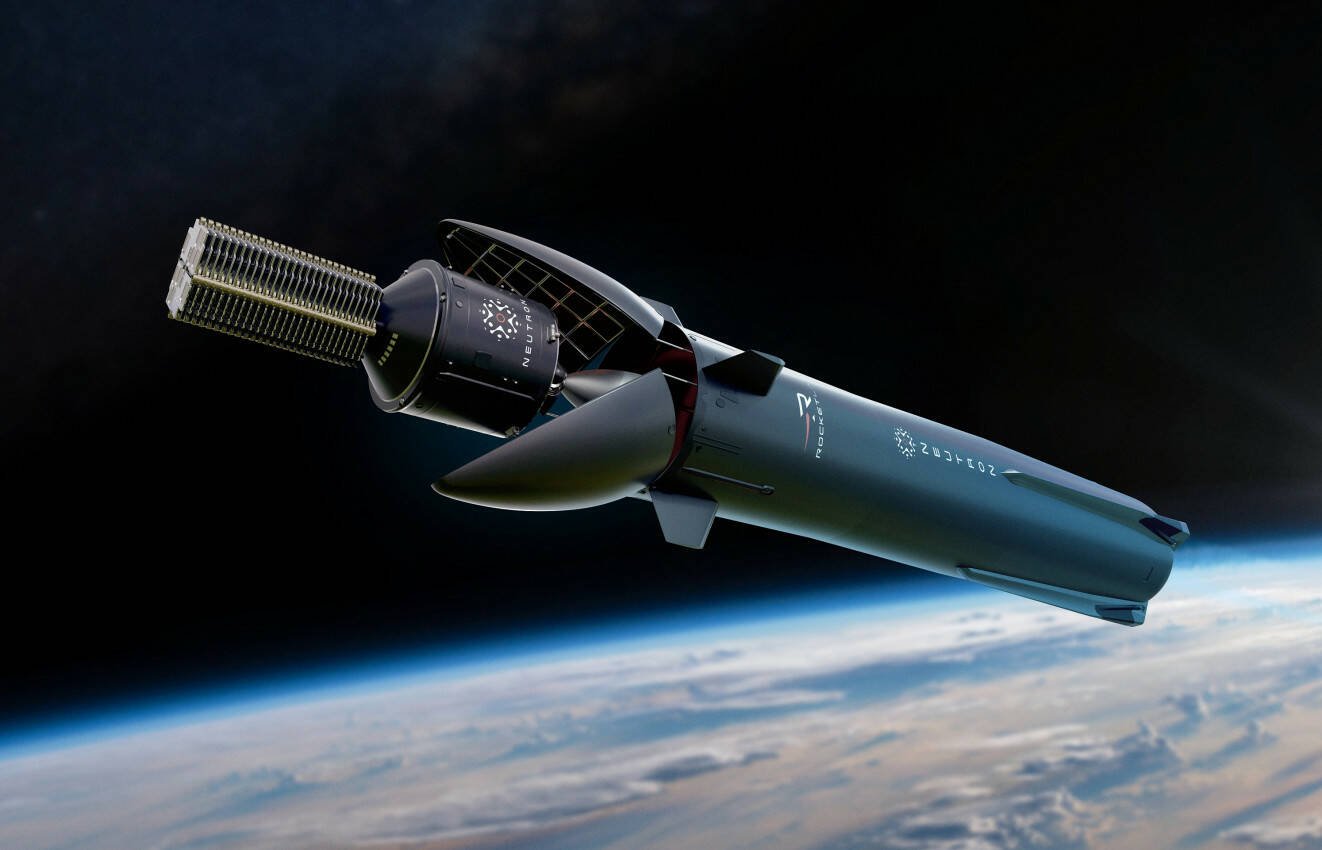
The rocket's design features a unique architecture. The first stage is a large, composite structure that houses the engines and propellant tanks. The second stage is encapsulated within a hinged fairing system that Rocket Lab has dubbed the "hungry hippo." During ascent, the fairing opens to release the second stage. After stage separation, the fairing closes, and the entire first stage returns to Earth for reuse—a departure from Electron's expendable design.
The tank rupture is particularly concerning because Neutron's structure is predominantly carbon composite. While composite materials offer excellent strength-to-weight ratios, they present unique challenges in manufacturing and testing. Unlike metallic tanks, composites can fail catastrophically without the warning signs of plastic deformation that metals exhibit. The failure mode during hydrostatic testing could indicate issues with:
- Material quality control - Variations in fiber alignment or resin curing
- Design margin - The safety factor may have been too aggressive
- Manufacturing defects - Delamination or voids in the composite layup
- Test procedure - Whether the pressurization rate or test conditions were appropriate
Schedule Implications and Industry Context
Before this incident, Rocket Lab had positioned 2026 as the year for Neutron's maiden flight. The company has been methodical in its development, learning from Electron's evolution while scaling up to a much larger vehicle. The tank rupture introduces uncertainty into this timeline.
Rocket Lab's statement indicates the team is reviewing test data to determine the extent of the impact. This analysis will be crucial because:
- If the failure reveals a fundamental design flaw, it could require significant redesign and retesting
- If it's a manufacturing issue, it might be resolved with improved quality control
- If it's a test anomaly, the program could proceed with minimal delay
The company plans to provide an update during its Q4 2025 earnings call in February 2026. This timing suggests they need time to analyze the failure data thoroughly before making public statements about schedule changes.
Comparative Industry Experience
SpaceX's experience with Falcon 9 development provides relevant context. The company encountered multiple test failures during development, including tank ruptures and engine failures. Each failure led to design improvements that ultimately made the vehicle more reliable. SpaceX's approach of aggressive testing to failure has proven effective in identifying weaknesses early.
Similarly, Blue Origin's New Shepard program experienced several test failures during its development phase, including a 2015 test where the booster failed to land. Each failure provided critical data that informed design changes.
The key difference is that Rocket Lab is developing Neutron while maintaining Electron operations. The company's recent Electron launch from LC-1 in New Zealand demonstrates they can continue business as usual while addressing Neutron's challenges. This dual-program approach provides revenue continuity but also divides engineering resources.
Technical Questions and Next Steps
The tank rupture raises several technical questions that Rocket Lab's engineering team must address:
Material Science: Carbon composite tanks require precise manufacturing processes. The rupture could indicate issues with:
- Fiber orientation in high-stress areas
- Resin distribution and curing
- Interface between composite sections
- Bonding of fittings and penetrations
Testing Methodology: Hydrostatic testing with water is standard, but for composite tanks, some companies use alternative methods:
- Pneumatic testing (with gas) can be more dangerous but reveals different failure modes
- Finite element analysis (FEA) should correlate with physical test results
- Non-destructive testing (NDT) like ultrasound or X-ray can detect internal defects
Design Validation: The test was conducted "to design limits," but what are those limits? The rocket's operational loads during flight include:
- Propellant tank pressures during fill and flight
- Aerodynamic loads during ascent
- Thermal gradients from engine operation
- Dynamic loads during stage separation
If the tank failed at design limit pressure, it means the safety margin was insufficient. Aerospace typically uses safety factors of 1.25 to 1.5 for pressure vessels. If the tank ruptured at exactly the design pressure, it suggests the safety factor was too low or the actual strength was below predicted values.
Impact on the Broader Launch Market
Neutron's development is important for the commercial launch market. It would provide:
- Competition for SpaceX's Falcon 9 in the medium-lift segment
- A partially reusable alternative to expendable vehicles like Atlas V
- Additional launch capacity for government and commercial customers
- Geographic diversity in launch sites (New Zealand and potentially the US)
Any delay to Neutron's schedule could affect:
- Rocket Lab's revenue projections and stock performance
- Customer launch manifests for 2026-2027
- The competitive balance in the medium-lift market
- NASA and DoD launch diversification efforts
Looking Ahead
Rocket Lab's response to this setback will be closely watched by the aerospace community. The company has built a reputation for transparency and methodical engineering. Their approach to analyzing and addressing the tank failure will provide insights into their engineering culture and problem-solving capabilities.
The February earnings call will be critical. Investors and industry observers will want to know:
- The root cause of the failure
- Corrective actions planned
- Revised timeline for Neutron's first flight
- Impact on financial guidance
- Whether this affects other Neutron components in production
For now, Rocket Lab continues to demonstrate Electron's reliability with scheduled launches. The company's ability to maintain operations while addressing Neutron's challenges will be tested in the coming months. The tank rupture is a setback, but not necessarily a program-ending failure. How Rocket Lab responds will determine whether Neutron remains on track for its 2026 maiden flight or faces significant delays.
The aerospace industry has learned that development programs often encounter unexpected challenges. The measure of success is not in avoiding failures, but in learning from them and building more robust systems. Rocket Lab's Neutron program now faces its first major test of that principle.
Comments
Please log in or register to join the discussion