A personal experiment reveals that RSS feeds can drive more traffic than major search engines, challenging conventional wisdom about online content discovery.
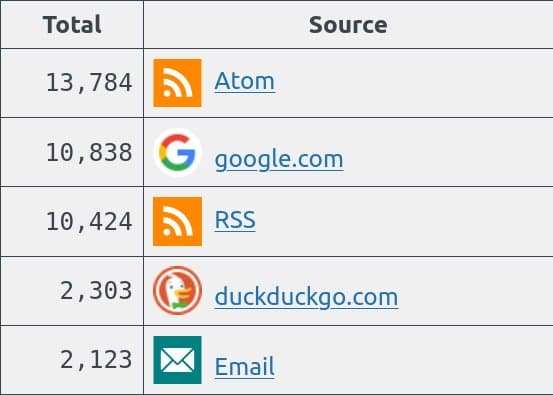
In an era dominated by search engine optimization and algorithmic content discovery, one blogger's personal experiment reveals a surprising counterpoint: RSS feeds and direct subscriptions are outperforming Google as traffic sources. Terence Eden's recent analysis of his blog statistics shows that approximately 25% of his traffic comes from people who have actively chosen to subscribe to his content, surpassing the traffic from the world's largest search engine.
The Experiment: Tracking Beyond Traditional Analytics
Eden's approach to understanding his traffic sources offers a refreshing alternative to the complex analytics platforms that many bloggers rely on. Rather than implementing comprehensive tracking systems, he added "local-only, lightweight statistics-gathering" to his blog. This minimalist approach allows him to see which sites people click on to reach his content while respecting privacy by avoiding intrusive tracking.
"I'm not creepily following people around the web nor am I trying to sell them anything," Eden explains. "I just want a rough idea of where people find me."
This methodology reveals an interesting distribution of traffic sources:
- Google remains significant but not dominant
- DuckDuckGo performs surprisingly well
- Bing struggles to crack the top 20 sources
- Social platforms like the Fediverse and BlueSky (formerly Twitter) contribute
- RSS feeds and newsletters collectively account for about 25% of traffic
Understanding the Subscription Advantage
The 25% figure from RSS and newsletter subscriptions is particularly noteworthy when compared to search traffic. These represent fundamentally different types of engagement:
Search Traffic: Users arrive with specific intent, having searched for particular information. They're often task-oriented and may leave immediately after finding what they need.
Subscription Traffic: These readers have made a conscious decision to follow the blogger's content. They're typically more engaged, returning regularly, and represent a built-in audience that isn't dependent on search algorithms or trending topics.
Eden describes this as "astonishing that they provide more traffic than a major search engine," highlighting the value of cultivating a dedicated readership.
Technical Implementation: RSS and Beyond
For bloggers interested in replicating Eden's approach, understanding the technical implementation is crucial. Eden maintains both Atom and RSS feeds for historical reasons, though he questions whether merging them would be beneficial.
The technical requirements for supporting RSS feeds are relatively straightforward:
- Generate a feed (RSS or Atom) that includes post metadata
- Ensure proper formatting and validation
- Promote the feed availability to readers
- Track feed consumption (Eden uses image-based tracking for this)
Modern content management systems typically include built-in RSS feed generation, making this accessible even to non-technical bloggers.
The Decline of Traditional Social Platforms
Eden's data reflects broader trends in social media usage. He notes that "Twitter has all but vanished" as a traffic source, while alternatives like the Fediverse and BlueSky are filling the gap.
This shift presents both challenges and opportunities for content creators:
- Traditional platforms are becoming less reliable for traffic
- Decentralized alternatives offer new avenues for discovery
- Direct subscriptions provide a more stable, platform-independent audience
Implications for AI and ML Content Creators
For professionals in the AI and machine learning space, these findings have particular relevance:
Building Authority: Regular, high-quality content through RSS can establish thought leadership more effectively than chasing search rankings.
Community Building: Subscription-based audiences are more likely to engage with complex technical content and participate in discussions.
Algorithm Independence: As search algorithms evolve and change, a direct subscriber base provides stability.
Content Format Flexibility: RSS feeds can include various content types, from research summaries to code snippets, catering to different segments of the ML community.
Practical Recommendations for Bloggers
Based on Eden's experience and similar data from other independent creators:
Prioritize Content Quality: Regular, valuable content encourages subscriptions more than keyword-stuffed posts designed for search algorithms.
Make Subscription Easy: Prominently display RSS and newsletter subscription options across your site.
Respect Reader Privacy: Consider lightweight tracking methods that respect privacy while still providing useful insights.
Diversify Traffic Sources: Don't rely solely on search engines or social platforms. Cultivate multiple channels for discovery.
Consider Content Formats: Experiment with different formats (text, code, multimedia) that work well in RSS readers.
The Future of Direct Audience Connections
Eden's experience suggests a potential shift away from algorithm-dependent content discovery toward more direct relationships between creators and audiences. This trend aligns with broader movements toward decentralized web technologies and user-owned data.
For AI and ML professionals, who often need to communicate complex technical concepts, building a direct audience through RSS and newsletters offers a way to bypass platform limitations and algorithmic whims.
As Eden notes, "I'm just delighted that so many people read my random thoughts." This sentiment captures the essence of why many creators pursue independent publishing—not for algorithmic validation, but for the genuine connection with readers who value their work.
The data from Eden's blog, while a single data point, challenges conventional wisdom about online content discovery and suggests that direct subscriptions may offer a more reliable and engaged audience than search engine traffic alone.
Comments
Please log in or register to join the discussion