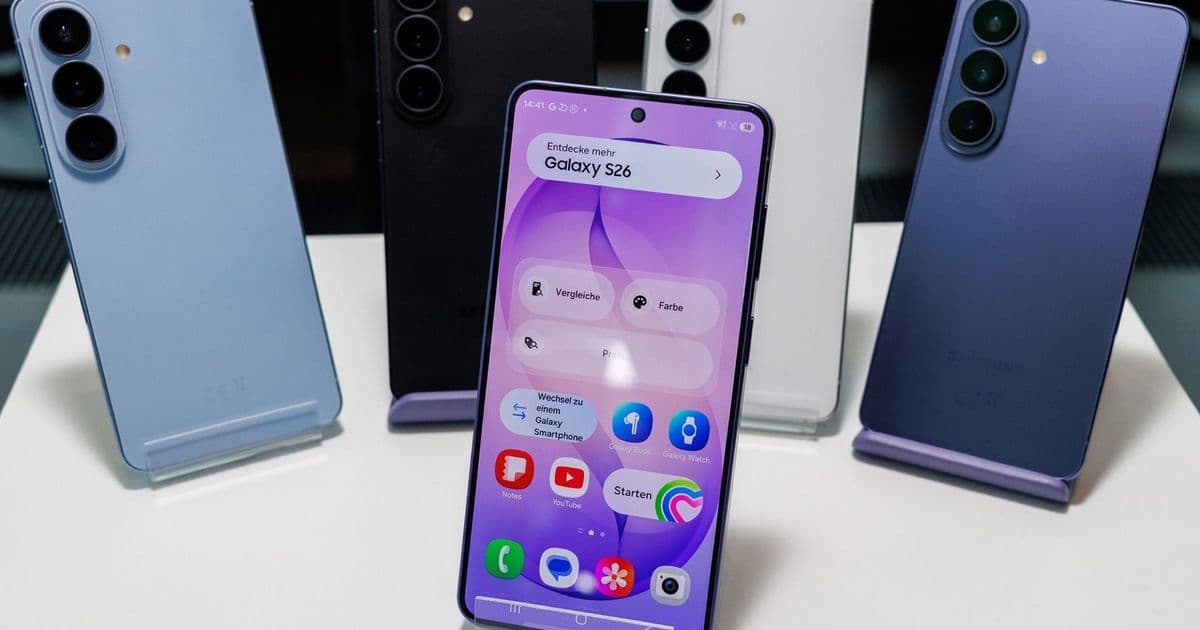
Samsung's decision to use Exynos 2600 in European Galaxy S26 models results in significantly worse performance and battery life compared to Snapdragon versions sold elsewhere.
Samsung's latest flagship smartphone strategy has raised eyebrows among tech enthusiasts, as the Galaxy S26 and S26+ models destined for European markets will ship with the company's in-house Exynos 2600 processor, while regions like the US and China receive the Qualcomm Snapdragon 8 Elite Gen 5 variant.
This regional differentiation marks a return to a controversial practice that Samsung had seemingly abandoned with the Galaxy S25, which featured the Snapdragon chip globally. The decision has already shown tangible consequences in early performance testing.
Battery Life Disparity
A battery endurance test revealed the most striking difference between the two variants. The US version of the Galaxy S26 achieved an impressive 9 hours and 26 minutes of runtime, while the European Exynos model fell significantly behind. This three-hour gap in battery performance is particularly concerning given that both devices share identical hardware specifications aside from the processor.
Performance Benchmarks Tell a Similar Story
Despite being manufactured on an advanced 2nm process, the Exynos 2600 struggles to match its Snapdragon counterpart in raw performance metrics. Geekbench tests show the Snapdragon version delivering 19.2% higher single-thread performance (3,677 vs 3,085 points) and 6.5% better multi-thread performance (11,163 vs 10,484 points).
Gaming performance follows the same pattern. In 3DMark Wild Life Extreme tests, the Snapdragon variant maintains a 9% lead over the Exynos model, scoring 7,786 points compared to its competitor. The gaming experience differs beyond just frame rates - the Snapdragon version runs 1.3°C cooler while maintaining similar power consumption levels, suggesting better thermal efficiency.
AnTuTu v11 benchmarks further emphasize the performance gap, with the Snapdragon Galaxy S26 achieving scores 20.4% higher than the Exynos version.
Real-World Gaming Impact
Gaming tests conducted by Techmo on YouTube demonstrate practical implications of these benchmark differences. The Snapdragon variant delivers more stable frame rates during extended gaming sessions, while the Exynos model shows more pronounced performance throttling under sustained load. This translates to a smoother gaming experience on the Snapdragon version, particularly in graphics-intensive titles.
European Customers Get the Short End
The regional split in processor choice means European consumers are receiving what appears to be an inferior product, despite paying the same premium price of $899. This practice has drawn criticism from tech communities, as it effectively creates a two-tier flagship experience based solely on geographic location.
Samsung's decision to revert to this strategy after the more unified approach with the Galaxy S25 suggests the company may be prioritizing cost considerations or supply chain logistics over providing a consistent user experience across markets.
The performance and battery life disparities between the Exynos and Snapdragon variants of the Galaxy S26 highlight the ongoing challenges Samsung faces in developing competitive in-house mobile processors that can match Qualcomm's offerings in all aspects of smartphone performance.
Comments
Please log in or register to join the discussion