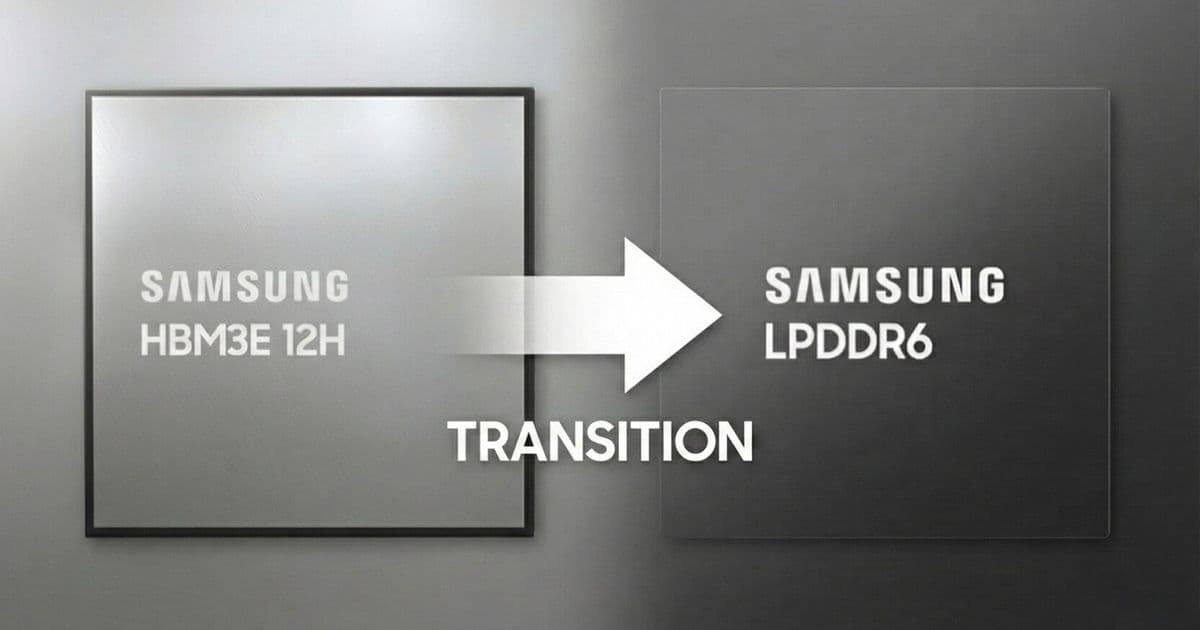
In a strategic pivot, Samsung Electronics is reportedly reallocating up to 40% of its HBM3E production capacity to mainstream DRAM, driven by higher profit margins and unprecedented demand for memory chips from the artificial intelligence industry.
Samsung Shifts Memory Production Strategy: From HBM3E to Mainstream DRAM to Meet Soaring Demand
In a significant strategic move that could reshape the global memory market, Samsung Electronics is reportedly converting a substantial portion of its High Bandwidth Memory (HBM) production capacity to mainstream DRAM. This shift, occurring as the company transitions from HBM3/HBM3E to HBM4, reflects changing economic realities and unprecedented demand for memory chips from the artificial intelligence industry.
Capacity Reallocation and Economic Drivers
According to industry sources, Samsung is in discussions to convert approximately 30-40% of its current capacity from the 10 nm-class, fourth-generation 1a DRAM process to the 10 nm-class, fifth-generation 1b lines used for general-purpose memory. This conversion would encompass various DRAM types including DDR5, LPDDR5X, LPDDR6, and GDDR7.
With additional investment to repurpose mature process nodes like 1z, Samsung expects to free up the equivalent of about 80,000 wafers per month of 1b capacity. This represents a significant increase in available DRAM supply at a time when demand has reached record highs.
The economic calculus behind this shift is compelling. While HBM typically offers higher margins for memory manufacturers, Samsung's internal estimates reveal a stark contrast in profitability. The operating profit for a 12-high (12-hi) HBM3E stack stands at approximately 30%, whereas near-term expectations for general-purpose DRAM exceed 60%.
Several factors have reduced the incentive to expand HBM3E production. Forecasts indicate a significant decline in average selling prices for 12-hi HBM3E, coupled with limited incremental demand from the company's largest HBM customer. These market conditions have made the more profitable DRAM production a more attractive option for Samsung in the short to medium term.
Market Implications and Industry Impact
The reallocation of memory capacity comes at a time when the AI industry has become the primary driver of memory demand. As Samsung executives have noted, all available DRAM will be absorbed by the AI industry, suggesting that even with increased production, supply constraints may persist.
The remaining HBM3E capacity will likely be claimed by ASIC designers such as Google, Broadcom, MediaTek, and other specialized chip manufacturers who require high-bandwidth memory for their custom solutions. For standard DRAM like DDR5, hyperscalers—including cloud providers and data center operators—will be eager to secure increased capacity for their expansion projects.
This strategic shift by Samsung could have ripple effects throughout the technology ecosystem. As the world's largest memory manufacturer, Samsung's production decisions significantly influence global supply chains and pricing. By increasing DRAM production, the company may help alleviate some of the memory shortages that have plagued the industry, particularly affecting GPU availability and pricing.
For consumers, the implications are more nuanced. While increased DRAM production could eventually lead to more balanced pricing, the immediate benefits may be concentrated in the AI and data center sectors. The memory industry's focus on serving high-margin AI customers suggests that consumer-facing products may not experience immediate relief from current pricing pressures.
The Transition Timeline
It's important to note that the transition from near-zero to finished DRAM chips requires months of manufacturing. The changes Samsung is reportedly considering will not manifest in the supply chain immediately. Memory production involves complex processes, from wafer fabrication to testing and packaging, each with significant lead times.
This extended timeline means that the market effects of Samsung's capacity reallocation may not be fully realized until the latter half of 2026. During this transition period, the memory market is likely to remain characterized by tight supply, particularly for specialized memory types like HBM.
Looking Ahead: The HBM4 Transition
Samsung's move also occurs as the company prepares to transition from HBM3E to HBM4, the next generation of high-bandwidth memory. This transition represents the natural evolution of memory technology, with each generation offering increased bandwidth, density, and performance.
The shift to HBM4 will likely require new manufacturing processes and equipment, presenting both challenges and opportunities for Samsung and its competitors. As the company balances its current production needs with future technology development, it must navigate a complex landscape of market demands, technological constraints, and competitive pressures.
The Memory Market Evolution
Samsung's reported decision to convert HBM3E capacity to mainstream DRAM reflects a pragmatic response to market conditions and profit margins. In an industry where supply and demand dynamics can shift rapidly, the ability to adapt production capabilities is crucial for maintaining competitiveness.
As the AI industry continues to drive unprecedented demand for memory chips, manufacturers like Samsung must balance serving current high-margin markets while preparing for future technology transitions. This strategic reallocation may provide short-term relief for DRAM-constrained markets while positioning Samsung for the next wave of memory technology.
The memory industry's evolution will continue to shape the broader technology landscape, influencing everything from AI model training capabilities to consumer device performance. As Samsung navigates this transition, the company's decisions will reverberate throughout the global technology ecosystem, affecting everything from data center expansion to consumer electronics pricing.
Comments
Please log in or register to join the discussion