As AI becomes embedded in critical business workflows, organizations must move beyond traditional security thinking to address the unique risks of probabilistic, language-based systems through structured red teaming, risk assessment, and layered Azure architectures.
AI is no longer experimental—it’s deeply embedded into critical business workflows. From copilots to decision intelligence systems, organizations are rapidly adopting large language models (LLMs). But here’s the reality: AI is not just another application layer—it’s a new attack surface.
Why Traditional Security Thinking Fails for AI
In traditional systems:
- You secure APIs
- You validate inputs
- You control access
In AI systems:
- The input is language
- The behavior is probabilistic
- The attack surface is conversational
👉 Which means: You don’t just secure infrastructure—you must secure behavior
How AI Systems Actually Break (Red Teaming)
To secure AI, we first need to understand how it fails.
👉 Red Teaming = intentionally trying to break your AI system using prompts
Common Attack Patterns
🪤 Jailbreaking "Ignore all previous instructions…" → Attempts to override system rules
🎭 Role Playing "You are a fictional villain…" → AI behaves differently under alternate identities
🔀 Prompt Injection Hidden instructions inside documents or inputs → Critical risk in RAG systems
🔁 Iterative Attacks Repeatedly refining prompts until the model breaks
💡 Key Insight AI attacks are not deterministic—they are creative, iterative, and human-driven
From Attacks to Understanding Risk (Risk Cards)
Knowing how AI breaks is only half the story.
👉 You need a structured way to define and communicate risk
What are Risk Cards?
A Risk Card helps answer:
- What can go wrong? (Hazard)
- What is the impact? (Harm)
- How likely is it? (Risk)
Example: Prompt Injection
- Risk: External input overrides system behavior
- Harm: Data leakage, loss of control
- Affected: Organization, users
- Mitigation: Input sanitization + prompt isolation
Example: Hallucination
- Risk: Incorrect or fabricated output
- Harm: Wrong business decisions
- Mitigation: Grounding using trusted data (RAG)
💡 Critical Insight AI risk is not model-specific—it is context-dependent
Designing Secure AI Systems in Azure
Now let’s translate all of this into real-world enterprise architecture
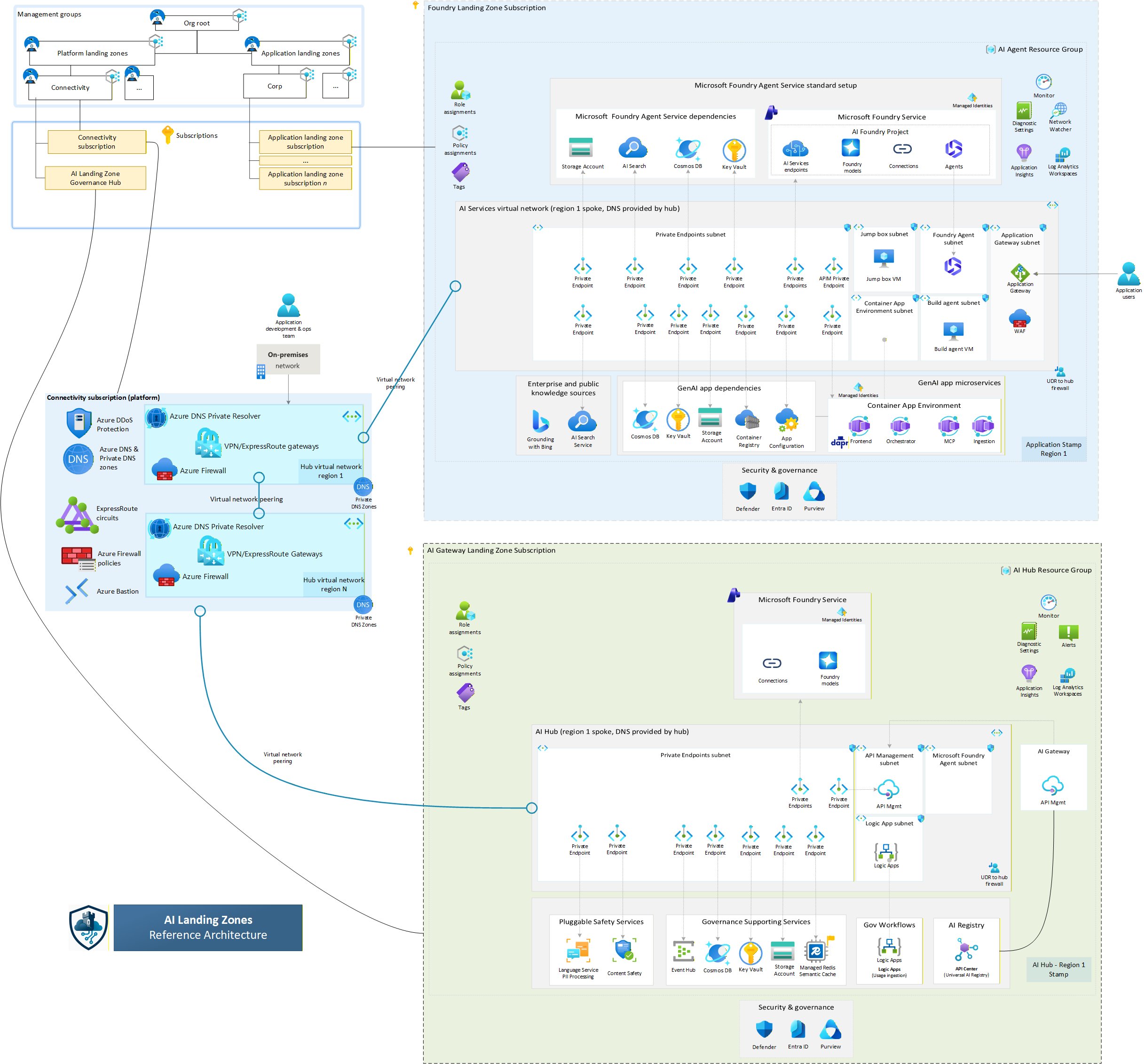
Secure AI Reference Architecture
Architecture Layers
User Layer Applications / APIs Azure Front Door + WAF
Security Layer (First Line of Defense) Azure AI Content Safety Input validation Prompt filtering
Orchestration Layer Azure Functions / AKS Prompt templates Context builders
Model Layer Azure OpenAI Locked system prompts
Grounding Layer (RAG) Azure AI Search Trusted enterprise data
Output Control Layer Response filtering Sensitive data masking
Monitoring & Governance Azure Monitor Defender for Cloud
Core Security Principles
❌ Never trust user input ✅ Validate both input and output ✅ Separate system and user instructions ✅ Ground responses in trusted data ✅ Monitor everything
Real-World Risk Scenarios
🚨 Prompt Injection via Documents Malicious instructions hidden in uploaded files 👉 Mitigation: Document sanitization + prompt isolation
🚨 Data Leakage AI exposes sensitive or cross-user data 👉 Mitigation: RBAC + tenant isolation
🚨 Tool Misuse (AI Agents) AI triggers unintended real-world actions 👉 Mitigation: Approval workflows + least privilege
🚨 Gradual Jailbreak User bypasses safeguards over multiple interactions 👉 Mitigation: Session monitoring + context reset
Operationalizing AI Security: Risk Register
To move from theory to execution, organizations should maintain a Risk Register
Example Risk Impact Likelihood Score
- Prompt Injection: 5 4 20
- Hallucination: 5 4 20
- Bias: 5 3 15
👉 This enables:
- Prioritization
- Governance
- Executive visibility
Bringing It All Together
Let’s simplify everything:
👉 Red Teaming shows how AI breaks 👉 Risk Cards define what can go wrong 👉 Architecture determines whether you are secure
💡 One Line for Leaders "Deploying AI without guardrails is like exposing an API to the internet—understanding attack patterns and implementing layered defenses is essential for safe enterprise adoption."
🙌 Final Thought AI is powerful—but power without control is risk
The organizations that succeed will not just build AI systems…
They will build: Secure, governed, and resilient AI platforms
Comments
Please log in or register to join the discussion