SiFive has announced it will integrate NVIDIA's NVLink Fusion technology into its future data center-class RISC-V CPU designs, marking a significant expansion of the NVLink ecosystem and positioning RISC-V as a viable alternative to x86 and ARM in high-performance AI systems.
The high-performance CPU IP landscape just shifted in a meaningful way. SiFive, the premier RISC-V IP vendor, announced this morning that it will adopt NVIDIA's NVLink Fusion for its future data center CPU designs. This move brings RISC-V into the NVLink ecosystem alongside established players like Arm, Intel, and AWS, fundamentally changing the CPU options available for building integrated AI systems.
Understanding the NVLink Fusion Ecosystem
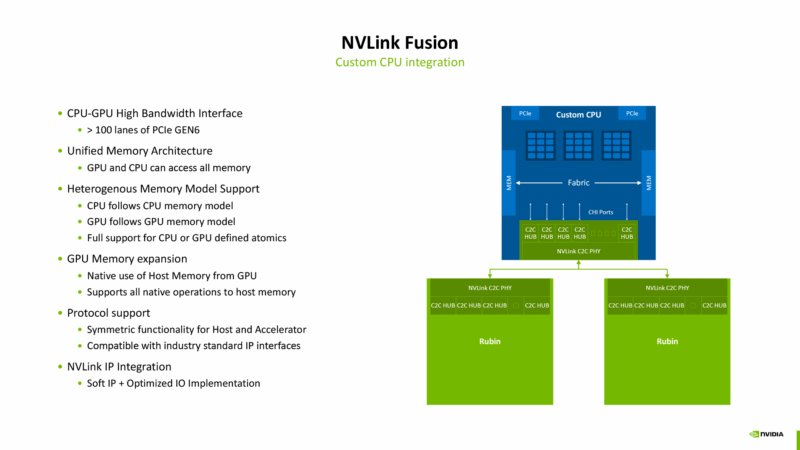
NVIDIA's NVLink has evolved from a proprietary GPU-to-GPU interconnect into something much larger. With NVLink Fusion, NVIDIA is essentially opening up its high-speed interconnect technology through a dual-pronged approach: IP licensing and external chiplets. This allows third-party vendors to integrate NVLink connectivity directly into their silicon designs.
The program addresses a critical gap in the AI hardware ecosystem. While NVIDIA GPUs dominate AI acceleration, CPU choices have been limited to those that can effectively interface with these GPUs. Traditional PCIe connections create bottlenecks for tightly-coupled AI workloads that require frequent CPU-GPU communication. NVLink-C2C (chip-to-chip) offers substantially higher bandwidth and full cache coherency, making it the preferred connection method for integrated systems.
SiFive's Strategic Position
For SiFive, this announcement represents more than just adding another interconnect option. The company has long promoted RISC-V's efficiency and customizability as advantages for specialized workloads, but without native NVLink support, SiFive CPUs were effectively excluded from the most lucrative segment of the server market: AI infrastructure.
The company's interest likely centers on the chip-to-chip variant of NVLink technology. This C2C implementation provides a high-bandwidth, fully cache-coherent link between CPUs and GPUs—the same technology NVIDIA uses to connect its own Grace CPUs to GPUs. By licensing this IP through the NVLink Fusion program, SiFive can integrate NVLink connectivity directly into future RISC-V CPU designs.
This development aligns with NVIDIA's broader RISC-V strategy. Last year, NVIDIA announced plans to bring CUDA and its drivers to RISC-V platforms. With SiFive now on board with NVLink Fusion, the software and hardware pieces are falling into place for RISC-V to become a first-class citizen in NVIDIA's AI ecosystem.
Technical Implications for System Builders
The immediate practical impact is expanded CPU choice for AI system design. Current integrated AI systems typically choose between x86 (Intel/AMD) and ARM architectures. SiFive's adoption of NVLink Fusion adds RISC-V as a third option, potentially offering:
- Customizable CPU cores: SiFive's IP model allows for core customization, enabling system builders to optimize CPU configurations for specific AI workloads
- Power efficiency advantages: RISC-V's streamlined architecture can offer better performance-per-watt in certain scenarios
- Open ISA benefits: No licensing restrictions or architecture royalties compared to proprietary alternatives
The timing suggests this will materialize in hardware around the Vera Rubin platform timeframe, potentially implementing NVLink 6 generation technology. This positions SiFive to compete directly with ARM and x86 vendors in the next generation of AI systems.
Competitive Landscape Shift
This announcement creates ripple effects across multiple competitive dimensions:
Against ARM: ARM has dominated the mobile and increasingly the server space, but SiFive's open ISA and customization capabilities could appeal to hyperscalers wanting more control over their CPU designs. With both now supporting NVLink Fusion, the competition shifts to architecture efficiency and ecosystem maturity.
Against x86: Intel and AMD maintain significant software ecosystem advantages, but RISC-V's open nature and SiFive's customizable IP could attract cloud providers building custom silicon. The NVLink connection removes the biggest hardware integration barrier.
Within RISC-V: While SiFive is the leading RISC-V IP vendor, this move could accelerate RISC-V adoption in data centers, potentially attracting more software development and ecosystem investment that benefits all RISC-V vendors.

The Broader Ecosystem Play
NVIDIA's strategy becomes clearer with each NVLink Fusion partnership. By methodically adding CPU vendors—first ARM, then Intel, then AWS, now RISC-V—NVIDIA is making NVLink the de facto standard for high-performance CPU-GPU interconnects. This creates a powerful ecosystem lock-in effect: if you want to build top-tier AI systems with NVIDIA GPUs, you need NVLink-compatible CPUs.
For NVIDIA, this is defensive diversification. If customers reject x86 or ARM for various reasons—cost, control, architecture preferences—NVLink Fusion ensures they can still use RISC-V within the NVIDIA ecosystem rather than exploring alternative GPU solutions.
What Comes Next
While the announcement lacks specific product details, several developments seem likely:
- SiFive will develop data center-class RISC-V cores with integrated NVLink-C2C controllers
- System OEMs will announce designs incorporating these CPUs with NVIDIA GPUs
- Software ecosystem development will accelerate as CUDA-on-RISC-V matures
- Competitive responses from other RISC-V vendors seeking similar NVLink partnerships
The real test will come when actual hardware ships. SiFive will need to demonstrate that its RISC-V implementations can match or exceed ARM and x86 performance in real AI workloads while leveraging NVLink's bandwidth advantages. The customizability promise must translate into tangible TCO benefits for hyperscale deployments.
For homelab builders and enthusiasts, this represents a fascinating long-term shift. While immediate availability in consumer-accessible hardware remains unlikely, the convergence of open architecture (RISC-V), open interconnect standards (via NVLink Fusion licensing), and dominant GPU acceleration (NVIDIA) could eventually democratize high-performance AI system building in ways that proprietary ecosystems cannot match.
The SiFive-NVIDIA partnership signals that the future of AI infrastructure won't be limited to a duopoly of x86 and ARM. RISC-V has officially entered the high-performance data center conversation, and it's bringing NVLink with it.
Comments
Please log in or register to join the discussion