The open-source Sing-Box Manager has rolled out version 1.3 with critical updates for Sing-Box 1.8+ compatibility, including rule-set optimizations and cache file management. This tool now supports over 30 proxy protocols and cutting-edge features like TCP Brutal congestion control, positioning it as a Swiss Army knife for complex network configurations.
Network engineers and privacy-focused developers now have a significantly upgraded toolkit at their disposal. The latest release of Sing-Box Manager (v1.3) delivers crucial compatibility with Sing-Box 1.8+'s enhanced rule-set syntax and cache file handling—capabilities that streamline complex proxy configurations for enterprise and privacy applications.
The Evolution of a Powerhouse
Version tracking reveals rapid maturation:
- v1.3: Rule-set/cache file support for Sing-Box 1.8+
- v1.2: Added Clash API integration
- v1.1: Introduced HTTPUpgrade transport + Multiplex/TCP Brutal/ECH security extensions
- v1.0: WireGuard unblocking + granular node management
Why This Matters for Infrastructure
Sing-Box Manager solves critical pain points in modern networking:
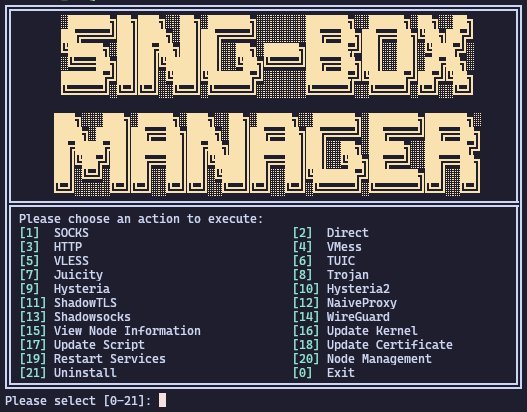
- Protocol Agnosticism: Supports 30+ protocols—from TLS-embedded options like VLESS+REALITY to performance-focused Hysteria2—allowing customized privacy/performance tradeoffs
- Zero Trust Essentials: Automatic 100-year TLS certs with renewal, plus TLS 1.3 ECH encryption
- Performance Engineering: TCP Brutal congestion control bypasses traditional TCP limitations for high-loss networks
- Cross-Platform Flexibility: Generates client configs for Clash Meta, V2rayN, SFA, and SFI clients
Under the Hood
# Installation (Debian/Ubuntu):
apt update && apt -y install curl wget tar socat jq git openssl
wget -N -O /root/singbox.sh https://raw.githubusercontent.com/...
chmod +x /root/singbox.sh
Configurations live in /usr/local/etc/sing-box/ with clear separation:
clash.yamlfor Meta-compatible deploymentswin_client.json/phone_client.jsonfor endpoint devices
The Unspoken Advantage: Protocol Coexistence
Unlike single-protocol solutions, Sing-Box Manager enables simultaneous operation of SOCKS, HTTP, TUIC, Juicity, and WireGuard services on one instance—critical for multi-tenant environments or segmented access controls.
Forward Trajectory
With Juicity support added in v1.1 and WireGuard streaming unblocks in v1.0, the project demonstrates acute awareness of real-world needs—whether bypassing geo-restrictions or optimizing for low-latency applications. The exclusion of TCP Brutal from Clash configs highlights thoughtful protocol-aware design rather than blanket implementation.
For DevOps teams managing global access infrastructure, this isn't just another proxy manager—it's becoming the unified control plane for next-generation secure networking.
Comments
Please log in or register to join the discussion