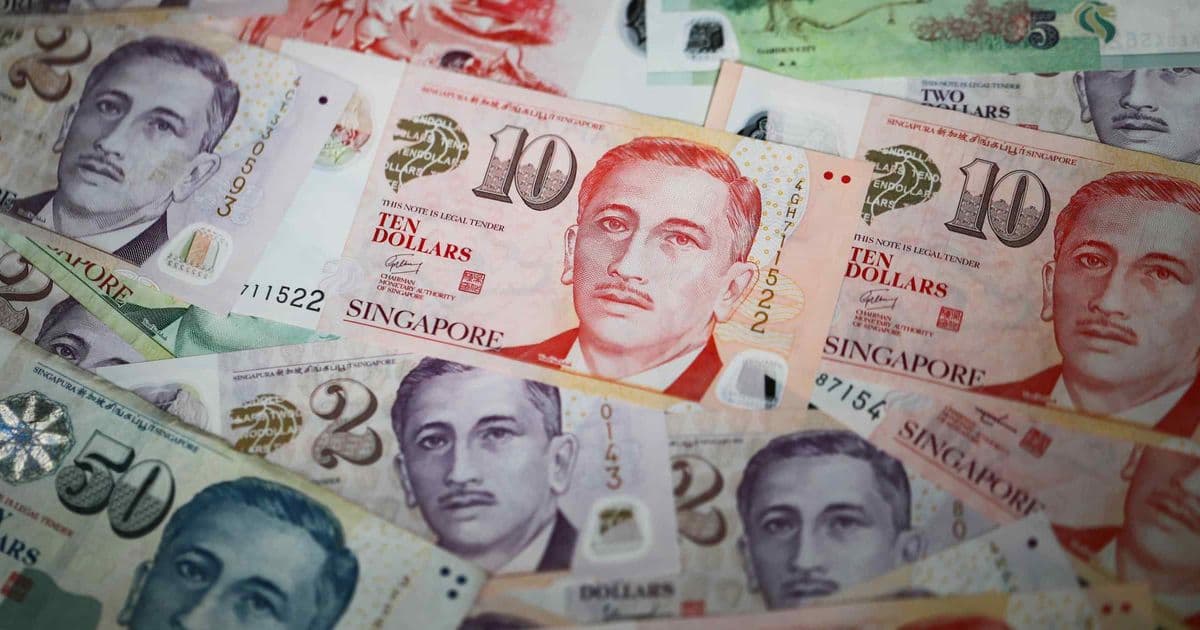
Singapore is investing billions to attract growth-stage IPOs while Hong Kong dominates AI listings, as Southeast Asia's capital markets undergo strategic realignment.
Singapore is making a multibillion-dollar push to attract growth-stage companies to list on its exchange, positioning itself as a complementary alternative to Hong Kong's dominance in technology and AI IPOs. The city-state's aggressive strategy comes as Southeast Asia's IPO market shows signs of recovery, with $4.5 billion raised in the second half of 2025 alone.
Singapore's Growth IPO Strategy
The Singapore Exchange (SGX) is targeting private companies that have achieved significant scale but aren't yet ready for the Hong Kong or New York markets. This "growth IPO" segment represents companies typically valued between $500 million and $2 billion that need capital to expand regionally or globally.
"Singapore is positioning itself as the natural next step for Southeast Asian unicorns before they consider larger exchanges," said a senior banker familiar with the strategy. The city-state has earmarked billions of dollars to develop capital-raising avenues, including regulatory reforms and incentives for both issuers and investors.
The timing appears strategic. Singapore's benchmark Straits Times Index recently passed the 5,000 mark for the first time, signaling strong market confidence. The city-state's GDP grew 5% in 2025, outpacing many regional peers despite challenges in the AI sector.
Hong Kong's AI Listing Dominance
While Singapore focuses on growth-stage companies, Hong Kong continues to attract high-profile technology and AI listings. The Special Administrative Region has established itself as the preferred destination for Chinese tech companies seeking international capital, particularly those in artificial intelligence and semiconductor sectors.
Hong Kong's success in AI listings stems from several factors: its proximity to mainland China's tech ecosystem, established relationships with Chinese investors, and regulatory frameworks that accommodate dual-class share structures favored by tech entrepreneurs. The exchange has also benefited from geopolitical tensions that have made U.S. listings less attractive for some Chinese companies.
Regional Market Dynamics
The contrasting strategies reflect broader shifts in Asia's capital markets. Hong Kong is leveraging its position as a gateway between China and international investors, while Singapore is building on its reputation as a neutral, business-friendly jurisdiction for Southeast Asian companies.
Recent data shows Southeast Asia's IPO market rebounding strongly. The $4.5 billion raised in the second half of 2025 represents a significant recovery from the pandemic-induced slowdown. Singapore's DBS Bank, Southeast Asia's largest lender, reported a 10% profit decline in Q4 2025, citing low interest rates as a key factor. This underscores the importance of fee income from capital markets activities.
Strategic Implications
The competition between Singapore and Hong Kong for IPO business has several implications for the regional financial ecosystem:
For Companies: Southeast Asian startups now have multiple pathways to public markets. Companies can choose Singapore for growth capital or Hong Kong for technology-focused listings, depending on their strategic objectives and investor base.
For Investors: The competition is likely to improve liquidity and pricing across both exchanges. Singapore's focus on growth companies may attract long-term institutional investors, while Hong Kong's tech focus continues to draw venture capital and technology-focused funds.
For the Region: The dual-hub strategy strengthens Southeast Asia's position in global capital markets. Rather than competing directly, Singapore and Hong Kong appear to be carving out complementary niches that serve different segments of the market.
What This Means for 2026
Industry analysts expect the rivalry to intensify in 2026, with both exchanges likely to introduce new incentives and regulatory reforms. Singapore's success will depend on its ability to attract high-quality growth companies, while Hong Kong must maintain its edge in technology listings amid increasing competition from mainland Chinese exchanges.
The broader context includes Malaysia's GDP expansion of 5.2% in 2025 and Singapore's strong economic performance, suggesting robust underlying growth in the region. However, challenges remain, including interest rate environments that affect bank profitability and the need for both exchanges to adapt to evolving investor preferences.
As Southeast Asia's financial centers compete for IPO supremacy, the ultimate winners may be the companies and investors who benefit from improved access to capital and more diverse listing options. The battle for Asia's IPO crown is far from over, but Singapore's aggressive push signals a new phase in the region's capital markets evolution.
Comments
Please log in or register to join the discussion