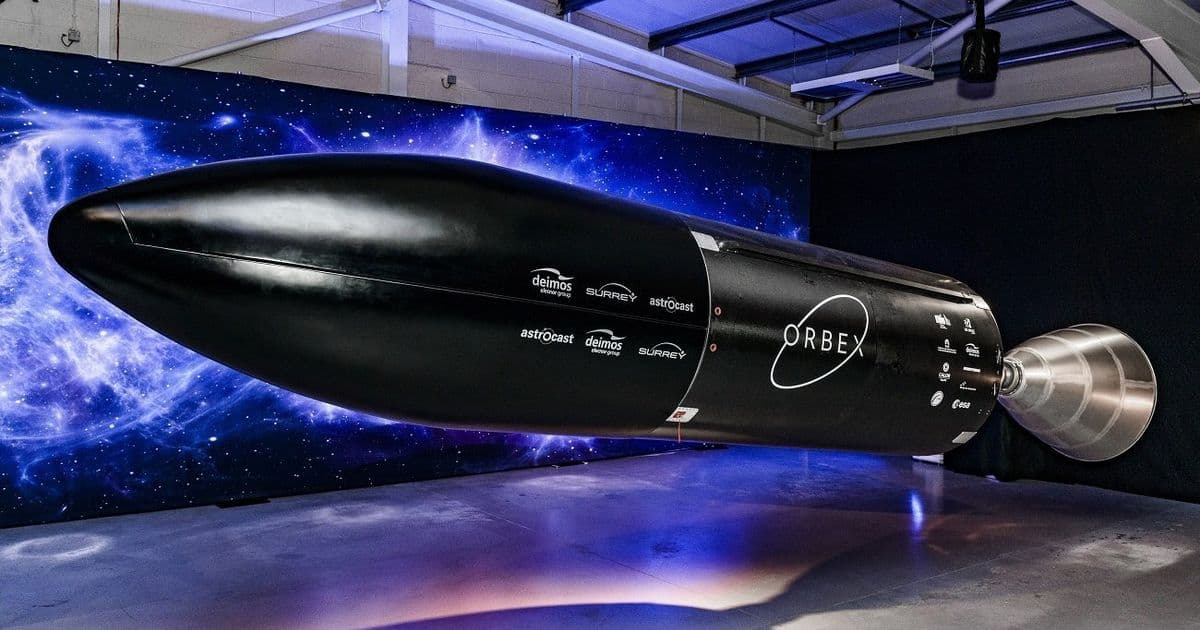
Scottish rocket company Orbex collapses into administration after exhausting funding options, with rival Skyrora expressing interest in acquiring its assets including the Highland spaceport.
The UK's space ambitions have suffered a significant setback with the collapse of Orbex, one of the country's most prominent rocket companies, which has announced it will appoint administrators after exhausting funding options and merger opportunities.
The End of Orbex's UK Space Dreams
Orbex had positioned itself as a key player in establishing the UK as a sovereign space launch nation. The company had been developing its Prime rocket, a micro-launcher designed to carry small satellites into orbit from UK soil. However, despite years of development and substantial government backing, the business proved no longer viable.
"Disappointing doesn't come close to describing how we feel about this moment," said CEO Phil Chambers in a statement. "We have been successfully developing a sustainable, world-class sovereign space launch capability for the UK and were on the cusp of our first test flights later this year."
The company's journey had been marked by repeated delays. In 2021, then-CEO Chris Larmour told The Register they were "working towards the end of 2022," though he acknowledged that "there's always something either internally or externally, that impacts the ability to meet those dates..." Larmour departed abruptly in 2023, stating he was "leaving the company in good shape, with deep pockets and a clear path to first launches."
Government Investment and Political Embarrassment
The collapse is particularly embarrassing for the UK government, which had invested heavily in Orbex's ambitions. In January 2025, then Technology Secretary Peter Kyle praised the company, saying: "Supporting Orbex's launch will also turbocharge the country's position in the space sector and inspire our next generation of space professionals, who will be able to design, test, build and launch British rockets, carrying British satellites, from British soil."
This came after a £20 million government investment, followed by an additional £6 million. A government spokesperson told The Register: "We remain committed to supporting our dynamic space sector. The UK attracts some of the highest levels of private space investment in Europe, and we are home to over 1,900 innovative space companies such as Open Cosmos, Magdrive, Filtronic, and Space Forge."
The spokesperson acknowledged the competitive nature of the space launch sector, noting that "some companies will succeed, while others will fail," and promised further details on national space capabilities "in due course."
Skyrora's Strategic Interest
Scottish rival Skyrora has already expressed interest in acquiring some of Orbex's assets, particularly the Sutherland Spaceport located in the Highlands of Scotland. This facility was originally intended to support Orbex's Prime launch vehicle, though construction was paused at the end of 2024.
Dr. Jack-James Marlow, COO at Skyrora, stated: "As the only UK company with a domestic launch license and both manufacturing and testing capabilities, Skyrora is best placed to take over Orbex's assets."
Skyrora is currently at the preliminary expression of interest stage and has not provided further comment on specific acquisition plans.
The Broader Context of UK Space Ambitions
The collapse of Orbex represents a significant challenge to the UK's goal of becoming a major space-faring nation. The country has invested heavily in developing domestic launch capabilities, viewing space as a strategic sector for economic growth and technological leadership.
Orbex's failure highlights the extreme challenges facing new entrants in the space launch market, where technical complexity, regulatory hurdles, and intense competition from established players create a high-risk environment. The company's experience serves as a cautionary tale about the gap between ambitious space sector goals and the harsh realities of commercial spaceflight development.
While the UK government remains committed to its space strategy and points to other successful companies in the sector, the loss of Orbex represents a significant setback in terms of both investment and momentum. The coming months will reveal whether Skyrora can capitalize on this opportunity to strengthen its position as the UK's leading domestic launch provider, or whether the spaceport assets will find other uses in the evolving landscape of British space ambitions.
The situation also raises questions about the sustainability of the UK's approach to developing sovereign launch capabilities, particularly given the substantial public investment involved and the high failure rate in this competitive sector. As the government reviews its space strategy, the lessons from Orbex's collapse will likely influence future decisions about how to support and develop the UK's space industry.
Comments
Please log in or register to join the discussion