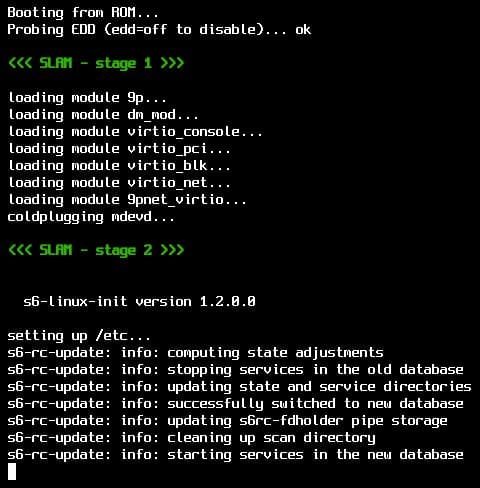
SLAM represents a fascinating departure from conventional operating system design, offering a modular alternative to the monolithic approach while maintaining the declarative benefits of Nix.
The System Layer Abstraction Modules (SLAM) framework emerges as a compelling exploration of alternative operating system architecture, built upon the solid foundation of Nix's purely functional deployment model but charting its own distinct course. Unlike its predecessors in the Nix ecosystem, SLAM deliberately rejects the monolithic status quo, instead embracing a philosophy of maximum flexibility through carefully constrained functionality. This approach represents not merely an incremental improvement but a fundamental reimagining of how system components might relate to one another in a Nix-based environment.
At the heart of SLAM's innovation lies its eponymous system layer abstraction, which offers users a choice of init systems and service managers that can operate both in isolation and in mutually composing forms. This architectural choice carries profound implications for system design, potentially enabling configurations that would be impossible in more rigidly structured systems. The dual stage bootstrap from initramfs, combined with BIOS and UEFI booting via the Limine bootloader, demonstrates a thoughtful approach to system initialization that prioritizes flexibility without sacrificing reliability.
The technical implementation of SLAM reveals several noteworthy features that distinguish it from other Nix-based distributions. The integration of s6 service supervision with s6-rc service management provides a robust alternative to the more common systemd approach, while Synit serves as both a system-bus and service manager, offering additional architectural possibilities. Perhaps most significantly, SLAM supports federated service management through external modules, allowing for unprecedented composability of system components. This modular architecture extends to core Linux services, externally defined services, and even the ability to host SLAM service managers on other systems like Finix and NixOS.
The inclusion of package overlays to sever malignant dependency chains addresses a persistent challenge in complex software ecosystems, potentially offering a more elegant solution than traditional dependency resolution mechanisms. Meanwhile, the compatibility layer featuring a switch-to-configuration script and /run/current-system directory ensures that SLAM can integrate with existing NixOS deployment tooling, easing adoption for those familiar with the broader Nix ecosystem.
SLAM's licensing approach represents perhaps its most radical departure from conventional open-source projects. Released under the Peer Production License, SLAM explicitly rejects both Free Software and Open Source designations, limiting its use to individual users, non-commercial entities, and worker-owned cooperatives. This deliberate restriction serves multiple purposes: it ensures development remains aligned with research goals, disincentivizes the accretion of poorly conceived features, and maintains a clear boundary between experimental research and production systems. The project's creator explicitly states that SLAM has no aspirations of becoming an open-ended community project, instead embracing the discipline of single-developer maintenance to retain conceptual coherence and conform to a single standard of quality and intent.
This development model draws inspiration from established norms within the operating systems community, where restricting development to a small, focused team has yielded historically significant results. The lineage includes venerable systems like UNIX, Project Oberon, and the L4 microkernel family, all of which demonstrated that focused, disciplined development could produce systems of remarkable elegance and reliability. SLAM's creator positions the project within this tradition, suggesting that quality in operating system design often emerges from constraint rather than unfettered expansion.
The historical context of SLAM reveals it as part of a rich tapestry of experimentation within the Nix ecosystem. The project originated as a port of the Synit reactive operating system to the NixOS module system, with development advancing alongside work on Nix RFC0163. When NixOS development stalled, the SLAM repository was forked from the Finix repository, continuing the lineage of innovation. Examining the broader timeline from 2003 to the present reveals a pattern of continuous exploration and refinement, with each project building upon or responding to the limitations of its predecessors. This evolutionary process has produced a diverse ecosystem of approaches, from the mainstream NixOS and Guix to more experimental projects like not-os, vpsadminos, Sigil, and the various initiatives exploring alternative init systems and service management approaches.
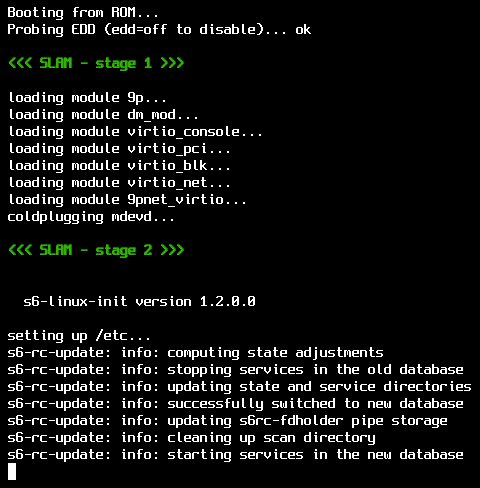
The practical implications of SLAM's architecture extend beyond academic interest. The project is already in active use on both personal hardware and virtual servers, demonstrating that its research-oriented design has real-world applicability. The modular service management capabilities, in particular, offer potential advantages for containerized environments, distributed systems, and scenarios requiring highly customized system configurations. The ability to compose service managers both within and across system layers could enable novel approaches to system reliability and security, particularly in contexts where traditional monolithic service managers present limitations.
For those interested in exploring SLAM, the project's Git repository provides the primary source of information, though the creator appropriately notes that SLAM is a research project rather than a user-friendly distribution. The slam-images repository offers initial system configurations and a harness for importing SLAM expressions, while the interim Synit wiki provides additional articles. Module options are documented in the slam(5) man page, and discussion occurs on IRC channels #synit on Libera and #slam on the OFTC network.
As the operating system landscape continues to evolve, projects like SLAM serve as valuable research platforms, exploring architectural alternatives that may eventually influence mainstream systems. The emphasis on modularity, composability, and disciplined development offers a counterpoint to the trend toward increasingly monolithic system designs, potentially inspiring new approaches to system architecture that balance flexibility with reliability. While SLAM may never achieve the widespread adoption of more established distributions, its contributions to the discourse on operating system design are likely to resonate throughout the broader software ecosystem for years to come.
The significance of SLAM ultimately lies not in its immediate practical impact but in its demonstration that alternative approaches to system architecture remain both possible and advantageous. In an industry increasingly dominated by a few dominant paradigms, SLAM stands as a testament to the value of architectural diversity and the enduring importance of exploring fundamental design questions. The project's very existence challenges us to reconsider assumptions about how operating systems should be structured, potentially opening new avenues for innovation in a field that often appears to have reached a state of mature consolidation.
Comments
Please log in or register to join the discussion