
A leaked Xiaomi smartphone with a massive 7-inch display and 10,000mAh battery could be the Redmi K100 Pro Max, offering significant upgrades over its predecessor with a larger screen, bigger battery, and advanced 3nm chipset.
Xiaomi phone with 7-inch display and 10,000mAh battery leaks alongside launch window
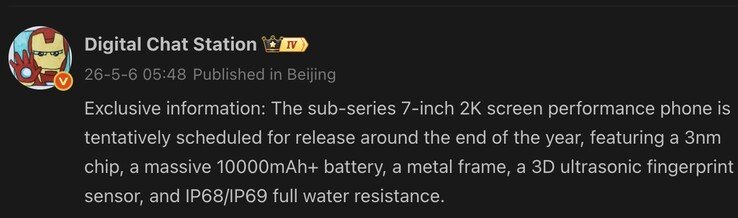
Digital Chat Station on Weibo has shared intriguing details about an upcoming large-screen smartphone from Xiaomi that appears to be pushing boundaries in display size and battery capacity. The device, potentially the Redmi K100 Pro Max, represents a significant evolution from its predecessor and could redefine expectations for performance-centric smartphones with massive displays.
What's New: Display and Battery Breakthroughs
The standout feature of this leaked device is its expansive 7-inch display with 2K resolution. This represents a notable increase over the current flagship Xiaomi 17 Ultra, which features a 6.9-inch panel. For context, this would make it one of the largest mainstream smartphone displays available, potentially appealing to users who prioritize media consumption, gaming, and productivity on their mobile devices.
Equally impressive is the claimed battery capacity exceeding 10,000mAh. If accurate, this would be among the largest batteries ever packed into a smartphone, significantly outpacing most competitors and even many dedicated power banks. The combination of a large display and substantial battery suggests Xiaomi is targeting users who need extended battery life for intensive use scenarios.
Additional leaked specifications include a metal frame construction, ultrasonic fingerprint sensor, and IP68/IP69 dust and water resistance ratings. The ultrasonic fingerprint technology offers faster and more secure authentication compared to traditional optical sensors, while the premium build quality and IP ratings indicate this is positioned as a high-end device despite its likely Redmi branding.

How It Compares: Performance and Evolution
If this device is indeed the Redmi K100 Pro Max, it would represent a significant upgrade over its predecessor. The Redmi K90 Pro Max, launched in 2025, featured a 6.9-inch display, 7,560mAh battery, and was powered by a Snapdragon 8 Elite Gen 5 chipset.
The rumored 3nm chipset in the new model would represent a generational leap in manufacturing technology, promising improved performance and efficiency. While the exact processor hasn't been specified, it could potentially be Qualcomm's upcoming Snapdragon 8 Gen 4 or a MediaTek Dimensity flagship chip, both expected to be built on 3nm processes.
The display upgrade from 6.9 to 7 inches may seem modest, but when combined with the jump from approximately 7,560mAh to over 10,000mAh battery capacity, this suggests a device designed for users who prioritize screen real estate and battery life above all else. The metal frame and IP68/IP69 ratings also indicate a move toward more premium build quality compared to previous Redmi models.
Who It's For: Target Audience and Market Positioning
This device appears to be targeting several key user groups:
Media Enthusiasts: The 7-inch display would provide an exceptional viewing experience for videos, streaming content, and digital comics, potentially reducing the need for tablets for casual media consumption.
Mobile Gamers: The combination of a large display, powerful 3nm chipset, and massive battery would appeal to gamers who want immersive gameplay without constantly worrying about battery life.
Productivity Users: Professionals who frequently work on their phones would benefit from the increased screen real estate for multitasking and document editing.
Power Users: Those who demand maximum battery life and top-tier performance in a single device would find this particularly attractive.
The Redmi K100 Pro Max would likely be positioned as a more affordable alternative to Xiaomi's flagship Ultra series, offering many premium features at a lower price point. This strategy has proven successful for Xiaomi in the past, allowing the company to capture market share across different segments.
Launch Timeline and Considerations
According to the leak from Digital Chat Station, the device is expected to launch around the end of 2026. If this timeline holds, we would likely see more detailed specifications and official announcements in the coming months, particularly at Xiaomi's flagship events in late 2026.
It's worth noting that these specifications are based on leaks and should be treated with some skepticism. While Digital Chat Station has a reliable track record with Xiaomi leaks, details can change between now and the official launch. The actual battery capacity, display technology, and final chipset specifications may differ from what's currently rumored.
Market Context and Competitive Landscape
The smartphone industry has seen increasing competition in the "phablet" category, with manufacturers like Samsung, Apple, and Google all offering devices with screens exceeding 6.7 inches. Xiaomi's potential entry with a 7-inch display would further push the boundaries of what's considered a mainstream smartphone size.
In terms of battery capacity, most flagship smartphones currently offer batteries in the 4,500-5,000mAh range, with some gaming phones reaching 6,000mAh. A device with over 10,000mAh would be unprecedented in the mainstream market, though it's worth noting that such a large battery would likely result in a thicker and heavier device.
The 3nm chipset represents the cutting edge of semiconductor technology, promising significant improvements in both performance and power efficiency compared to current 4nm and 5nm chips. This would be particularly important for a device with a large display, which typically consumes more power than smaller screens.
Conclusion
The leaked Xiaomi Redmi K100 Pro Max appears to be a bold step forward in smartphone design, combining an exceptionally large display with industry-leading battery capacity. If the leaks prove accurate, this device could redefine expectations for what's possible in a mainstream smartphone, particularly for users who prioritize screen size and battery life.
While we'll need to wait for official confirmation from Xiaomi, the potential combination of these specifications suggests a device that could appeal to a specific segment of power users who have been underserved by current offerings. The end of 2026 launch window gives Xiaomi time to refine these specifications and address potential challenges like device thickness and heat management that come with such a large battery and powerful chipset.
As with all leaks, we recommend treating this information with some caution until Xiaomi makes an official announcement. However, the consistent details from multiple sources suggest there's substantial truth to these claims, and we look forward to seeing how Xiaomi positions this device in its lineup once it's officially unveiled.
Comments
Please log in or register to join the discussion