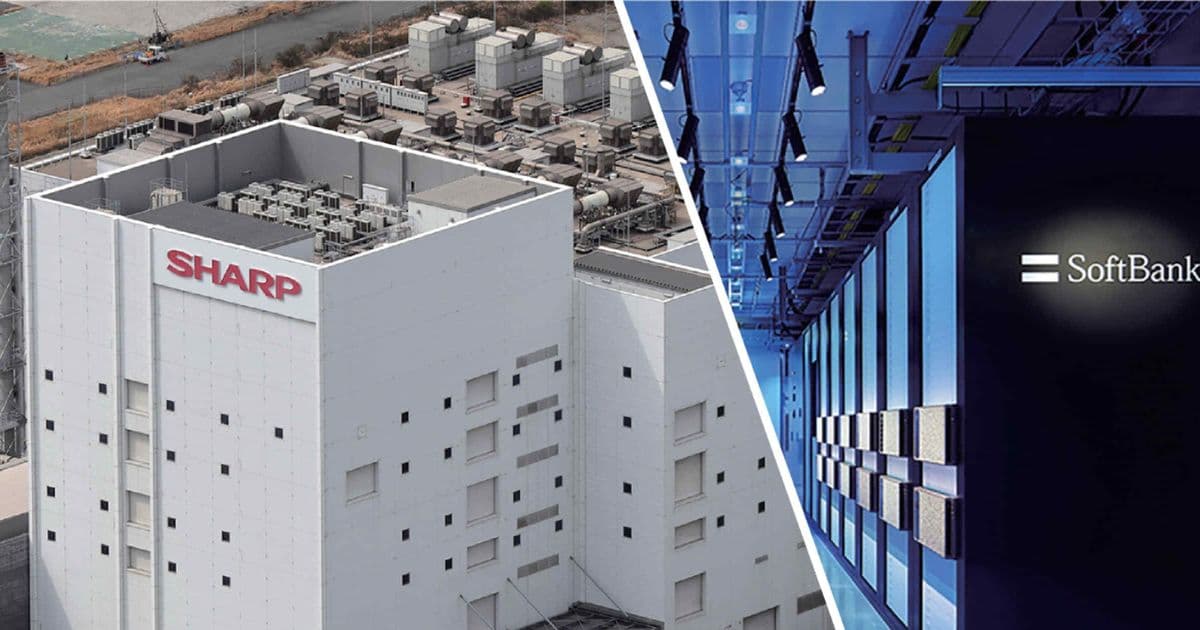
SoftBank's ambitious plan to develop lithium- and cobalt-free batteries for data centers by FY2027 represents Japan's broader strategy to reduce dependence on Chinese critical minerals amid growing geopolitical tensions and supply chain vulnerabilities.
The technology landscape is witnessing a significant shift as SoftBank Group, one of Japan's most influential conglomerates, announces plans to develop and manufacture batteries that eliminate reliance on lithium and cobalt for data center applications. This initiative, targeting implementation as early as fiscal year 2027, aligns with Japan's broader strategic objective to reduce dependence on Chinese metals amid escalating geopolitical tensions and supply chain vulnerabilities.
The battery technology represents a potential breakthrough in energy storage solutions for data centers, which have traditionally relied on lithium-ion batteries containing both lithium and cobalt—materials predominantly sourced from China and other geopolitically sensitive regions. According to sources cited in the Nikkei Asia report, SoftBank intends to manufacture these innovative batteries domestically in Japan, signaling a significant investment in both research and production capabilities.
This development comes at a critical juncture when Japan, like many other nations, is reassessing its critical mineral dependencies. The country has increasingly recognized that its technological and economic security is intertwined with access to essential materials. By pursuing lithium- and cobalt-free battery technology, SoftBank is positioning itself at the forefront of a growing movement toward technological sovereignty in key sectors.
The data center industry has been experiencing exponential growth globally, with Japan's data center market projected to expand significantly. Jones Lang LaSalle (JLL) reports that Japan's $23 billion data center market is expected to grow approximately 50% by 2030, with 90% of sites concentrated in densely populated regions. This growth has created substantial demand for reliable, sustainable energy storage solutions that can ensure uninterrupted operations while meeting increasing environmental and regulatory requirements.
From a technological perspective, the development of lithium- and cobalt-free batteries would address several critical challenges. Traditional lithium-ion batteries face limitations including thermal instability, finite resource availability, and ethical concerns surrounding cobalt mining practices. Alternative battery chemistries—such as sodium-ion, iron-phosphate, or other emerging technologies—could offer comparable performance characteristics without the geopolitical and supply chain risks associated with critical minerals.
The implications of this initiative extend beyond SoftBank and the data center sector. If successful, this technology could potentially be adapted for electric vehicles, grid storage, and other applications, creating ripple effects throughout the energy storage ecosystem. This aligns with Japan's national strategy to develop competitive advantages in green technologies while reducing exposure to volatile commodity markets.
However, significant challenges remain. Battery technology that eliminates lithium and cobalt while maintaining energy density, longevity, and safety standards has yet to achieve widespread commercial viability. Industry experts note that alternative chemistries often trade performance for material availability, creating a complex optimization challenge for engineers and researchers.
The investment community has reacted cautiously to such announcements. While the strategic rationale is clear, the technical and economic feasibility of large-scale production remains uncertain. Battery technology development typically requires extensive testing, certification, and scaling before achieving commercial viability, meaning SoftBank's FY2027 timeline appears ambitious given current technological constraints.
Environmental considerations also present a nuanced perspective. While eliminating cobalt addresses ethical concerns in mining, the overall environmental footprint of alternative battery technologies must be evaluated comprehensively. Manufacturing processes, energy requirements, and end-of-life recyclability all factor into the sustainability equation, suggesting that the environmental benefits may not be as straightforward as they initially appear.
From a geopolitical standpoint, this initiative reflects Japan's broader strategy to diversify its critical material supply chains. The country has been actively investing in domestic recycling programs, alternative material research, and partnerships with resource-rich nations beyond China. This approach mirrors similar efforts in the United States and Europe, creating a global trend toward technological sovereignty in strategic sectors.
The competitive landscape will likely evolve rapidly if SoftBank achieves its objectives. Companies specializing in alternative battery chemistries, such as sodium-ion or solid-state technologies, may experience increased interest and investment. Traditional battery manufacturers could face disruption, potentially accelerating innovation across the entire energy storage ecosystem.
For the data center industry specifically, this development could influence facility design, power management strategies, and sustainability initiatives. Data center operators have been increasingly focused on reducing their environmental footprint while maintaining reliability and performance. Lithium- and cobalt-free batteries could offer a pathway to greener operations without compromising on operational requirements.
The broader implications for Japan's technological position are significant. By developing proprietary battery technology, SoftBank and Japan could establish leadership in a critical component of digital infrastructure. This technological advantage could translate into economic benefits, export opportunities, and enhanced national security in an increasingly digitized world.
As with any technological advancement, adoption will likely follow an S-curve, with early adopters taking calculated risks while others wait for proven performance and cost-effectiveness. The data center sector, with its high value placed on reliability and operational continuity, may initially proceed cautiously despite the potential benefits.
The success of SoftBank's initiative will depend on multiple factors, including technological breakthroughs, manufacturing scalability, cost competitiveness, and market acceptance. If these challenges can be overcome, the company may not only transform its own data center operations but also influence the broader trajectory of energy storage technology in Japan and potentially beyond.
This development underscores the increasingly intertwined relationship between technology, geopolitics, and economic strategy. As nations and companies reassess their dependencies in an uncertain global environment, innovation in critical technologies like energy storage becomes both a competitive advantage and a strategic necessity.
The transition away from lithium and cobalt represents more than just a materials substitution; it reflects a fundamental rethinking of how energy is stored and managed in our increasingly digital world. For SoftBank and Japan, this initiative represents a significant step toward technological autonomy and resilience in a rapidly evolving global landscape.
Comments
Please log in or register to join the discussion