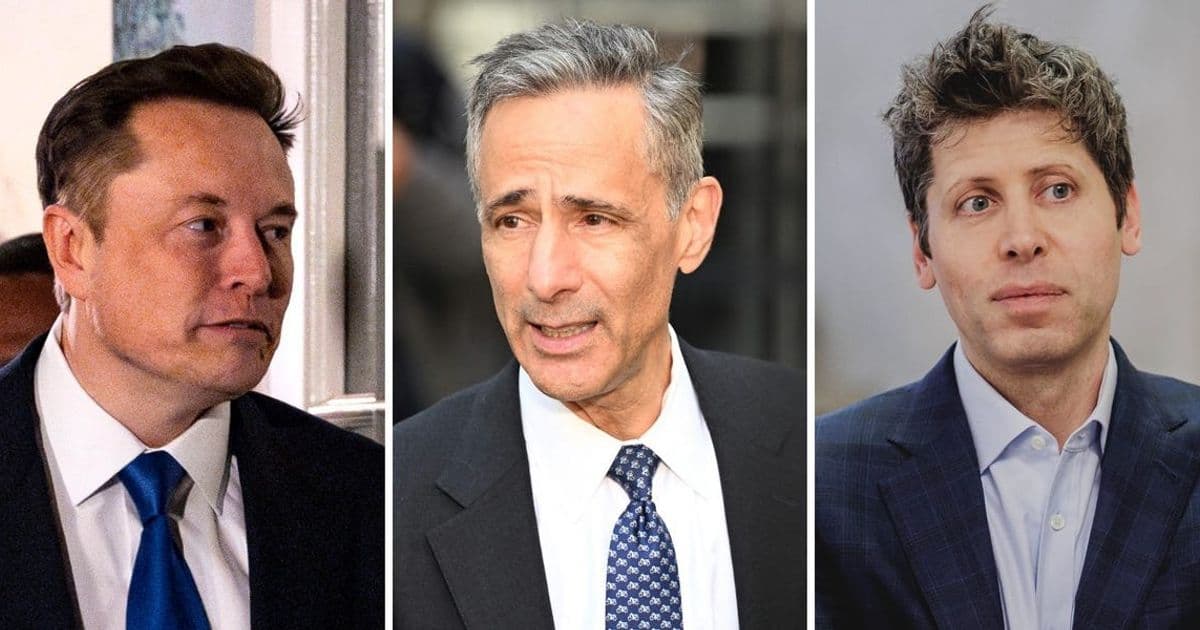
William Savitt has emerged as one of Silicon Valley's most influential lawyers, representing Sam Altman against Elon Musk's lawsuit targeting OpenAI, having previously defended Twitter against Musk's acquisition reversal and guided OpenAI's for-profit transition.
William Savitt has positioned himself at the center of Silicon Valley's most consequential legal battles, representing Sam Altman in Elon Musk's lawsuit attempting to dismantle OpenAI. As Wachtell, Lipton, Rosen & Katz's litigation partner, Savitt has built a reputation for navigating complex corporate disputes with strategic precision, becoming the go-to counsel for tech industry leaders facing existential threats.
The Musk vs. Altman legal battle represents one of Savitt's most high-profile current challenges. Musk's lawsuit, filed in late 2025, alleges OpenAI's transition to a for-profit model violated its original mission and threatens to dissolve the company. Savitt's defense strategy appears focused on establishing that the for-profit transition was necessary to secure the computational resources required for advanced AI development, positioning OpenAI's governance changes as pragmatic evolution rather than mission betrayal. OpenAI's corporate structure documentation provides context for these governance changes.
Savitt's previous representation of Twitter against Musk in 2022 demonstrated his ability to handle billion-dollar disputes under intense public scrutiny. When Musk attempted to terminate his $44 billion acquisition agreement, Savitt helped Twitter secure a Delaware court ruling that enforced the merger agreement, ultimately forcing Musk to complete the acquisition. The case turned on Savitt's argument that Musk's "poison pill" claims were pretextual, with evidence showing his concerns about bot accounts emerged only after the market downturn affected the deal's economics. Twitter's 2022 proxy statement detailing the acquisition process provides additional context.
Before the Twitter case, Savitt played a pivotal role in OpenAI's controversial transition to a for-profit model in 2023. As OpenAI sought to raise additional funding to compete with emerging rivals, Savitt helped structure the complex governance changes that created a new for-profit parent company while maintaining a nonprofit board with special fiduciary duties. The transition allowed OpenAI to secure additional funding from Microsoft and other investors while attempting to preserve aspects of its original mission. The legal framework established precedent for how AI research organizations might balance profit motives with public benefit obligations.
Savitt's approach to these cases reveals a consistent pattern: focusing on contractual obligations and corporate governance principles rather than emotional appeals. In the Twitter case, he emphasized the binding nature of signed agreements. In the OpenAI governance transition, he framed the changes as necessary for organizational survival and mission advancement. In the current Musk lawsuit, he's likely to argue that corporate entities have the right to evolve their structures to meet changing circumstances.
The significance of Savitt's work extends beyond individual cases to the broader tech landscape. His representation of OpenAI comes amid increasing regulatory scrutiny of AI development, with lawmakers examining how corporate governance structures should address the unique challenges of artificial intelligence. The legal precedents established in these cases may shape how future AI organizations are structured and governed.
Market analysts note that Savitt's involvement often correlates with favorable outcomes for his clients. According to legal industry observers, Wachtell, Lipton has won approximately 78% of Delaware Chancery Court cases over the past decade, with Savitt personally leading several of the firm's most significant tech litigation victories. This track record has made him particularly valuable to tech executives navigating existential legal threats.
The Musk vs. Altman case continues to develop, with potential implications for the entire AI industry. Should Musk succeed in dissolving OpenAI's current structure, it could trigger a cascade of similar challenges to other AI organizations with hybrid governance models. Savitt's defense will likely argue that such challenges undermine the ability of AI companies to make necessary strategic decisions in a rapidly evolving technological landscape.
As these legal battles unfold, William Savitt's role as legal architect for tech's most influential leaders appears increasingly central. His ability to navigate complex corporate disputes, establish favorable precedents, and protect client interests in high-stakes environments has positioned him as one of the most influential legal figures in Silicon Valley's current era of technological transformation.
Comments
Please log in or register to join the discussion