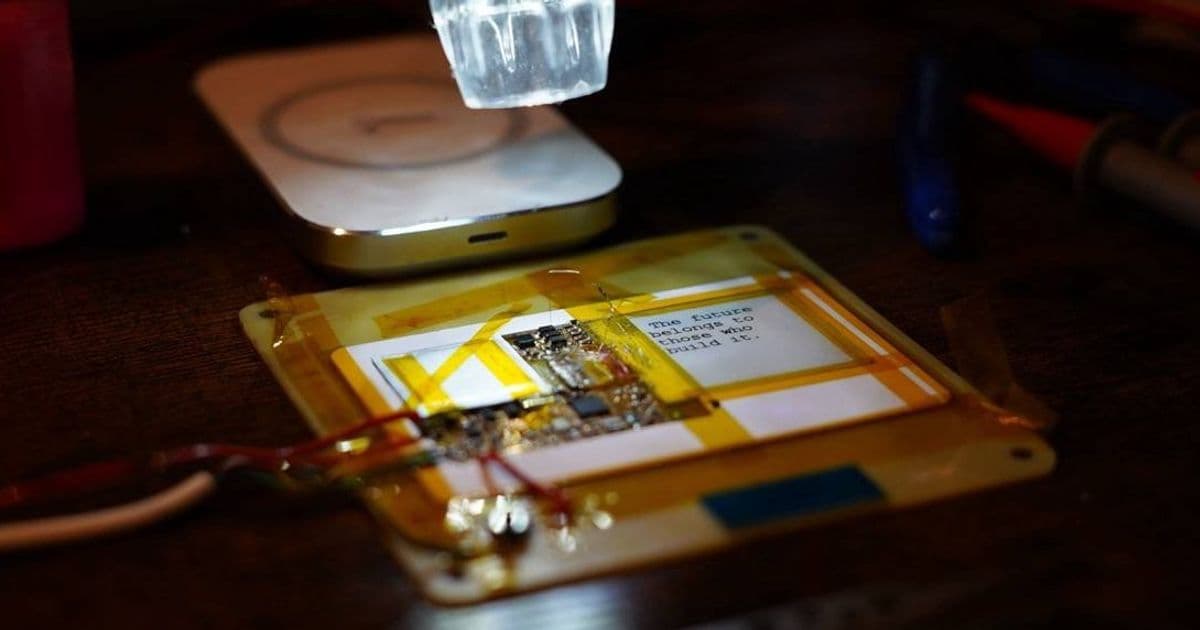
A tinkerer has created a fully functional credit card-sized ESP32 computer with e-ink display and NFC capabilities, demonstrating the potential for ultra-compact IoT devices and opening up new possibilities for portable smart applications.
Someone made a literal credit-card-sized ESP32 computer, and so can you
In the world of DIY electronics and IoT development, size constraints often drive innovation. Recently, a developer going by the name Krauseler on the ESP32 subreddit showcased a remarkable achievement: a fully functional credit card-sized ESP32 computer complete with an e-ink display and NFC capabilities. This tiny marvel pushes the boundaries of what we consider possible with microcontrollers and demonstrates the incredible potential of modern embedded systems.
The Project: Credit Card-Sized Computing
Krauseler's project is exactly what its name suggests - a computer that matches the dimensions and thickness of a standard credit card. Built around the ESP32-C3 microcontroller, this tiny device packs processing power, a display, and wireless connectivity into an impossibly small form factor.
The motivation behind such an extreme project, as explained on Krauseler's GitHub page, stems from a fascination with space constraints:
"I've always been interested in extreme space constraints — but this one pushed it to another level. Products like AirTag-style card trackers and similar devices that claim to be 'credit-card sized' are usually still far away from actually feeling like one."
This statement highlights a common issue in consumer electronics - products marketed as "credit card sized" often don't truly match the form factor of an actual credit card. Krauseler set out to create something that wasn't just small in one dimension but truly matched the credit card form factor in all dimensions.
Technical Specifications and Implementation
At the heart of this project lies the ESP32-C3 microcontroller, a RISC-V based chip that offers Wi-Fi and Bluetooth 5.0 connectivity in a compact package. The ESP32-C3 is particularly suited for this kind of project due to its small footprint and low power consumption.
Key components of the credit card ESP32 include:
- ESP32-C3 microcontroller with Wi-Fi and Bluetooth 5.0
- E-ink display for low-power visual output
- NFC chip for contactless communication
- Battery circuitry for portable operation
- Custom PCB designed to match credit card dimensions
The e-ink display is a crucial component here, as it offers excellent visibility in various lighting conditions while consuming minimal power - essential for a device that needs to operate on battery power. The NFC capability opens up possibilities for contactless interactions, making this tiny computer more than just a display device.
Development Environment and SDK Requirements
Working with the ESP32-C3 requires the ESP-IDF (IoT Development Framework), which is the official development framework from Espressif. For those looking to replicate this project, you'll need:
- ESP-IDF version compatible with ESP32-C3 (v4.4 or later recommended)
- RISC-V toolchain support
- Drivers for the e-ink display and NFC chip
- Custom board configuration files
The development process involves writing code in C/C++ with ESP-IDF APIs, configuring the peripherals, and optimizing for the extremely limited physical space. This includes careful consideration of antenna placement for both Wi-Fi and Bluetooth, as well as ensuring all components fit within the strict dimensional constraints.
Potential Applications and Use Cases
While the creator is still exploring what this tiny computer might be good for, the possibilities are intriguing:
Smart Home Dashboard
The credit card size makes it perfect as a portable smart home dashboard. Displaying temperature, humidity, security status, or controlling smart devices from your wallet becomes a reality.
Two-Factor Authentication (2FA)
With its NFC capability and display, this device could serve as a portable 2FA token, displaying codes and potentially acting as a hardware security key.
NFC Ticket Wallet
The combination of NFC and e-ink display makes it ideal for storing and displaying various tickets - transit passes, event tickets, or even digital keys.
Portable Development Terminal
For developers, this could serve as a portable debugging terminal or status monitor for IoT projects, fitting conveniently in a laptop bag or even a wallet.
Smart Business Card
Imagine a business card that can display your contact information, change its display based on who you're handing it to, and even share data via NFC.
Building Your Own Credit Card Computer
For those inspired to create their own version, Krauseler has shared the project details on GitHub. The repository includes PCB designs, component lists, and sample code to get you started.
The build process requires:
- Sourcing the right components, particularly the e-ink display and NFC chip that fit within the credit card dimensions
- Designing a custom PCB that accommodates all components while maintaining the credit card form factor
- Careful soldering of components, especially given the tight space constraints
- Programming the ESP32-C3 with appropriate firmware for your chosen application
The most challenging aspect is likely the PCB design and component selection, as everything must fit precisely within the credit card dimensions while maintaining functionality.
Cross-Platform Considerations
While this project is specific to the ESP32 platform, it raises interesting questions about cross-platform development in the embedded space. The ESP32 ecosystem, including ESP-IDF, has excellent support for multiple platforms:
- Windows development with ESP-IDF
- Linux development (native and WSL)
- macOS development
The framework abstracts much of the platform-specific complexity, allowing developers to work on their preferred operating system while targeting the ESP32 hardware.
For developers coming from a mobile background (iOS/Android), the ESP32 offers a different but complementary development experience. While mobile development focuses on rich user interfaces and app stores, embedded development like this project emphasizes resource efficiency, direct hardware control, and custom form factors.
The Future of Ultra-Compact Computing
Projects like this credit card-sized ESP32 computer represent the cutting edge of what's possible with modern microcontrollers. As components continue to shrink and power efficiency improves, we can expect to see more devices that push the boundaries of size and form factor.
This particular project demonstrates that "credit card sized" isn't just marketing hype - with careful design and component selection, it's possible to create a fully functional computer in this form factor. The implications for wearable computing, IoT devices, and portable technology are significant.
Conclusion
Krauseler's credit card-sized ESP32 computer is more than just a technical curiosity - it represents a new frontier in ultra-compact computing. By pushing the boundaries of what's possible with microcontrollers and demonstrating that size doesn't have to compromise functionality, this project opens up new possibilities for portable smart devices.
Whether it becomes a practical tool or remains an impressive demonstration of engineering prowess, projects like this inspire innovation and push the limits of what we consider possible with embedded systems. For developers and tinkerers, it serves as both a challenge and an inspiration - what other form factors might we be able to put a computer in?
For those interested in exploring this project further, check out the ESP32 subreddit for ongoing discussion and the GitHub repository for implementation details.
Comments
Please log in or register to join the discussion